Introduction: Modern Design Meets Southern California Landscapes
The best modern landscapes don’t erase nature—they frame it. If you’re wondering how to combine modern design with natural beauty, OE Landscape approaches it by using clean lines, geometric hardscape, and regionally appropriate, low-water planting to highlight what already makes a Southern California yard special, from mature trees and rocky grades to San Gabriel foothill and mountain views in communities like Glendora, San Dimas, and La Verne.
For homeowners in Glendora and surrounding Southern California neighborhoods who want a high-quality custom yard, this guide explains how to create that balance without fighting the site. You’ll see practical ways to align landscape design with your home’s architecture, define functional outdoor zones, connect indoor and outdoor living, choose modern materials for pavers, concrete, turf alternatives, and planting, and improve water efficiency and long-term maintenance. OE Landscape is a licensed, family-owned contractor specializing in modern landscape design, hardscape elements, and outdoor living spaces throughout the Glendora area. We hold a California C-27 license, are bonded and insured, and have spent over a decade helping many homeowners create outdoor environments that raise property value, require less maintenance, deliver more usable square footage, and make yards more energy efficient.
Start with Architectural Harmony and the Natural Site
Every modern landscape should begin by studying the home’s architectural style – rooflines, stucco color, window proportions – and the existing site. Studying the site’s topography is crucial before finalizing designs, because respecting topography minimizes the need for extensive land reshaping. Preserving natural features fosters an authentic connection to the landscape.
Walk the yard at different times of day and note:
Mountain sightlines worth framing from patios or interior rooms
Mature trees and boulders that provide structure and shade
Natural grade changes you can work with instead of against
Sun and shade patterns that affect plant selection and seating
Early collaboration with landscape architects ensures cohesive design from the start. Natural stone and timber should complement the surrounding environment rather than fight it. On a recent Glendora project, OE Landscape aligned new concrete bands and low planter walls with a mid-century ranch home’s horizontal lines, letting the existing hillside do the talking.
Define Functional Outdoor Living Zones First
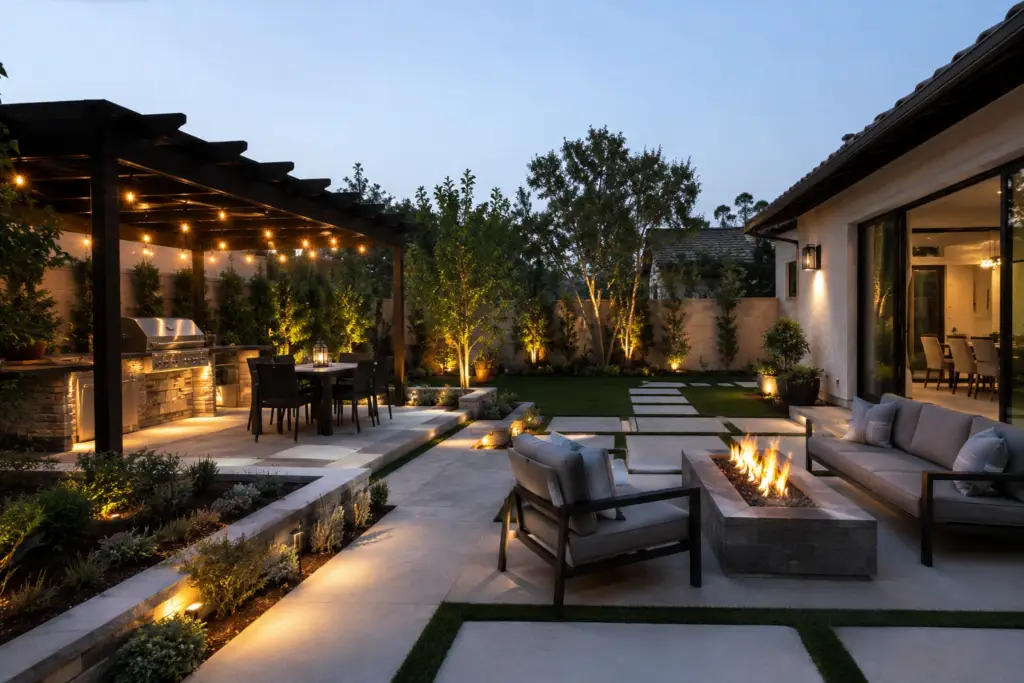
Before choosing a single plant or paver, divide your yard into clear zones. Designing outdoor spaces as purposeful rooms enhances usability – think of each area as having a job. Functional landscaping includes designated areas for relaxation and entertainment, and patios and decks provide versatile spaces for various outdoor activities.
Practical zones for a Southern California yard include:
Covered dining patio for hot afternoons
Lounge area with lounge chairs around a fire feature for evenings
Small turf or artificial turf play lawn for kids
Quiet garden corner with seating areas and lush plantings
Service zone for bins, equipment, edible flowers, or herbs
Patios and decks expand living spaces beyond the home’s walls, and outdoor entertainment zones enhance social gatherings and relaxation. Organize zones by movement patterns from your kitchen, living room, and primary bedroom doors outward. Function comes before plant types or decorative elements in intentional design.
Balance Clean Lines with Organic Forms
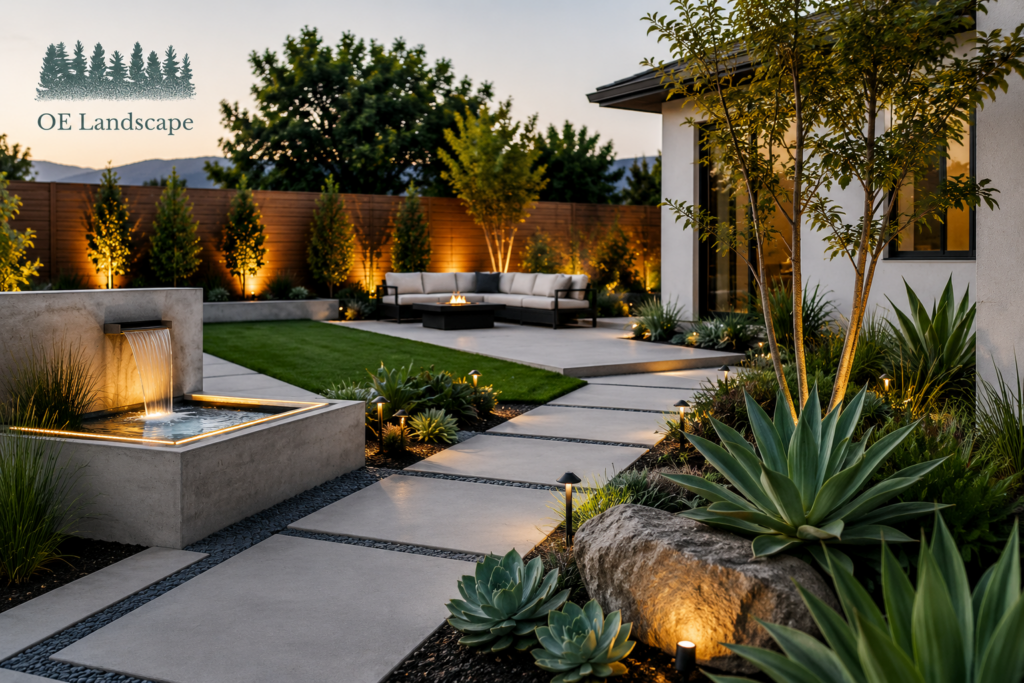
Modern design features clean lines and geometric shapes – rectilinear patios, straight lines on paths, and crisp steel edging. But the best work pairs that geometry with organic planting that softens the structure. Modern design emphasizes balance and scale in landscape aesthetics, and multi-level tiered landscaping can soften harsh geometric lines.
Layout ideas that create visual interest:
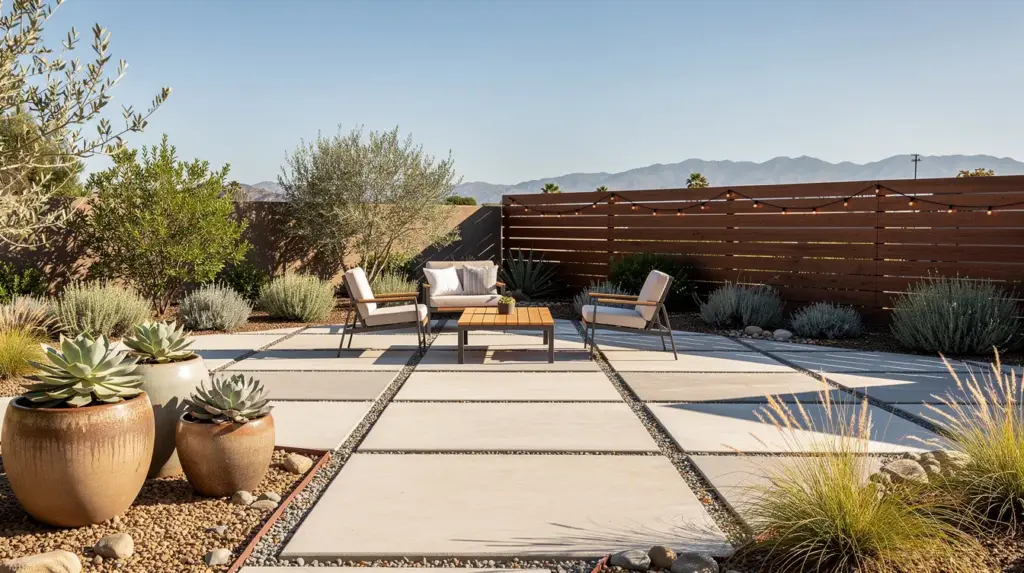
Staggered large-format pavers in a grid with gaps filled by groundcover
Long linear planters running parallel to a fence or wall
Gentle curved planting beds hugging corners, filled with flowing masses of ornamental grasses and salvias
Geometric patterns in paving that contrast with billowing plant forms
This striking contrast between hardscape and softscape is what gives a modern backyard its wow factor. On a Claremont project, OE Landscape used a sinuous border of deer grass and purple sage against a strict paver grid – the contrasting textures made both elements stronger.
Use Modern Hardscape Elements that Feel Natural
Hardscaping elements include paths, walls, and seating areas, and they form the backbone of any landscape. Concrete patios and sleek wood fences are common hardscaping elements, but the material palette matters enormously. Modern hardscaping emphasizes clean lines and geometric shapes while effective strategies focus on materials that complement the environment.
Modern designs feature broad, sleek, smooth pathways, yet the best ones avoid looking sterile. Consider these hardscape materials well suited to California:
Sand-finished concrete – reduces glare and heat; echoes nearby hillside tones
Natural stone – granite or basalt for durability and weather resistant materials performance
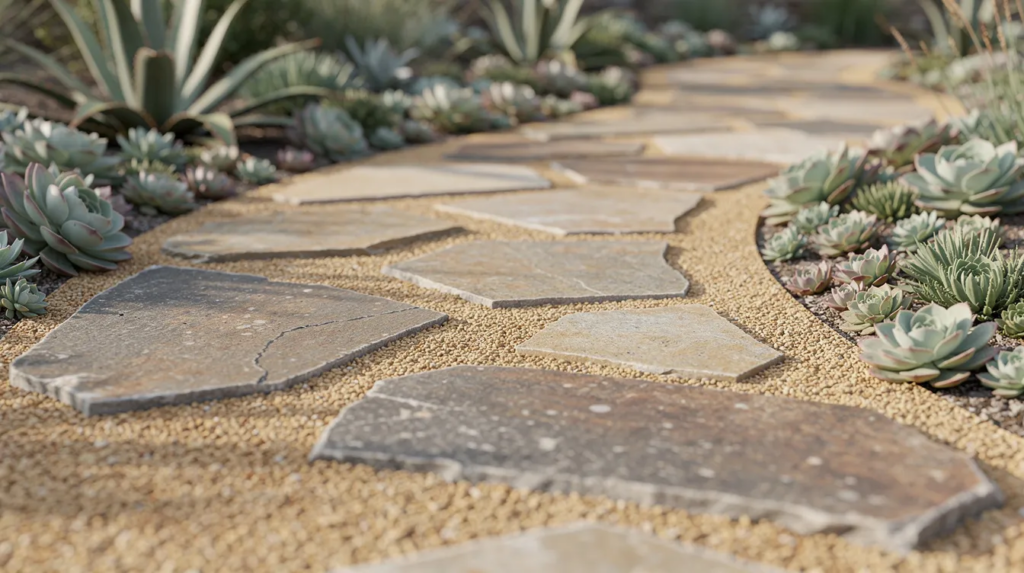
Decomposed granite (DG) – earthy, permeable, low cost
Corten steel edging – rust patina mimics local rock colors
Permeable pavers – allow water to pass through surfaces and reduce runoff while supporting groundwater replenishment
Using consistent material palettes creates visual harmony with nature. Local, sustainable materials enhance indoor-outdoor transitions in design. Keep colors muted – tans, warm grays, charcoal – to echo the surrounding environment rather than compete with it.
Plant Selection: Sculptural, Low-Water, and Regionally Appropriate
Contemporary landscapes often emphasize simplicity and intentionality in plant selection. The modern approach uses fewer species in larger groupings, creating drifts rather than a random garden of individual specimens. Modern landscapes often use repeating rows of low maintenance plants to build rhythm.
Native plants require less water and fertilizer than exotic alternatives. They support local wildlife and biodiversity, create habitat corridors for local species, and thrive better in their home territory. Native plants also reduce the need for artificial fertilizers and require less water and maintenance than non-native species. Using native plants can reduce long-term maintenance costs significantly – drought-tolerant landscapes can cut outdoor water use by 50–60%.
Plants that deliver a modern look in Southern California:
Accent trees: Olive (Olea europaea), Toyon, Manzanita
Sculptural plants: Agave, Aloe, columnar Italian cypress
Soft layers: Westringia, lavender, rosemary, California sage
Groundcovers: Dymondia margaretae, low-spreading manzanita
Evergreen shrubs: Indian hawthorn, Ceanothus, Podocarpus
Mix architectural plants with softer layers to balance structure and lush vegetation. Native plants require less water and maintenance in modern landscapes, making them ideal for daily living in the San Gabriel Valley’s local climate.
Leverage Ornamental Grasses and Textured Planting for Movement
Ornamental grasses add motion, sound, and seasonal interest to otherwise rigid spaces – a contemporary twist on classical gardens. Position grasses in bands along walkways, at the base of seat walls, or in front of taller shrubs to break up hard edges.
Strong SoCal grass choices include:
Deer grass (Muhlenbergia rigens) – native, upright, low water
Blue fescue – compact silver-blue mounds
Fountain grass varieties – arching form, backlighting beautifully at sunset
Lomandra – tough, tidy, varying heights
One annual cutback in late winter keeps grasses looking fresh. Space them 18–24 inches apart so each clump reads as a single species mass rather than a scattered mix.
Create Seamless Indoor–Outdoor Living Connections
Seamless indoor-outdoor connections enhance overall living experience. The goal is to make the threshold between house and yard disappear. Consistent flooring between indoor and outdoor spaces erases boundaries – match your patio tile to your interior flooring color and format.
Expansive glass walls can dissolve the boundary between indoors and outdoors, and large, floor-to-ceiling windows can frame outdoor views in architecture. Internal courtyards can introduce natural elements into homes, while integrated landscaping connects green spaces directly to buildings. Biophilic design integrates greenery directly into living spaces through biophilic elements like living walls and integrated planters.
Repeat materials across the threshold: the same ceiling wood tone on a pergola, similar stone on both counters. Maximizing natural daylight can improve well being and comfort inside and out.

Design Outdoor Living Spaces for Everyday Use
Modern backyards serve as extensions of indoor living spaces. Outdoor dining areas enhance functionality and social interaction, while comfortable seating arrangements create inviting outdoor spaces. Smart technology improves outdoor living area functionality and convenience – think automated lighting, speakers, and smart irrigation controllers.
Features that support outdoor living year-round:
Built-in BBQ islands with composite decking countertops
Linear gas fire tables surrounded by low seating
Large umbrellas or pergolas to provide structure and shade
Raised planters near dining for lush plantings and fragrance
Smart technology enhances outdoor space functionality and convenience in every zone. Layer elements: start with the hardscape surface, add built-in features, then soften with nearby trees and planters for dappled light and a cozy ambiance.
Combine Fire, Water, and Greenery as Modern Focal Points
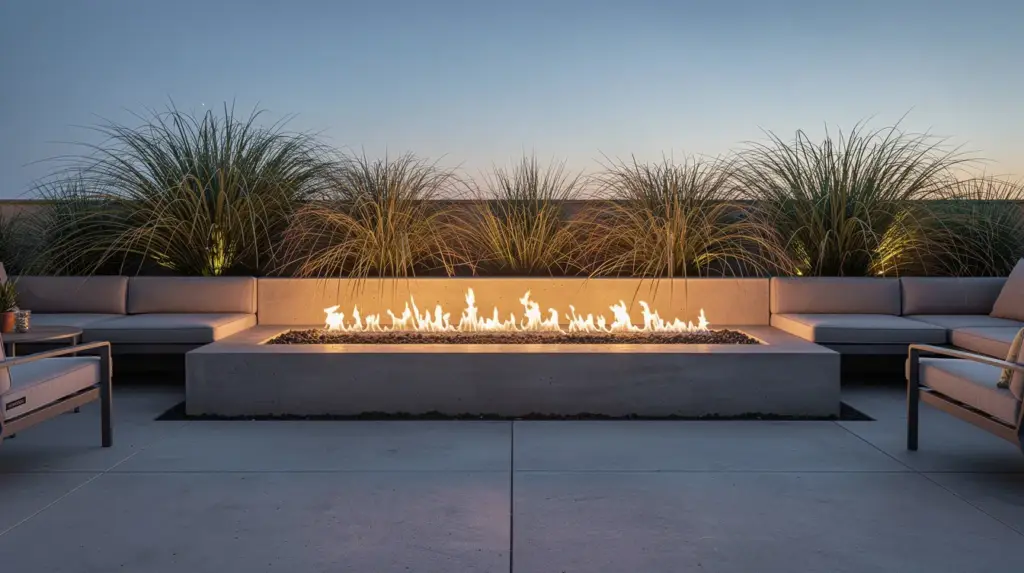
Fire features and water features anchor a modern style landscape to natural elements like sky, stone, and plants. Incorporating a water feature enhances visual appeal and tranquility – even a simple wall-mounted scupper spilling into a narrow basin framed by grasses creates calm. Fire pits and linear gas fire tables (preferred for local code compliance) pair well with low seating and surrounding planting.
Align these focal points with main sightlines from inside the home. The interplay of flame, water, and greenery provides a unique space that works for both intimate evenings and gatherings.
Use Color, Texture, and Seasonal Interest Thoughtfully
A muted earthy color palette can create a relaxing space. Modern landscapes lean on foliage color – blue-gray succulents, burgundy Loropetalum, variegated grasses – rather than beds of bright annuals. Introduce seasonal flowers strategically: winter-blooming Ceanothus, spring salvias, and summer drought-tolerant color from lantana or edible flowers.
Combine smooth and rough textures: polished concrete with rough natural stone, glossy agave leaves with feathery grasses, gravel with spreading groundcovers. This layering of design elements creates year-round visual interest without high water or maintenance demands.
Lighting: Modern Fixtures that Highlight Natural Beauty
Strategically placed lighting can improve nighttime curb appeal and extend the usability of outdoor living areas well past sunset. Use warm-white LEDs (2700–3000K) for a consistent, inviting feel.
Key techniques:
Uplighting olive or citrus trees to reveal form and create silhouettes
Grazing textured stucco or stone walls to emphasize surface depth
Path lights set into gravel or planter edges, spaced 6–10 feet apart
Backlighting ornamental grasses for a dramatic evening glow
Keep fixtures concealed – the light itself should be visible, not the hardware. Smart transformers and timers make the system energy efficient and hands-off.
Make the Most of Slopes, Views, and Native Landforms
Foothill lots in Glendora often come with slopes that feel like problems but are actually assets. Retaining walls can double as seating terraces. Hillside plantings of native or Mediterranean species hold soil while adding texture. Natural barriers can help maintain privacy while preserving views of the San Gabriel Mountains.
Erosion control strategies that look modern and natural include geogrid-reinforced walls, stacked stone softened by drifts of deer grass, and modern concrete stairs with integrated lighting. OE Landscape has transformed steep Glendora slopes into layered planting terraces with floating concrete steps – turning unusable grade into the yard’s best feature.
Design for Water Efficiency and Energy-Efficient Comfort
Sustainable practices in landscaping improve environmental performance and lower utility bills. Smart irrigation systems optimize water usage in modern landscaping, and drip irrigation systems optimize water usage in gardens by delivering water directly to root zones. Hydrozoning – grouping plants by water needs – ensures nothing gets over- or under-watered.
Strategic shade trees on west and south façades, plus pergolas and shade sails, reduce indoor cooling loads and make patios usable through summer. Careful planning around watering schedules and soil conditions keeps the landscape healthy with minimal input. Organic fertilization promotes long-term soil health, and incorporating green roofs can enhance sustainability in architecture for homes with flat rooflines.
Choosing Turf Alternatives and Rock Landscaping Wisely
Large, high-water lawns are increasingly out of step with Southern California’s climate. Alternatives that still feel warm and modern:
Artificial turf for play zones – saves water but needs proper drainage; OE Landscape installs it to look clean and natural
Dymondia or low native groundcovers for light foot traffic
Gravel courtyards and stepping stone bands in DG for zero-irrigation zones
Rock landscaping avoids a “parking lot” feel when you mix stone sizes, add planting pockets with low water plants, and maintain clear modern geometry. Native boulders and river rock swales paired with drought-tolerant plants create a natural materials palette that fits foothill aesthetics.
Keep Maintenance Simple without Losing Natural Character
Group plants by maintenance needs and growth rate so pruning and cleanup stay efficient. Use evergreen structural plants – olives, podocarpus, Indian hawthorn – as anchors. Let more free-form perennials and grasses serve as seasonal accents. Low maintenance plants like agave and manzanita hold their form year-round with almost zero input.
Seasonal tasks include spring grass cutbacks, fall debris cleanup, and quarterly irrigation checks. OE Landscape designs every project with maintenance realities in mind so the yard stays crisp without constant fussing.
Boosting Curb Appeal and Property Value with Modern Landscapes
A well-designed front yard can increase property value by 20%. The most impactful curb appeal upgrades in modern homes include a clear, direct walkway with modern pavers, updated entry plantings of a single species massed for impact, and simple landscape lighting along the drive.
Low-water, hardscape-rich front yards photograph well for listings and comply with HOA water use restrictions. Industry data from Southern California contractors shows quality landscape investments can recoup 70–100% of cost at resale.
Climate and Microclimate Considerations in the San Gabriel Valley
Think about your specific microclimate before committing. South- and west-facing walls need heat-tolerant plants; shaded north patios do best with ferns and shade grasses. Reflected heat from walls and paving increases temperatures locally – light-colored, textured surfaces help. Wind patterns, cold pockets, and soil conditions all affect plant success.
OE Landscape selects plants and durable materials that withstand Glendora’s hot summers, occasional winter chills, and limited rainfall. Consulting a local professional confirms suitability before you invest.
Working with a Professional Landscape Contractor like OE Landscape
Partnering with a licensed C-27 contractor who understands modern architecture and local conditions protects your investment. OE Landscape’s typical process includes an on-site consultation, concept design, material and plant selection, detailed proposal, professional installation, and follow-up.
We’re family-owned, bonded, insured, and offer financing options for larger outdoor living and hardscape projects. Every solution is custom – no one-size-fits-all packages.
Planning Your Own Modern-Natural Landscape: Next Steps
Here’s a quick checklist to get started with careful planning:
Study your house and site – note sun, views, slopes, existing elements
Set goals for how you want to use your outdoor spaces
Choose a restrained material palette that echoes your home and landscape
Select water-wise, regionally appropriate plants in massed groupings
Layer lighting to extend usability and highlight natural beauty
Gather inspiration photos, measure your yard, and note sun patterns before calling a professional. Then contact OE Landscape by phone or online to schedule a design consultation. We serve homeowners in Glendora, San Dimas, La Verne, Claremont, and surrounding cities.
Your yard already has the bones of something great – the mountain views, the golden light, the mild climate that makes outdoor living possible almost year-round. A modern landscape built around those natural assets doesn’t just look good. It becomes the part of your home you actually live in.