
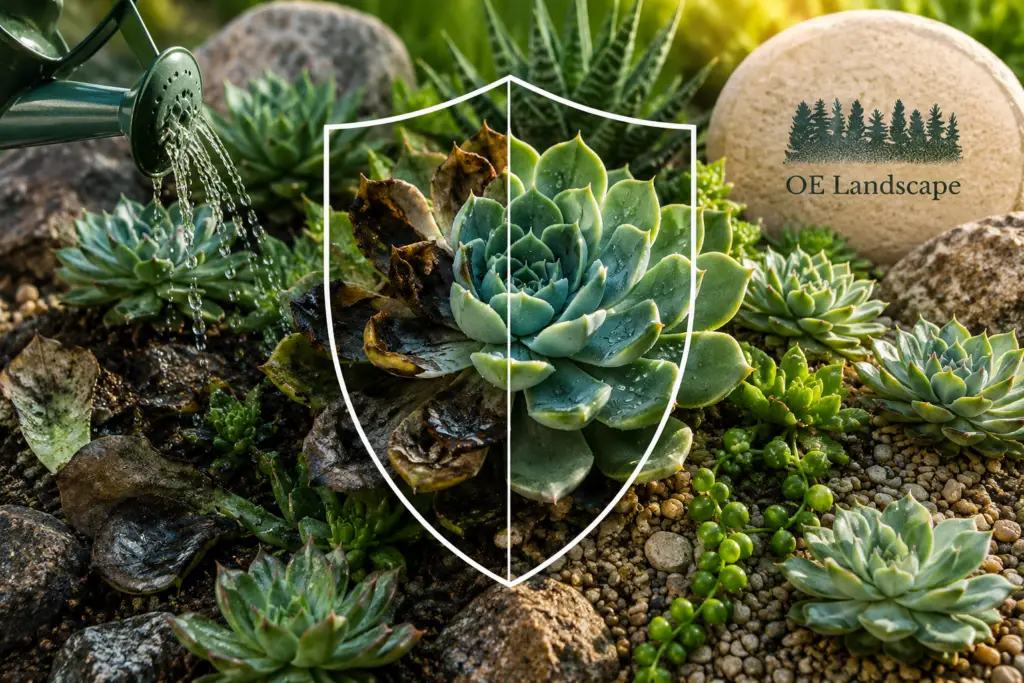

Succulents have become a favorite in modern landscaping because of their striking forms, drought tolerance, and low-maintenance appeal. From elegant agave displays to colorful echeveria gardens, these resilient plants can transform outdoor spaces with minimal water requirements. However, despite their hardy reputation, succulents are not immune to problems. Poor drainage, excessive moisture, and improper planting techniques can lead to rot and disease that compromise both the beauty and longevity of your landscape. At OE Landscape, we believe that a successful succulent landscape begins with thoughtful planning and proper maintenance. Here's how you can prevent rot and disease while keeping your succulent garden healthy year-round.
1. Start with Excellent Drainage
The number one cause of succulent failure is excessive moisture around the roots. Succulents evolved in arid environments where water drains quickly, making proper soil drainage essential. Use well-draining sandy or gritty soil mixes. Incorporate gravel, pumice, or coarse sand into planting beds. Avoid heavy clay soils without proper amendments. Consider raised beds or rock gardens for poor-draining areas.
2. Avoid Overwatering
Even in landscaped settings, succulents require much less water than traditional plants. Water deeply but infrequently. Allow soil to dry completely between watering. Reduce irrigation during cooler months. Adjust watering schedules after rainfall.
3. Give Plants Enough Space
Proper spacing improves airflow, helps foliage dry faster, and reduces fungal diseases.
4. Choose Healthy Plants
Inspect plants before installation. Avoid specimens with mushy stems, black spots, or damaged roots.
5. Plant at the Proper Depth
Keep the crown slightly above the soil surface to prevent trapped moisture and crown rot.
6. Remove Dead Leaves
Dead foliage traps moisture and encourages fungal growth. Regular cleanup helps keep your landscape healthy.
7. Watch for Early Signs of Disease
Look for soft stems, black or brown spots, yellow leaves, bad odors, and unexpected wilting.
8. Protect Against Pests
Monitor for mealybugs, aphids, scale insects, and fungus gnats that can weaken plants and spread disease.
9. Choose Succulents for Your Climate
Select varieties suited to Southern California's climate for stronger growth and better disease resistance.
10. Work with Professional Landscape Designers
Professional landscape planning ensures proper drainage, irrigation, plant selection, and long-term maintenance.
Final Thoughts
Succulent landscapes offer exceptional beauty while requiring less water and maintenance than traditional gardens. By focusing on drainage, proper watering, good airflow, and proactive care, you can prevent rot and disease before they become costly problems. Ready to build a thriving, low-maintenance succulent landscape? Contact OE Landscape today to create an outdoor space that's beautiful, sustainable, and built to last.
Protect Your Succulent Landscape with Expert Care
Creating a beautiful succulent landscape is only the beginning—keeping it healthy requires proper planning, installation, and ongoing maintenance. Whether you're designing a new drought-tolerant garden or looking to improve an existing one, OE Landscape has the expertise to help your outdoor space thrive.Our team specializes in custom landscape design, irrigation planning, drainage solutions, and professional landscape maintenance throughout Southern California. We'll help you create a stunning, low-maintenance landscape that stays healthy season after season.Ready to transform your outdoor space? Contact OE Landscape today to schedule a consultation or request a free quote. Let us design a landscape that's beautiful, sustainable, and built to last.
Call: (714) 400-9017
Get Started: Request your free quote