
Professional Landscape Drainage for Southern California Homes
Help move excess water away from problem areas with practical drainage solutions planned around your yard, grading, hardscape, lawn, planting, and runoff conditions.
- ✓ Yard & Landscape Drainage
- ✓ French Drain Solutions
- ✓ Orange County & Los Angeles
Manage Water Before It Becomes a Bigger Yard Problem.
Rainfall, irrigation, roof runoff, slopes, compacted soil, patios, walkways, and other hard surfaces can all influence how water moves through a property. When drainage is poor, water can collect in lawns, planting beds, side yards, and paved areas.
OE Landscape evaluates drainage as part of the overall outdoor environment. Depending on the property, a solution may involve surface grading, catch basins, French drains, channel drains, downspout routing, or a combination of several methods.
Drainage also works best when it is coordinated with landscape design, hardscaping, artificial turf, and irrigation and lawn improvements.
What Poor Yard Drainage Can Look Like
Drainage issues do not always appear the same way. These are common conditions homeowners may notice around landscaped properties.
Standing Water
Puddles that remain after rain or irrigation may indicate low spots, slow infiltration, or insufficient drainage paths.
Soggy Lawn or Planting Beds
Consistently wet soil can affect lawn usability, plant health, and the overall condition of landscaped areas.
Runoff Toward Structures
Surface water moving toward buildings, walls, patios, or other improvements should be evaluated so it can be redirected appropriately.
Water Beside Hardscape
Patios, walkways, pavers, and concrete can change runoff patterns and may require dedicated drainage at edges or low points.
Erosion or Washout
Fast-moving runoff can carry soil, mulch, gravel, and other landscape materials away from slopes and planting zones.
Downspout Discharge Issues
Roof water released into the wrong location can overload planting areas or create repeated pooling near walkways and side yards.
Practical Ways to Move and Manage Water
The right approach depends on grading, soil, elevations, available discharge locations, surrounding hardscape, and where the water originates.
French Drains
Subsurface drainage can help collect water from consistently wet areas and move it through a gravel-and-pipe drainage path.
Catch Basins & Area Drains
Low-point drains may help collect surface water from lawns, planting beds, side yards, and other problem areas.
Channel & Trench Drains
Linear drains can help intercept runoff near patios, walkways, driveways, gates, and other hardscape transitions.
Downspout Routing
Roof runoff can be redirected away from sensitive landscape areas and connected to an appropriate drainage route where conditions allow.
Surface Grading
Small elevation adjustments can help encourage water to move toward appropriate collection points instead of settling in low areas.
Drainage With Landscape Construction
Drainage can be coordinated with turf, planting, irrigation, pavers, concrete, gravel, and other outdoor improvements.
See Drainage Work in the Landscape
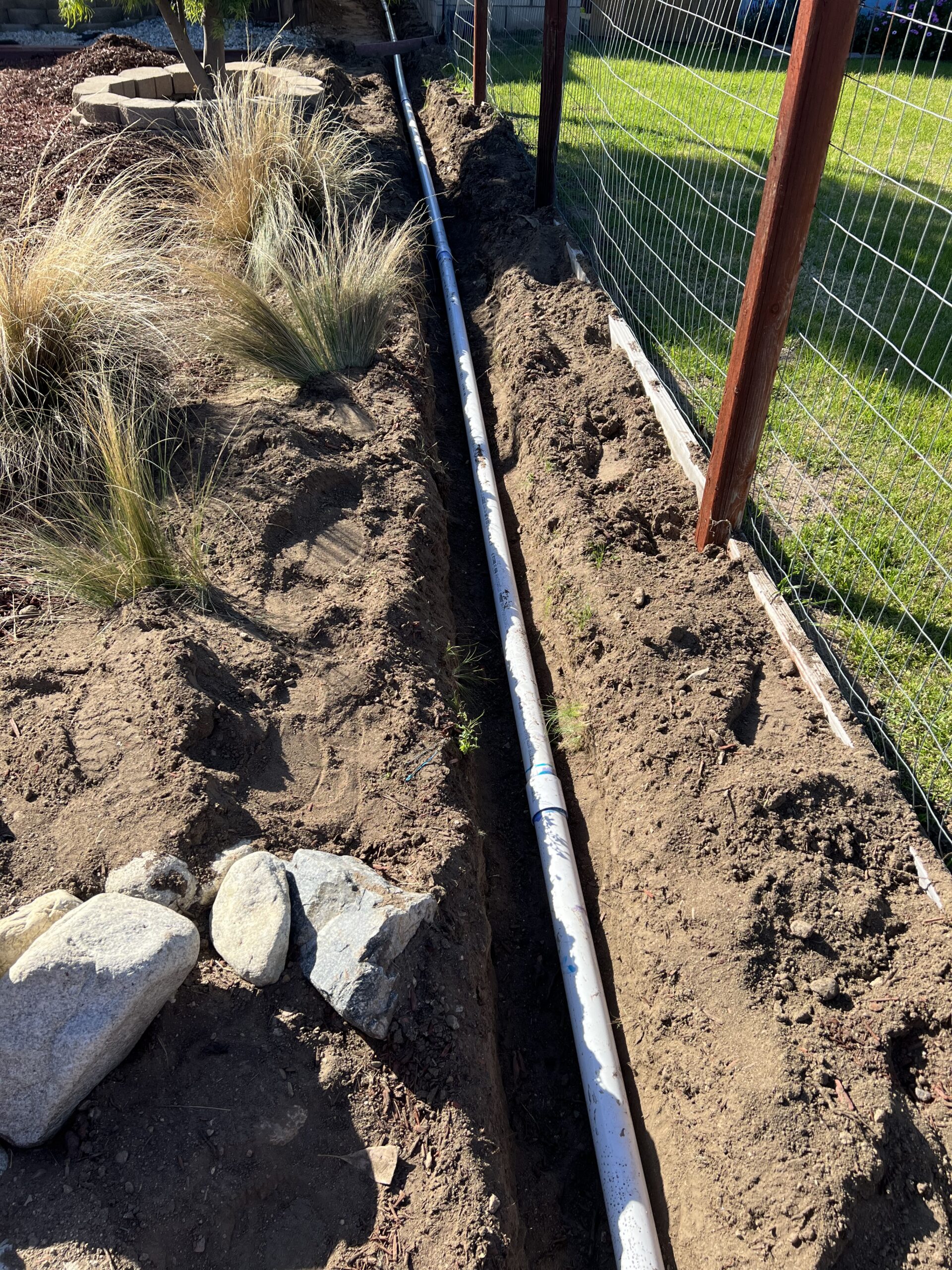
A closer look at drainage installation and French drain work from OE Landscape project documentation.
Drainage Installation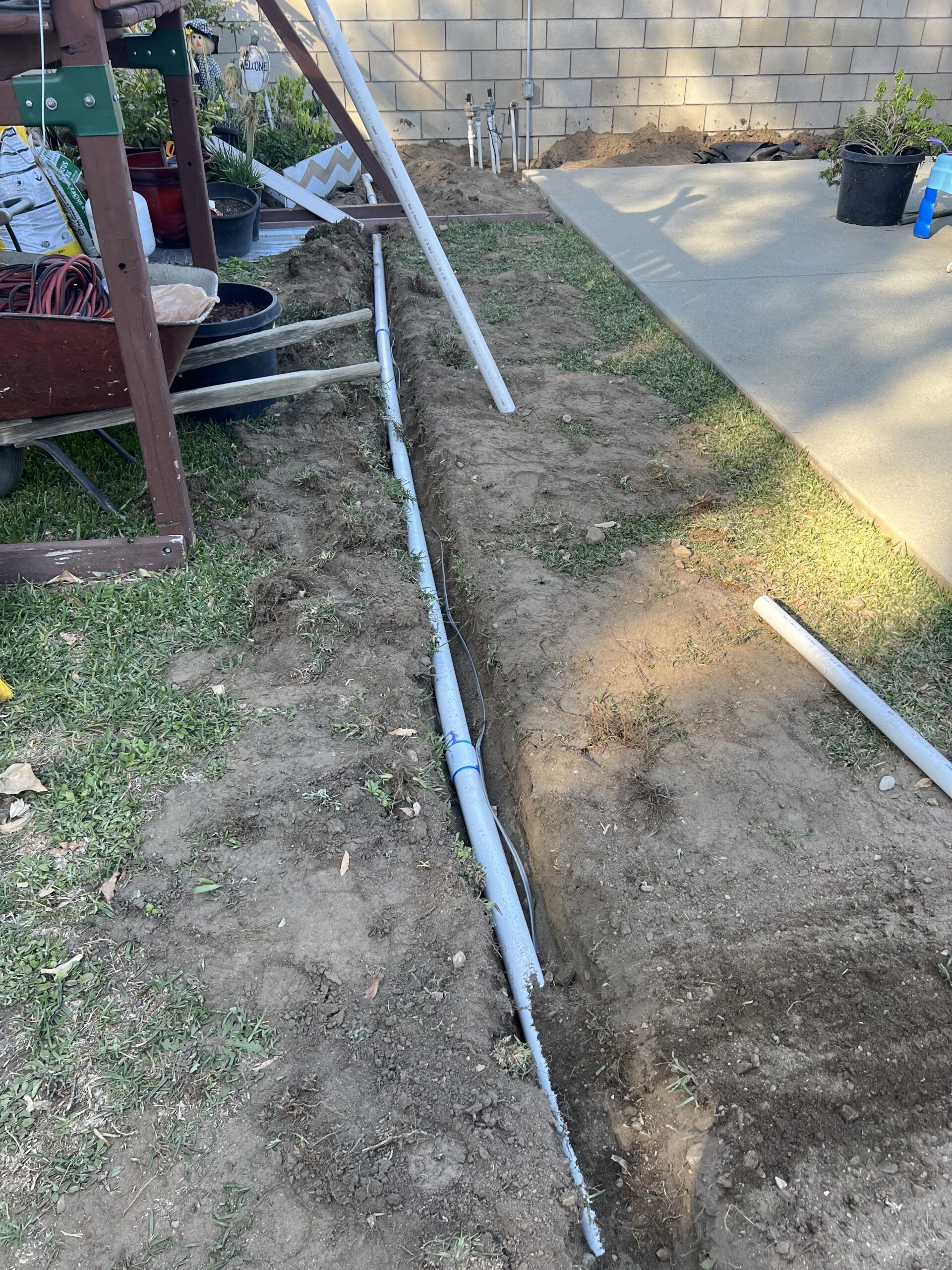 Drainage Work in Progress
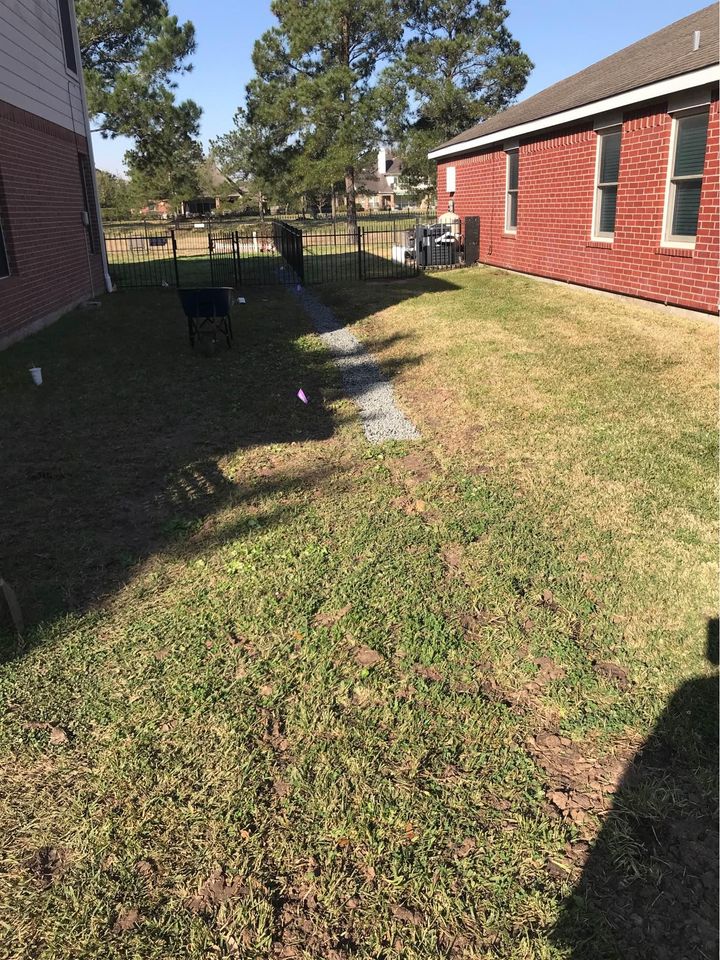 French Drain
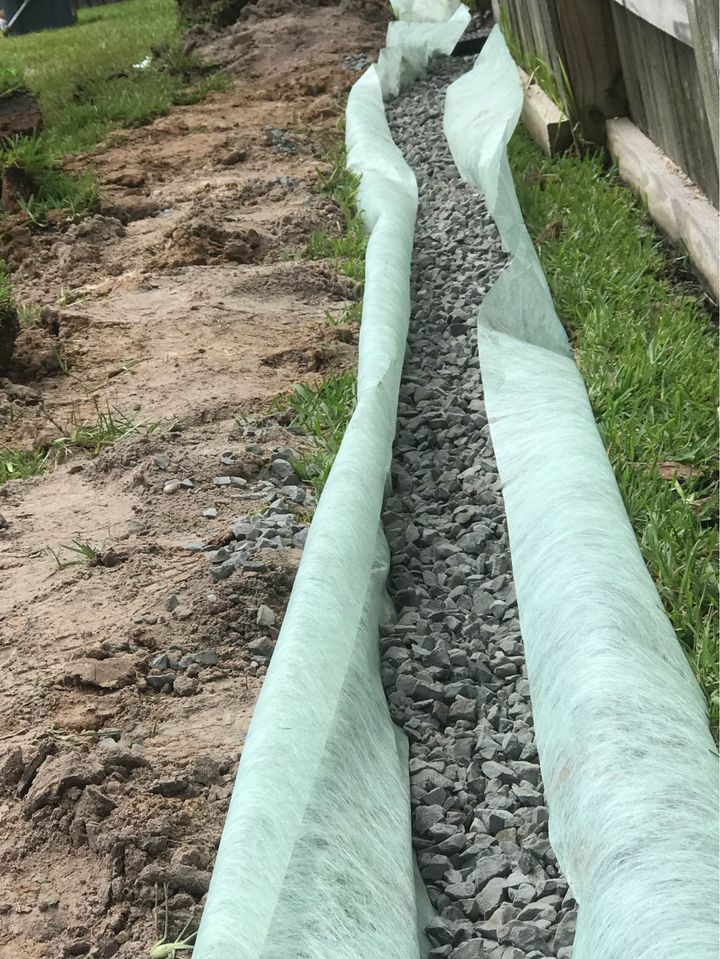 French Drain Detail
Watch the Work in Progress
These project videos provide a closer look at drainage work, site conditions, and installation details from OE Landscape.
Drainage Installation
A closer look at drainage work, trenching, pipe placement, and water-management details during installation.
Finished Drainage System
Finished OE Landscape drainage work showing how the system integrates cleanly with the surrounding landscape.
From Water Problem to Practical Plan
We begin by understanding where the water is coming from, where it collects, and how the surrounding landscape affects its movement.
Site Review
We review low spots, slopes, runoff paths, hardscape edges, downspouts, irrigation, and visible drainage concerns.
Drainage Plan
We identify an appropriate combination of collection points, routing, grading, and drainage components based on the site.
Installation
Drainage components are installed with attention to elevations, pipe routing, surrounding landscape, and clean finish work.
Final Review
We review the completed work and how it integrates with the lawn, planting, hardscape, and surrounding outdoor areas.
Plan Drainage With the Rest of Your Outdoor Project
Drainage often performs best when it is considered before or during other landscape improvements rather than treated as an afterthought.
Drainage as Part of the Whole Landscape
OE Landscape approaches drainage as one part of the property’s complete outdoor system—working alongside grading, planting, irrigation, turf, and hardscape.
- 10+ years of Southern California landscape experience
- Drainage planning coordinated with landscape construction
- French drains, catch basins, channel drains, grading, and runoff solutions as appropriate to the property
- Licensed, bonded, and insured California C-27 landscape contractor
- Clear communication from property review through installation
- Free estimate process for homeowners in Orange County and Los Angeles service areas
Drainage Should Move Water Responsibly.
Stormwater runoff can travel across roofs, pavement, lawns, and other surfaces before entering local drainage systems. California water agencies emphasize managing runoff carefully because stormwater can carry sediment and pollutants into waterways.
Homeowners can learn more from the California State Water Resources Control Board Storm Water Program and the U.S. EPA stormwater runoff resource.
Drainage routes and discharge locations may be subject to site conditions, property constraints, HOA requirements, city standards, or permitting. Complex structural, hillside, foundation, or engineered drainage conditions may require additional professional review.
Common Questions About Landscape Drainage
What type of drainage system does my yard need?
It depends on the source of the water, property elevations, soil, hardscape, available outlets, and where water is collecting. A site review helps determine whether surface grading, a French drain, catch basin, channel drain, downspout routing, or a combination is appropriate.
What is a French drain?
A French drain is a subsurface drainage system commonly built with perforated pipe and drainage rock. It can help collect and redirect water from persistently wet landscape areas when site conditions are suitable.
Can drainage be installed with pavers or concrete?
Yes. Drainage is often coordinated with hardscape construction so surface water can be intercepted at edges, low points, walkways, patios, and other paved areas.
Can you improve drainage before installing artificial turf?
Drainage and base preparation are important considerations before artificial turf installation. Existing site conditions should be reviewed before the new surface is installed.
Does a drainage system guarantee my property will never flood?
No drainage system can guarantee that a property will never experience flooding or water intrusion under every storm condition. The goal is to improve how ordinary runoff is collected, directed, and managed based on the property and project scope.
Do you provide free drainage estimates?
OE Landscape offers free estimates for landscaping projects. Start with the Free Landscape Estimate page and include photos or details about where water is collecting.
Let’s Take a Look at Where the Water Is Going.
Tell OE Landscape what happens during rain or irrigation, where water collects, and what other landscape improvements you are considering.