
How Professional Designers Build Visual Balance
Beautiful landscapes are not created by simply adding more plants, patios or outdoor features. Professional designers carefully balance proportion, placement, texture, color, hardscape and open space so every part of the property feels connected.
A well-designed outdoor space often feels effortless.
You may not immediately recognize why one landscape feels
calm and inviting while another feels crowded, unfinished
or visually confusing.
The difference is often not the amount of landscaping.
It is the relationship between every element in the yard.
Professional
landscape design
uses a principle known as
visual balance
to distribute plants, structures, hardscape, color,
texture and open space in a way that makes the entire
property feel intentional and connected.
What Professional Designers Consider
What Does Visual Balance Mean in Landscape Design?
Visual balance describes how the perceived weight of different features is distributed across a landscape.
Imagine a backyard where one side contains a large patio, mature tree, dense planting bed and outdoor kitchen while the opposite side remains mostly empty. Each feature may look attractive individually, yet the entire yard can still feel uneven.
Professional designers think beyond the individual feature. They consider how much attention each element attracts and how it relates to everything around it.
A mature tree may have strong visual weight because of its height. A bright flowering plant may draw attention through color. A large hardscape feature may become visually dominant because of its scale.
The objective is not necessarily to make both sides identical. The objective is to make the overall composition feel stable.
Symmetry Creates Order and Structure
Symmetrical balance is one of the easiest design approaches to recognize. Similar elements are arranged on opposite sides of a central point.
Matching trees might frame a walkway leading toward the front entrance. Similar planters may sit on either side of an outdoor fireplace. Planting beds may repeat the same general shape along both sides of a pathway.
This approach can work especially well with traditional or formal architecture because it reinforces order, elegance and consistency.
Professional designers may still introduce small differences in plant texture, height or color. This prevents a symmetrical landscape from feeling overly rigid.
Asymmetrical Balance Creates a More Natural Look
Many contemporary landscapes use asymmetrical balance. Instead of repeating the exact same feature on each side, designers combine different features that create a similar amount of visual weight.
For example, one mature specimen tree might be balanced by a grouping of smaller shrubs and ornamental grasses on the opposite side.
The individual elements are different, but the overall landscape still feels stable.
This approach is particularly useful for Southern California properties with slopes, irregular lot shapes, existing mature trees or architectural conditions that make perfect symmetry impractical.
Balance Does Not Mean Everything Has to Match.
Two areas can look completely different while still carrying similar visual importance. Professional landscape design focuses on stability and connection rather than perfect duplication.
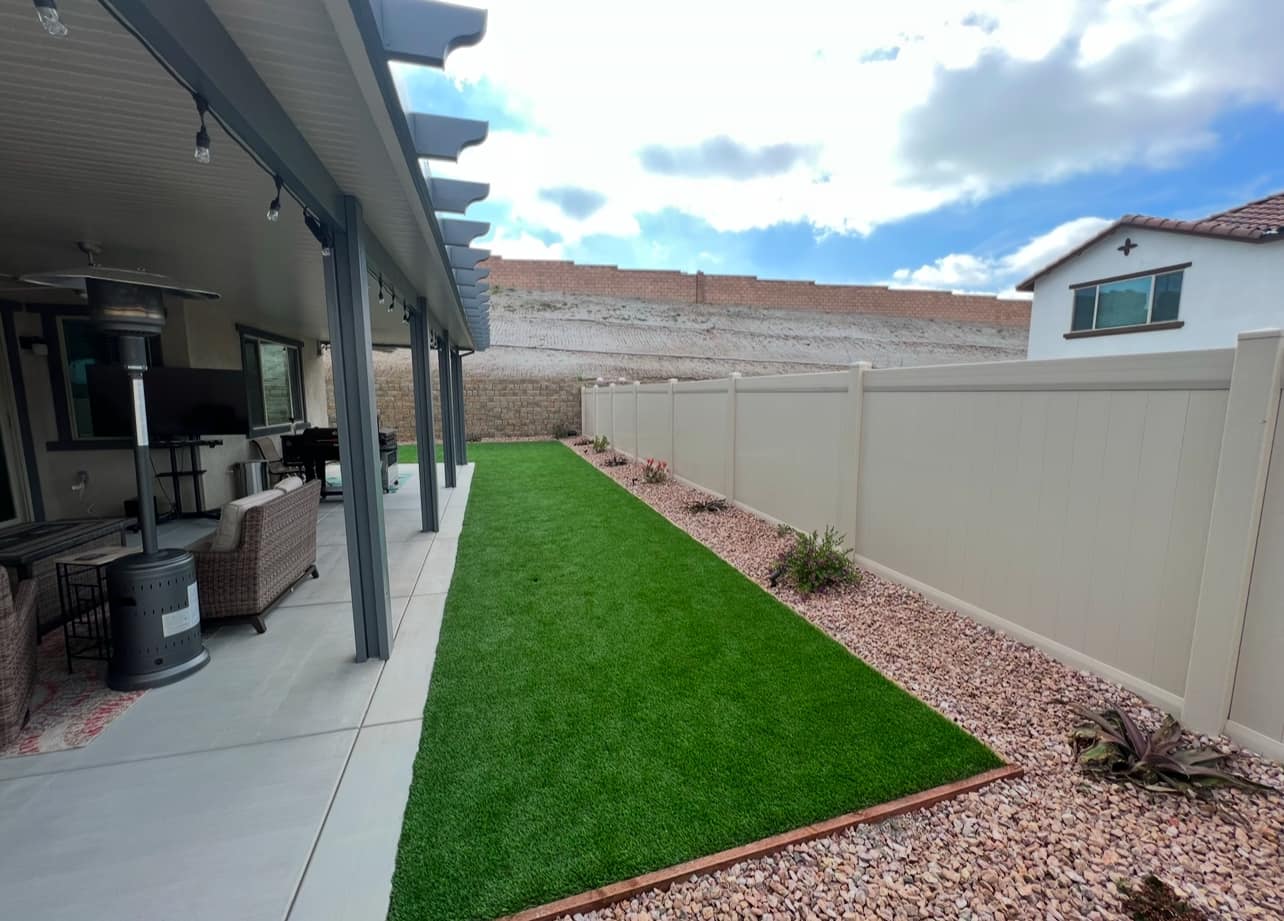
Balance Hardscape With Living Elements
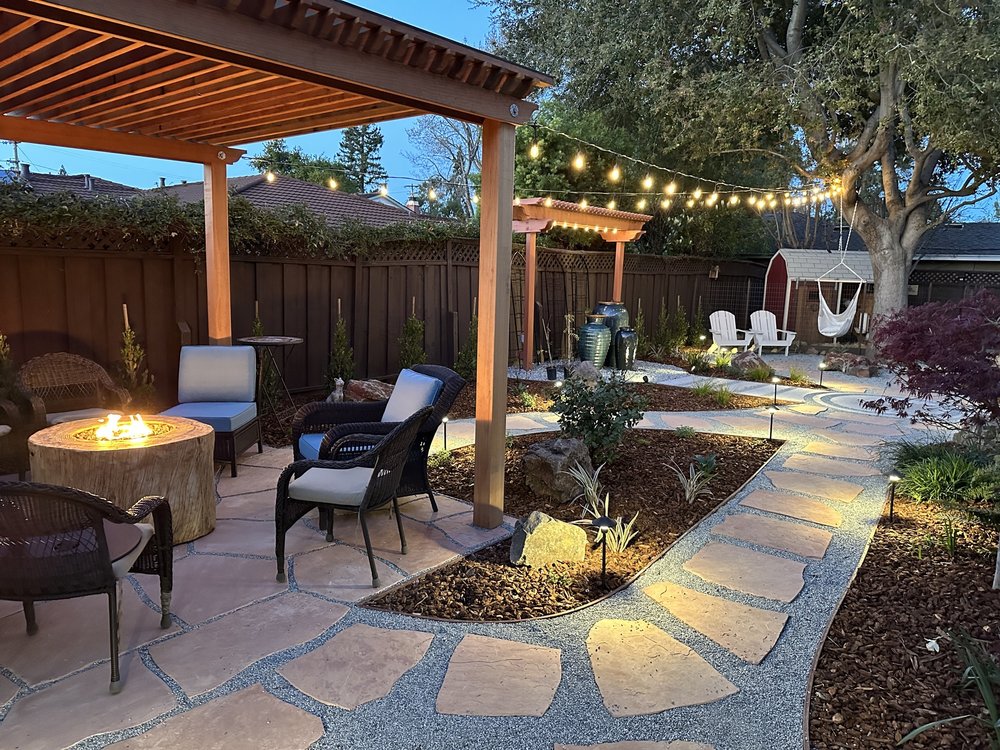
One of the most important relationships in an outdoor environment is the balance between built features and living landscape material.
Hardscaping may include patios, pavers, walkways, retaining walls, fire pits and outdoor living areas.
Softscape includes trees, shrubs, grasses, flowers and groundcovers.
Too much hardscape can make a yard feel harsh or overly developed. Too much planting in a limited area can make the landscape feel crowded.
The strongest designs allow both elements to support one another.
Plant Height Helps Create Depth
Professional planting design rarely relies on plants of only one height.
Instead, designers create layers. Low-growing plants may define pathway edges. Medium shrubs can establish structure behind them. Taller trees and screening plants can provide the background.
This creates depth and allows the eye to move naturally through the landscape rather than seeing one flat wall of vegetation.
Layering can also help create privacy without completely enclosing a property behind one dense screen of plants.
Repetition Creates Visual Rhythm
A front yard, side yard, patio and backyard should not feel like four unrelated projects.
Designers create consistency by repeating selected plants, colors, shapes or materials throughout the property.
An ornamental grass may appear in several planting beds. A paver used near the entrance may reappear in the backyard. The same stone finish might be repeated around an outdoor fire feature.
These repeated details create visual rhythm and help different areas feel like parts of the same landscape.
Six Elements That Can Change the Visual Weight of a Yard
Scale
Larger features naturally command more attention than smaller ones.
Color
Bright flowers and accent materials can immediately draw the eye.
Height
Trees and vertical structures can dominate surrounding lower elements.
Texture
Contrasting plant foliage and materials create additional visual interest.
Density
Dense planting feels heavier than an open, uncluttered area.
Open Space
Empty areas give surrounding features room to become more noticeable.
Color Should Be Distributed With Purpose
Bright colors naturally attract attention. This means flowering plants, colorful foliage, decorative containers and accent materials should be positioned intentionally.
If every strong color is concentrated in one corner of a property, that area may visually overpower everything around it.
Designers often use neutral materials such as natural stone, concrete, wood and green foliage as the foundation. Stronger colors are then introduced as accents.
Repeating a selected accent color in several areas helps connect the landscape without making it feel overly busy.
Open Space Is Also Part of the Landscape
One of the easiest ways to overwhelm a property is to fill every available area.
Professional designers understand that empty space is part of the composition.
An open lawn, broad pathway, uncluttered patio or simple gravel area gives the eye somewhere to rest.
A specimen tree can actually have greater visual impact when there is open space around it instead of dozens of competing plants.
Good landscape planning is not only about deciding what should be installed. Sometimes it is about deciding what should remain open.
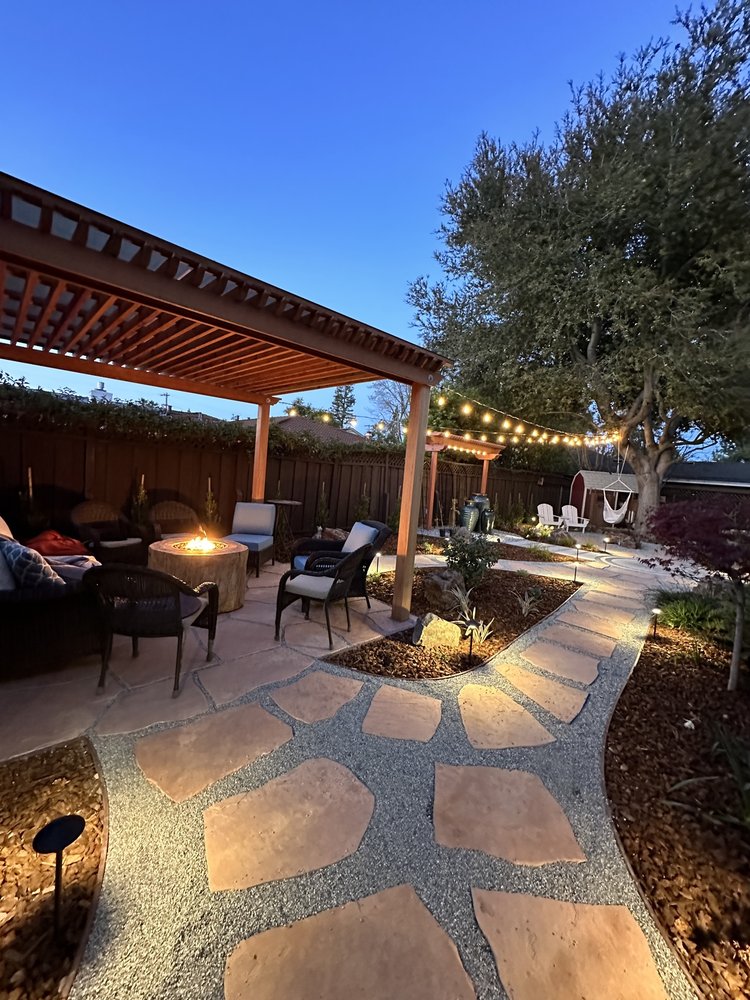
Give the Landscape a Clear Focal Point
Most successful outdoor spaces contain something that naturally attracts attention.
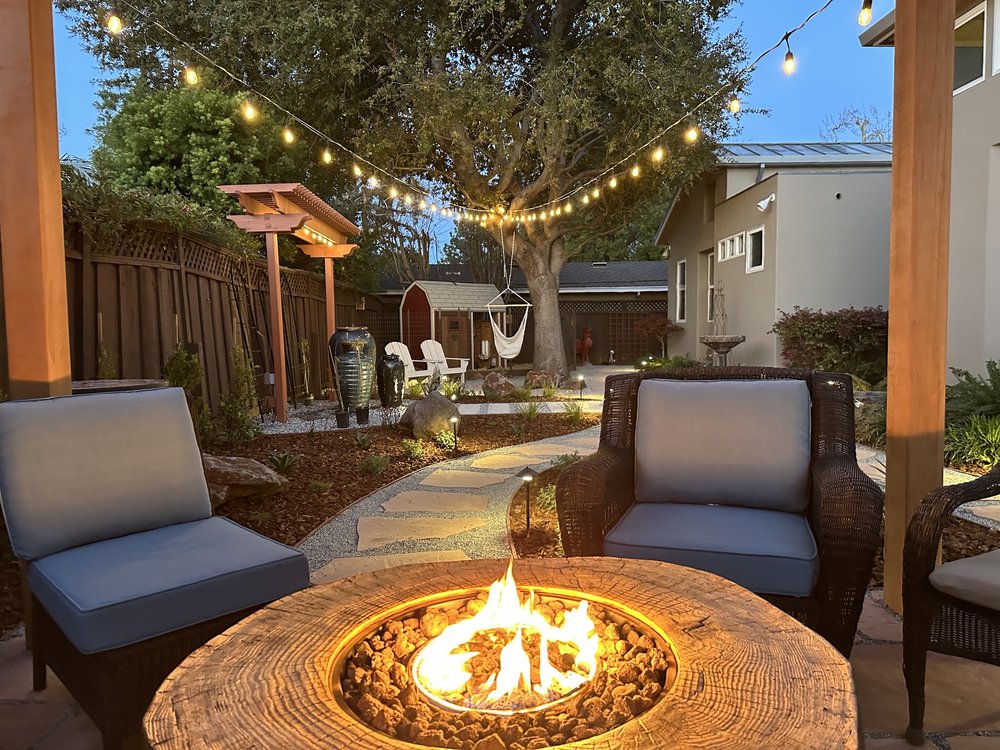
A focal point may be a mature tree, fire pit, outdoor fireplace, water feature, sculpture, pergola or dramatic planting arrangement.
The surrounding landscape design can then guide attention toward that feature through pathways, planting, lighting and surrounding materials.
Problems occur when too many features compete to become the main attraction.
Instead, professional designers generally establish one primary focal point and allow smaller secondary elements to support it.
Design for How Plants Will Look Years From Now
Landscape design is different from decorating an interior because the materials continue to grow.
A small shrub may eventually become several feet wide. A young tree can develop a large canopy. Groundcovers can spread into surrounding spaces.
Professional planning considers mature plant size before installation.
Installing plants too closely can make a new landscape look full immediately, but it can later create overcrowding and disrupt the intended visual balance.
The Landscape Should Support the Architecture
Outdoor design should never feel disconnected from the home.
Designers consider the building's proportions, exterior materials, colors, windows, doors, entrances and important sightlines when positioning major landscape features.
Pathways can guide visitors toward an entrance. Planting can frame architectural details. Outdoor living areas can visually extend the home into the backyard.
When architecture and landscape support one another, the entire property feels more cohesive.
You can see examples of completed outdoor transformations in our OE Landscape project gallery .
Explore the OE Landscape Project Estimator
If you're starting to plan your outdoor improvement budget, use our online estimator to get a preliminary idea of common landscape, hardscape, turf and outdoor improvement costs.
Visual Balance Comes From Many Small Decisions
Balanced landscapes are rarely created by one dramatic feature.
They result from dozens of smaller choices involving placement, proportion, color, texture, repetition, plant height, focal points and open space.
Professional designers look at how each part of the property relates to everything around it before deciding what should be added.
The finished outdoor space should feel comfortable when viewed from inside the home, enjoyable while walking through it and cohesive when experienced as one complete landscape.
OE Landscape helps bring professionally planned outdoor spaces to life through landscape installation and design , hardscaping , irrigation improvements , artificial turf installation and complete outdoor living improvements.
Create an Outdoor Space That Feels Balanced From Every Angle
Whether you're updating one area of your property or planning a complete outdoor transformation, OE Landscape can help turn a thoughtful plan into a professionally installed landscape.