Rainy-season landscape planning
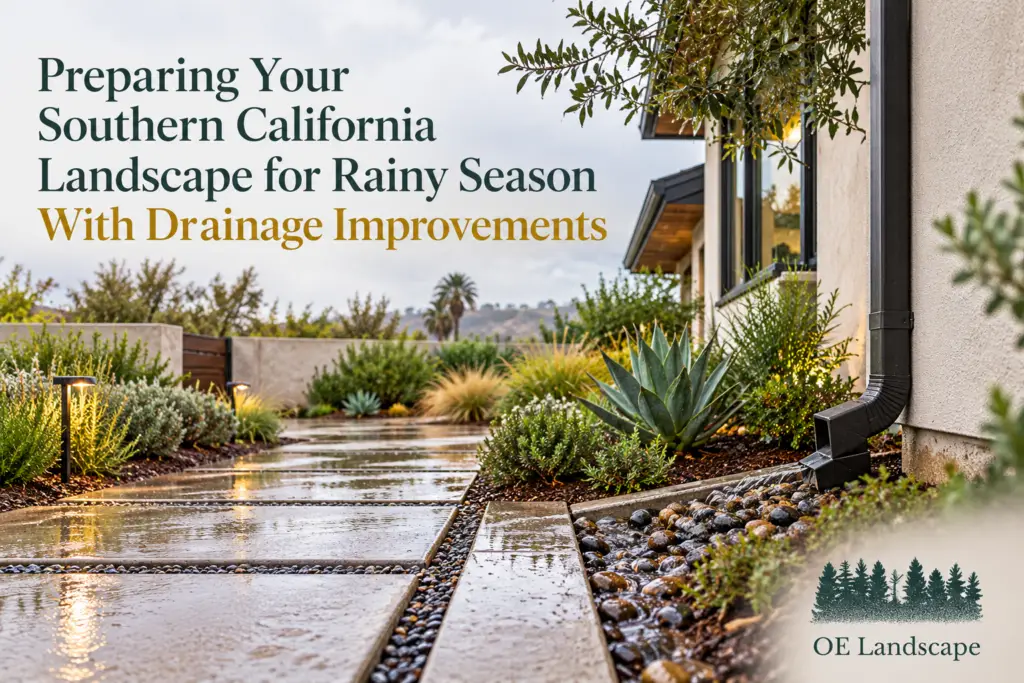
Preparing Your Southern California Landscape for Rainy Season With Drainage Improvements
Rainy-season drainage improvements work best when they are planned before the first major storm. A focused inspection can reveal blocked drains, poorly directed downspouts, low spots, erosion, and grading problems before runoff reaches the house or damages the yard.
CA C-27 License #1109316 | Bonded & Insured | Serving Southern California

Prepare before water starts collecting
Plan drainage improvements before the rain reveals bigger problems
Southern California's long dry stretches can make drainage easy to overlook. Then a concentrated storm sends roof water, patio runoff, and hillside flow toward the same low points. Los Angeles' annual wet-weather plan runs from October 15 through April 15, with the heaviest downpours typically occurring from December through February. That makes fall a practical time to inspect the property, clear the existing system, and plan corrections.
The goal is not simply to add a drain. Effective Southern California landscape drainage follows the water from where it lands to a lawful, stable outlet while accounting for the home, soil, slopes, planting, irrigation, and hardscape. OE Landscape evaluates these conditions as part of its landscape drainage services and can coordinate improvements with a broader landscape design.
Signs your landscape drainage needs attention
Drainage trouble rarely begins with a dramatic flood. It usually appears as a pattern: the same lawn area stays soggy, mulch washes onto a walkway, water gathers along a patio edge, or soil erodes below a downspout. Dampness near a wall or repeated sediment lines can also show where runoff has been traveling.
- Standing water in lawn, planting, or side-yard areas after the rest of the property has drained
- Runoff moving toward the house, garage, patio door, or retaining feature
- Water crossing walkways or collecting where pavement meets planting
- Exposed roots, gullies, displaced mulch, or sediment at the bottom of a slope
- Catch basins that fill without draining or emit water back onto the surface
- New cracks, settlement, tilting trees, or earth movement on or below a slope
Photograph the same locations before, during, and after a safe, ordinary rain. Those images can help a drainage professional distinguish a surface-flow issue from a recurring low point or a more complex slope condition. Never enter flowing water or inspect a hazardous slope during a storm.
Inspect and clear the drainage path before rainy season
Begin at the roofline and work downhill. Clear leaves and sediment from gutters, downspouts, area drains, channel drains, swales, and privately maintained outlets. Make sure drain grates are seated securely and not buried by mulch. Orange County Public Works likewise advises residents to remove debris from roof drainage and private drainage systems before heavy rain.
Next, look at where each downspout discharges. Water should not be released against the foundation, into an eroding bed, across a slippery walkway, or toward a neighboring property. If a downspout connects to an underground line, the line and outlet need to be checked for blockage, damage, or an inadequate discharge point.
Test only with a modest, controlled amount of hose water in dry weather. Stop if water backs up near the structure or appears where it should not. A hose test cannot reproduce a storm, but it can expose an obvious blockage and help map the system before professional evaluation.
Common Southern California landscape drainage improvements
No single drainage product fits every yard. The right system depends on the source and volume of water, soil infiltration, elevation changes, available outlet, and local requirements. A coordinated plan may use several of the following measures.
Surface grading and shallow swales
Small grade corrections can keep ordinary runoff moving away from structures and prevent isolated low spots. A shallow planted swale can slow and guide surface water, but its route and outlet must be designed so it does not concentrate flow onto a slope, sidewalk, street, or adjacent property.
Catch basins and channel drains
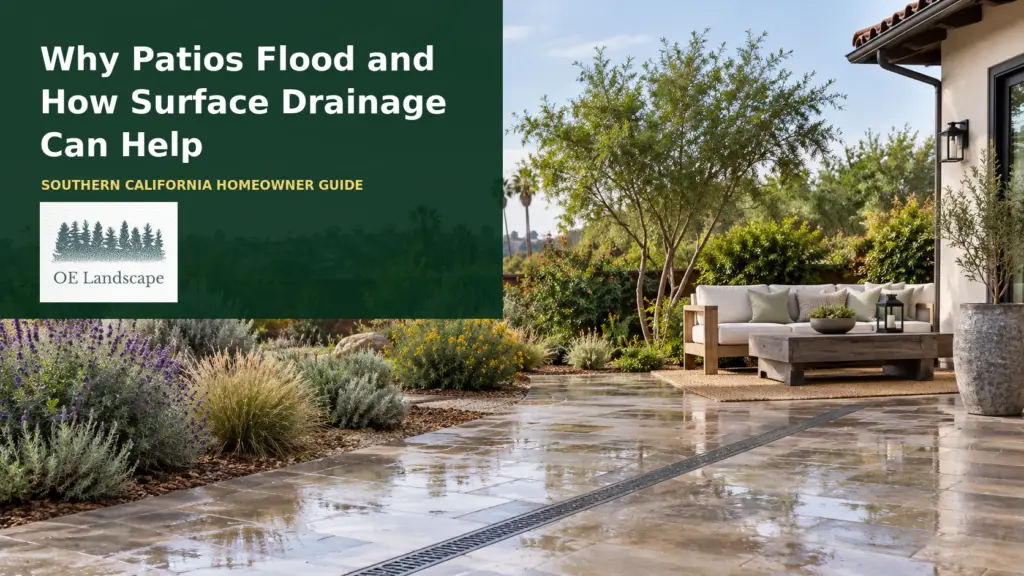
Catch basins collect water at defined low points. Channel drains can intercept runoff along a patio, driveway, or threshold. Both rely on correct elevations, sufficient pipe capacity, accessible cleanouts, and an appropriate discharge location. A grate alone does not solve a system with poor fall or a blocked outlet.
French drains
A French drain uses a perforated pipe within washed drainage aggregate to collect subsurface water along a defined route. It can be useful for persistent wet areas, but it should not be treated as a universal fix. Clay soil, roots, utility conflicts, slope stability, and outlet conditions all affect whether it is appropriate.
Downspout extensions and solid conveyance
Roof runoff is concentrated water. Extending or piping downspouts to a suitable outlet can keep that volume away from foundations and planting beds. Roof water should not be connected to a perforated drain where it could overload the system or saturate soil near the home.
Permeable and planted areas
Healthy soil, mulch, appropriately selected planting, and permeable surfaces can help slow and absorb smaller amounts of rain. They are useful parts of a landscape plan, but infiltration features must be located carefully around foundations, slopes, utilities, and poorly draining soils.
Reduce erosion without creating a new runoff problem
Bare soil and concentrated flow can quickly turn into rills, gullies, and sediment deposits. Stabilize disturbed areas before rain where practical, keep established drainage paths open, and avoid dumping loose soil, rock, or landscape material where runoff can carry it into streets or drains. Irrigation should also be adjusted during rainy weather so already-wet soil is not needlessly saturated.
Slopes require extra caution. Los Angeles County's homeowner guidance advises against altering slopes or drainage without expert advice. If you see significant cracking, settlement, earth slippage, a leaning retaining feature, or rapid erosion, keep clear of the area and consult an appropriately licensed civil or geotechnical professional. Landscape drainage work should support, not substitute for, necessary engineering.
When to request a professional drainage evaluation
Professional help is especially useful when water approaches the home, several surfaces drain into one low point, a previous repair has failed, underground piping is involved, or the project changes grading, hardscape, turf, or retaining conditions. A site review can connect visible symptoms to the route water actually takes.
OE Landscape plans drainage around the rest of the yard, including planting, irrigation, lawn, artificial turf, and hardscape. The first conversation is more productive when you provide photos of ponding or erosion, the approximate timing of the problem, and any available property or drainage plans. Start with a free landscape estimate or use the contact page to share project details.
The practical takeaway
Good drainage begins with a clear route for water
Before rainy season, clear what already exists, document where water travels, and correct the cause rather than only the wet spot. Thoughtful drainage improvements can reduce routine ponding and erosion while helping the yard work better as a whole. No system can guarantee protection from every storm, so continue monitoring conditions and follow local emergency guidance during severe weather.
Coordinated landscape planning
Drainage should work with the yard, not against it
OE Landscape can evaluate drainage alongside the materials, elevations, planting, and outdoor uses that shape the property. Review completed landscape work for design ideas, then discuss the actual water conditions on your site before choosing a system.