
Landscape Grading Mistakes That Send Water Toward Your Home
Landscape grading mistakes can send rainwater or irrigation runoff toward a home when the ground, paving, or planting beds interrupt the intended drainage path. Look at the whole route: where water begins, where it collects, and where it can leave the property responsibly.
CA C-27 License #1109316 | Bonded & Insured | Serving Southern California
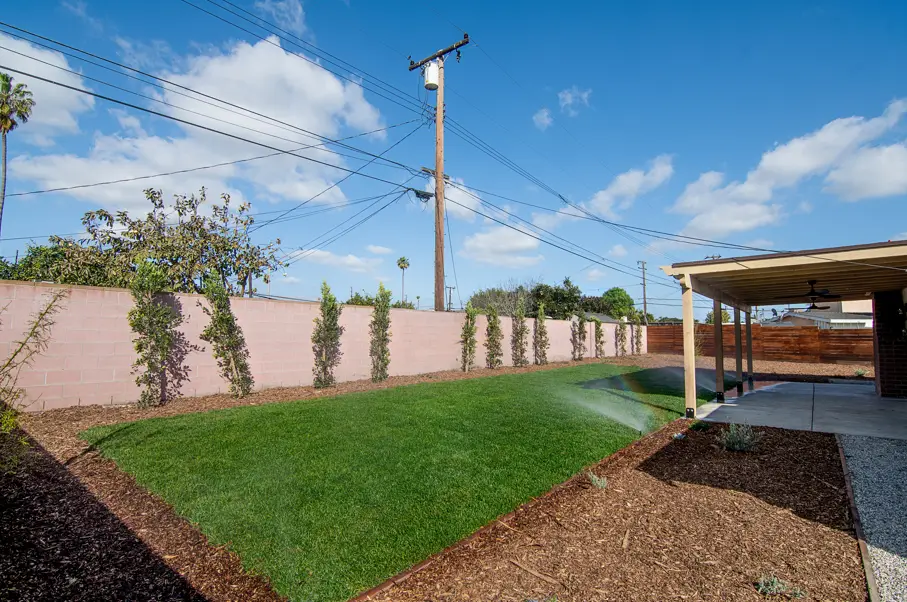
Where does water go after it reaches your yard?
Landscape grading mistakes can send rainwater or irrigation runoff toward a home when the ground, paving, or planting beds interrupt the intended drainage path. Look at the whole route: where water begins, where it collects, and where it can leave the property responsibly.
A damp patch does not prove that grading alone is the cause. Roof runoff, clogged drains, irrigation, soil conditions, and neighboring flows may also matter. OE Landscape's drainage services can help coordinate grading with the rest of a landscape plan. Explore drainage services and landscape design.
See the U.S. Department of Energy guidance on grading away from foundations.
Landscape grading mistakes: sloping toward the foundation
Soil can settle after construction or landscape work, leaving a shallow depression beside a wall. Water then follows the low area instead of moving away. Look for recurring puddles, water marks, washed mulch, or damp soil along the house after rain.
The U.S. Department of Energy recommends grading away from the foundation and describes a minimum fall of 0.5 inch per foot over 10 feet in its building guidance. This is not a universal prescription for every existing yard: local rules, clearances, setbacks, and site constraints must be assessed before changing grades. Where space is limited, an appropriately designed swale or drain may be needed.
Building planting beds that block the escape route
Fresh soil, mulch, edging, or a raised bed can form a ridge that traps water between the bed and the house. Filling a low spot without checking the next section of the yard can simply move the problem.
Keep a continuous drainage route in mind when planning beds and edging. Do not pile soil or mulch against siding, cover vents, or change required clearances. Have a professional review the finished elevations and the path beyond the planted area.
Ignoring patios, walkways, and side yards
A patio or walkway that slopes toward a doorway or foundation can deliver runoff to a sensitive area. Narrow side yards may leave little room for a surface route, while walls, gates, and edging can interrupt it.
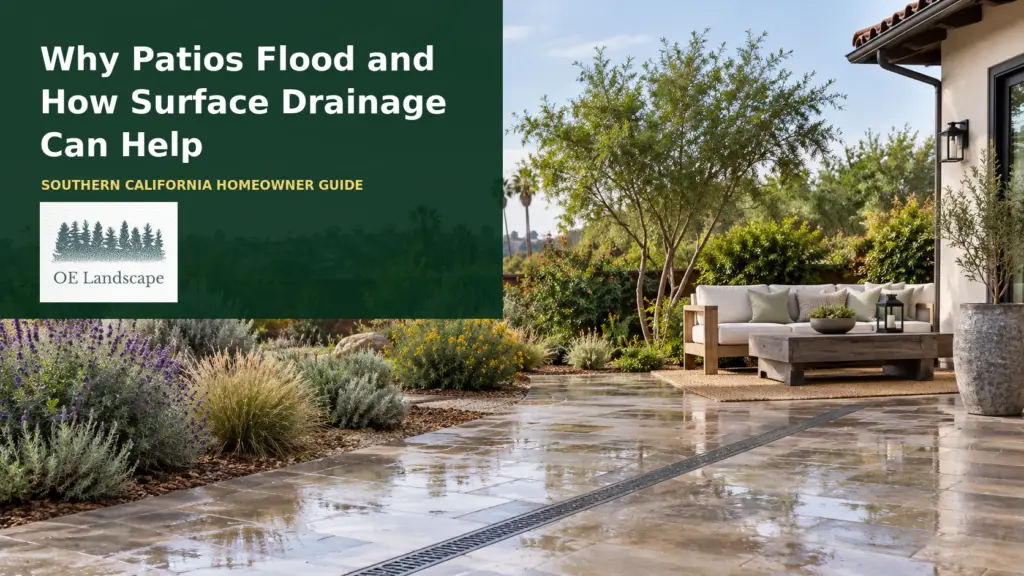
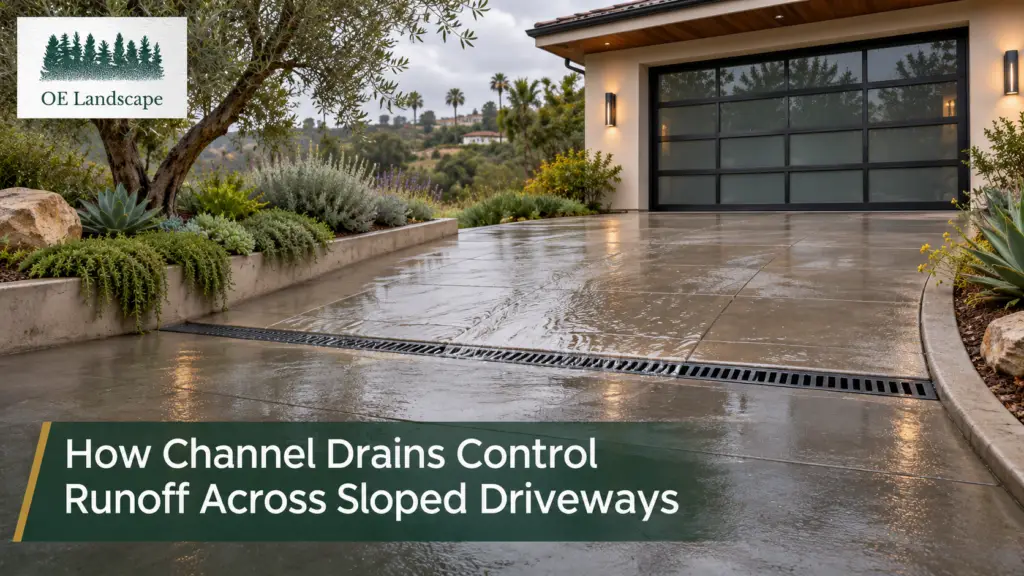
Before adding paving, check its proposed slope, thresholds, adjacent planting, and where runoff will go. Depending on the site, a graded swale, channel drain, catch basin, or other designed solution may be appropriate. A drain is only useful when its outlet and maintenance access are also planned.
Discharging downspouts into a low spot
Roof water can overwhelm an otherwise modest depression when a downspout releases beside the house. Observe the outlet during rain from a safe location and note whether water returns toward the wall or collects at a walkway.
Keep gutters and accessible outlets clear. Route runoff to an appropriate, permitted destination that does not create a nuisance for a neighbor or overwhelm another area. Avoid assuming a buried pipe will solve the issue without checking its slope, outlet, and access for maintenance.
Choosing a drain or rain garden without checking the site
A surface inlet may collect runoff from a low point; a French drain may be appropriate for certain subsurface water conditions. Neither is a substitute for identifying the source and a suitable discharge or infiltration plan. Clay-rich or compacted soils, buried utilities, retaining walls, and steep ground can change the design.
A rain garden is not simply a hole beside a foundation. EPA guidance calls for evaluating soil permeability and siting the garden to avoid utilities and water intrusion into basements or crawlspaces. Consider overflow and local requirements before selecting an infiltration feature.
Changing grades without a complete plan
Start with a simple observation: photograph the yard during or after a normal rain, note downspouts and irrigation, and record the places where water enters, ponds, and exits. Do not enter flooded areas or work around exposed electrical equipment.
Before digging, arrange utility location and identify private lines. Consult the local building department about permits, drainage discharge, property boundaries, and applicable requirements. Significant slopes, retaining walls, recurring interior moisture, foundation movement, or hillside instability warrant evaluation by an appropriately qualified engineer or other specialist.
Plan the full water path
A useful grading plan follows water from its source to a responsible destination and coordinates that path with planting, hardscape, and irrigation. Share your observations and photos with OE Landscape to discuss the right next step for your property.
Read the EPA rain garden siting guidance before considering infiltration.
Make the water route part of the whole project
OE Landscape can help review drainage alongside planting, hardscape, irrigation, and other landscape improvements.
Plan grading around your home and your yard
Tell us where water collects and what you are planning for your landscape.
CA C-27 License #1109316 | Bonded & Insured | Serving Southern California