

OE Landscape • Hillside Drainage Guide
French Drains on Hillsides: Managing Water Beneath the Soil
French drains on hillsides can intercept some subsurface water and carry it toward a suitable outlet. Their placement and discharge need careful planning because a drain alone cannot guarantee a stable slope.
CA C-27 License #1109316Bonded & InsuredServing Southern California
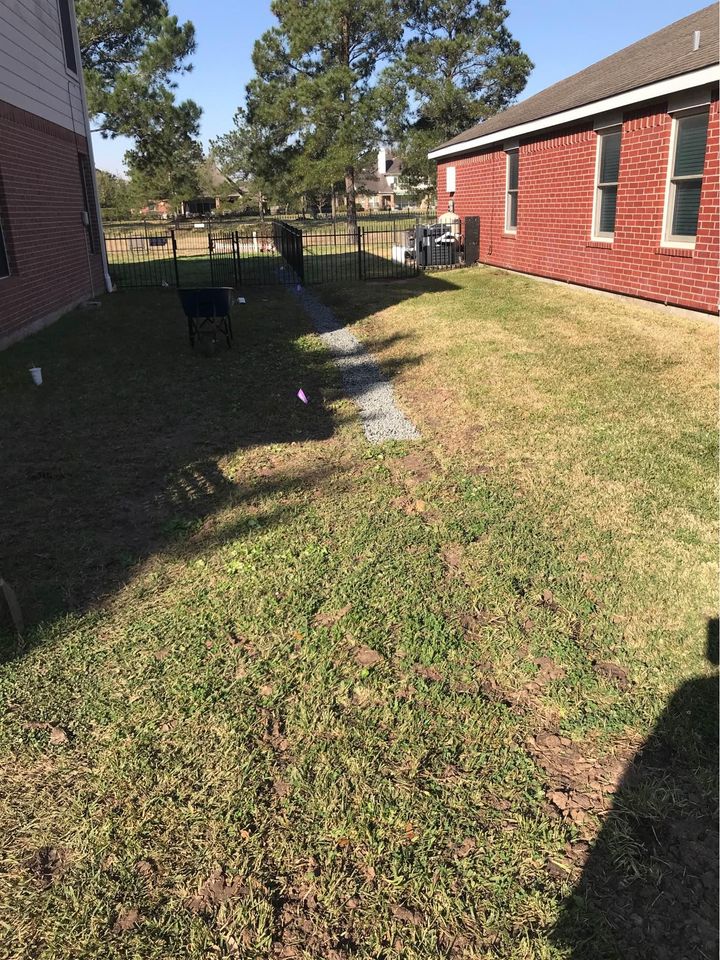
Start with the whole property
Follow the water above and below ground
A persistently wet planting bed or seepage along a slope may have several causes: rainfall, irrigation, a leaking line, or runoff from a roof or paved surface. Observing when and where the wetness appears helps a professional identify what to investigate.
A French drain is one possible part of a broader landscape drainage plan. Surface runoff often needs its own collection and routing strategy. Before disturbing a hillside, consider the slope, structures, existing drains, utilities, and where collected water can be discharged.
OE Landscape can also review related conditions such as yard drainage and runoff, downspout drainage, and French drains for persistently soggy areas.
A French drain can intercept some water moving through saturated soil and route it toward a planned outlet.
A drainage trench is not a substitute for geotechnical investigation or an engineered hillside repair.
The collection route only works when the receiving point is stable, maintainable, lawful, and appropriate for the site.
How French drains on hillsides work
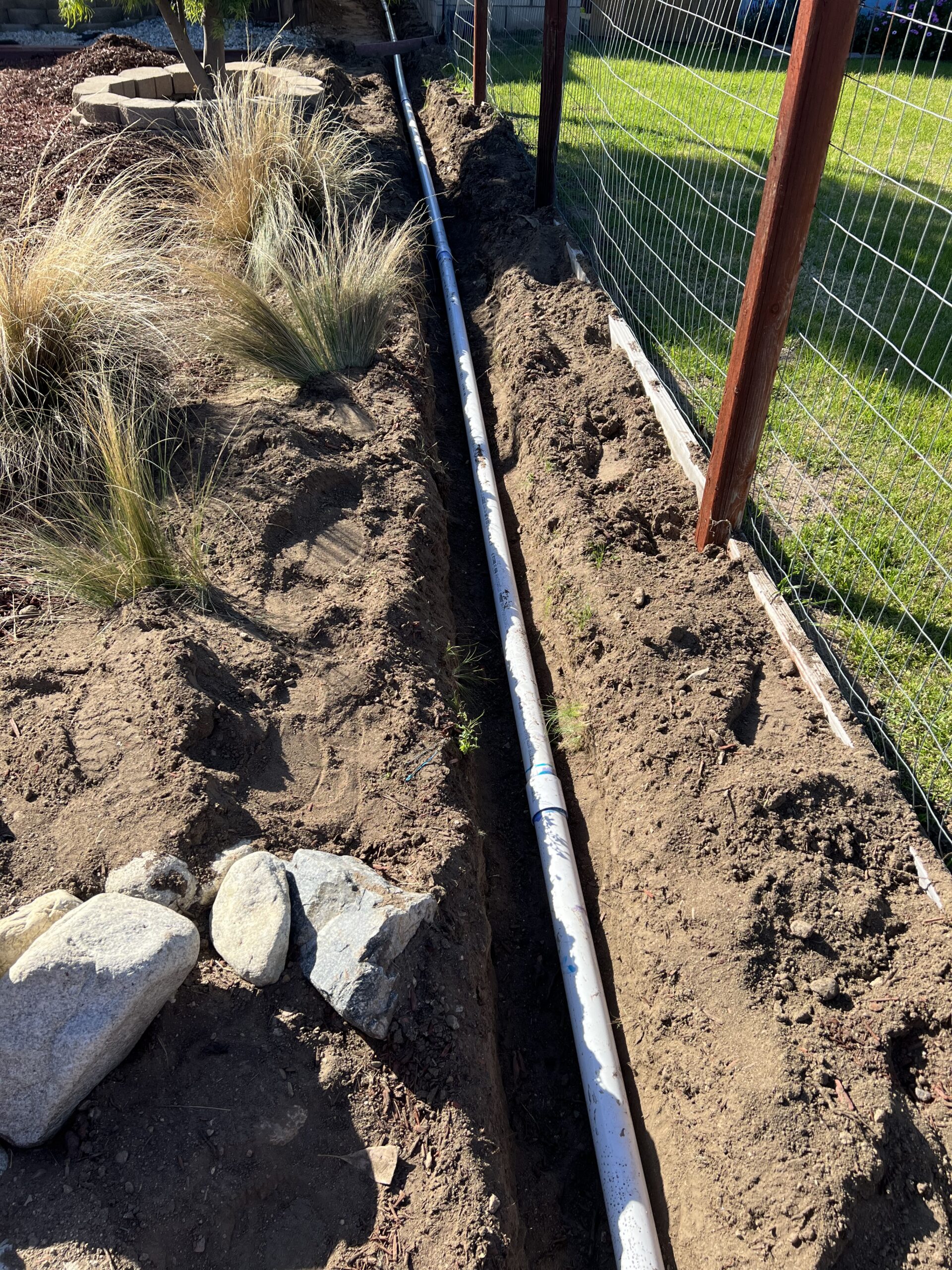
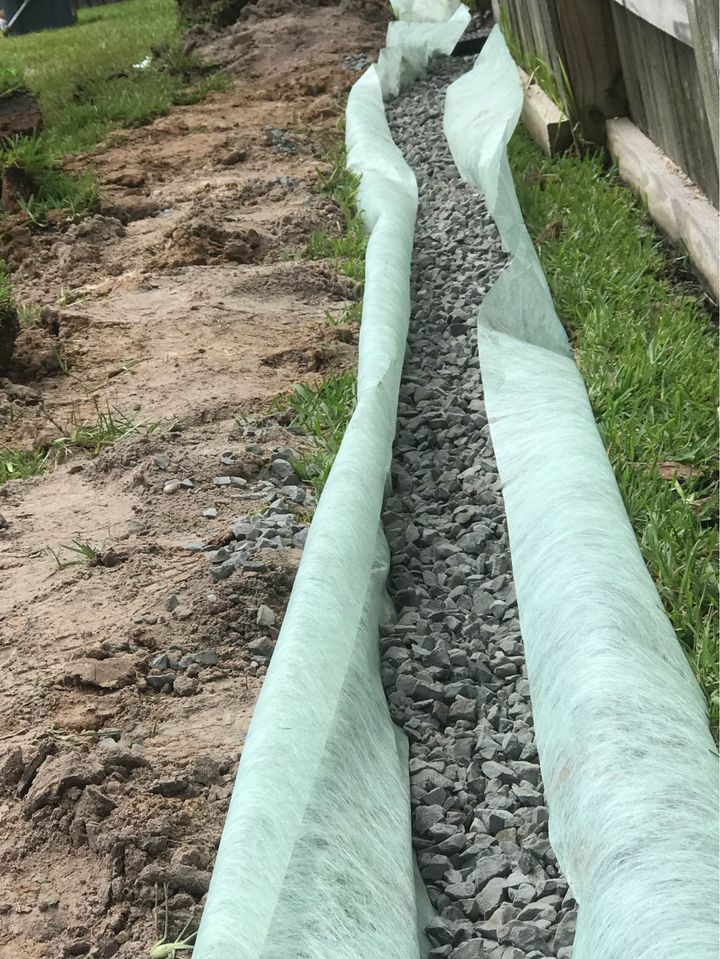
A typical French drain uses a trench containing drainage aggregate and perforated pipe to collect water moving through nearby soil. The pipe carries collected water toward an appropriate outlet; a filter system helps limit soil entering the drainage material. Details depend on the soil, water source, slope, and site design.
On a hillside, placement is especially important. A drain may intercept some water before it reaches a sensitive area, but it does not capture every underground flow path. The University of Minnesota Extension describes a French drain as one way to intercept water before it reaches a bluff; its shoreland example is not a standard design for every Southern California hillside.
Signs worth investigating before choosing a drain
Look for recurring seepage, persistently soggy soil, water collecting at a slope transition, sediment deposits, or small channels where runoff concentrates. Note whether the problem follows a storm, irrigation, or both. From a safe vantage point, photos taken before and after rain can help document the pattern.
These observations do not diagnose the cause. A blocked surface drain, a broken irrigation line, compacted soil, or water arriving from elsewhere can look similar. Avoid walking on an unstable or saturated slope to inspect it.
Plan the route and outlet before excavation
A useful site review considers topography, soil, existing drainage, utilities, walls and foundations, nearby properties, and the elevation and capacity of a receiving location. An installer should determine whether gravity drainage is feasible and whether other measures, such as surface inlets, grading, or downspout routing, are needed.
Collected water needs a lawful, stable discharge point that does not cause erosion or redirect a problem toward a neighbor, structure, or vulnerable slope. Local requirements, permits, easements, and HOA rules may apply. The Caltrans drainage guidance notes the importance of protecting outlets against erosion; its construction specifications are not a residential design recipe.
Know when a hillside needs more than a drain
A French drain is not a substitute for a slope-stability investigation or engineered repair. Excavation and added infiltration can affect a hillside; do not assume a gravel trench or dry well is safe simply because it drains. The California Governor's Office of Emergency Services recommends professional geotechnical advice where a potential landslide could endanger people.
Keep the hillside drainage system accessible and maintained
Ask for a maintenance plan and a record of the route, cleanouts, and outlet. When safe, check accessible inlets and outlets for leaves, sediment, damage, blockage, or erosion before the rainy season and after storms. Keep gutters and existing slope drains clear, and repair leaks promptly. Monterey Park's hillside protection guidance recommends watching drainage patterns and keeping slope drains clear.
If water backs up, the outlet erodes, or seepage returns, arrange an inspection. A system needs periodic care, and no installation can promise protection in every storm.
Drainage + Landscape Planning
Start with a site-specific conversation
OE Landscape evaluates drainage alongside grading, planting, hardscape, irrigation, and existing water-flow patterns. Share where water appears and what happens during rain so the team can discuss the next step and whether specialist review is appropriate.
Let's Look at the Whole Picture
Concerned about water moving through a hillside?
Tell OE Landscape where water appears, what changes after rain, and what other landscape improvements you are considering. A property-specific review is the right starting point.
CA C-27 License #1109316Bonded & InsuredServing Southern California