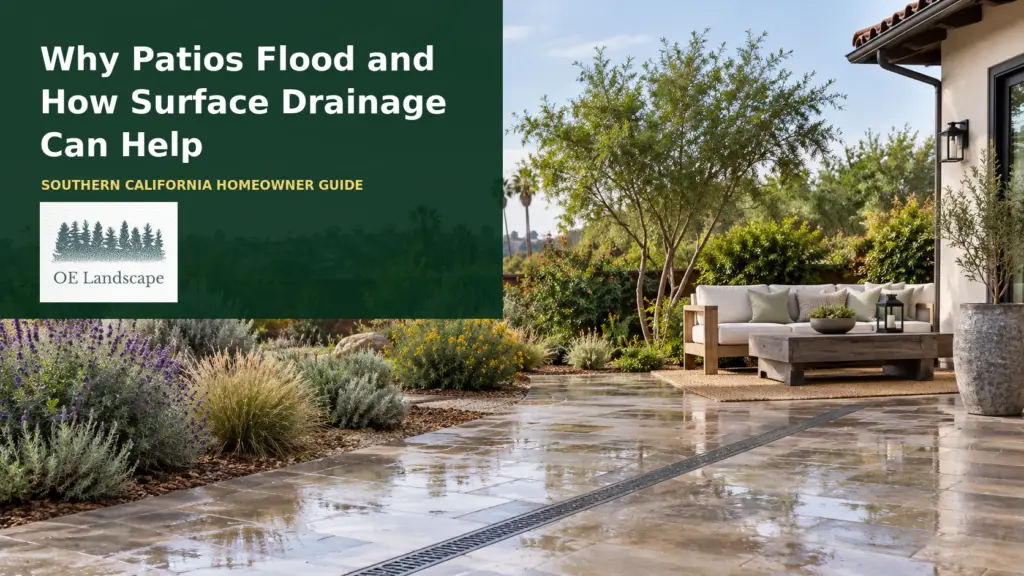

Channel Drains for Driveways, Patios, and Walkways
Learn how channel drains intercept hardscape runoff across driveways, patios, walkways, courtyards, and garage approaches—and why grading, pipe capacity, and a reliable discharge route matter just as much as the drain itself.
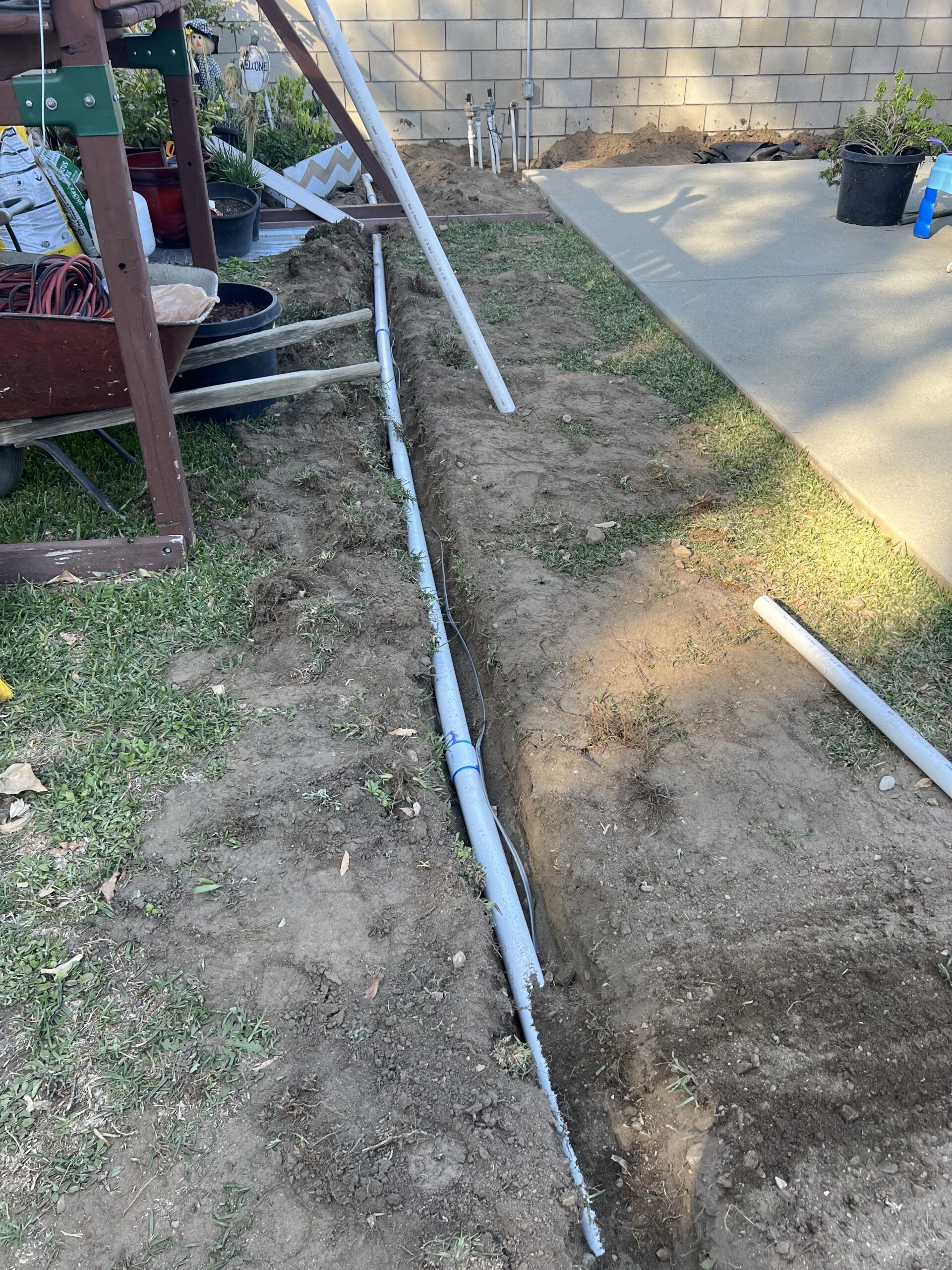
Give Hardscape Runoff a Clear Collection and Discharge Path
Water moves differently across hardscape than it does through soil.
On lawns and planting beds, at least some rainfall can soak into the ground. On concrete, pavers, patios, and driveways, water usually stays on the surface and follows the slope until it reaches a lower area.
That runoff can become a problem when it moves toward a garage, doorway, side yard, patio, or another part of the property where water begins to collect.
A channel drain can help intercept that surface runoff before it reaches the problem area.
At OE Landscape, we look at channel drains as one part of a complete drainage strategy. The drain itself is important, but so are the surrounding slope, underground pipe, discharge location, roof runoff, landscaping, and overall flow of water across the property.
For broader context on runoff from pavement and other impervious surfaces, see the U.S. EPA overview of urbanization and stormwater runoff.
What Is a Channel Drain?
A channel drain is a long, narrow drainage system designed to collect water across a wider section of a surface.
It usually consists of:
- A linear drainage channel
- A removable grate
- An outlet connection
- Underground drainage pipe
- A planned discharge route
Instead of collecting water at one small point like a catch basin, a channel drain intercepts runoff along a line.
This makes it especially useful in areas where water moves across a broad paved surface.
Why Hardscape Creates Fast-Moving Runoff
Hard surfaces do not absorb rainfall the same way soil does.
When rain falls on concrete, pavers, or other relatively impermeable surfaces, water can quickly begin moving downhill.
The larger the hardscape area, the more runoff may become concentrated toward its lower edge.
This can be especially noticeable on:
- Driveways
- Large patios
- Pool decks
- Walkways
- Courtyards
- Garage approaches
A properly located channel drain can capture that water before it travels into an area where it may cause standing water or flooding.
How Channel Drains Work
The surrounding surface is graded so water moves toward the drain.
As runoff reaches the grate, it enters the linear channel below.
The channel then directs the water toward an outlet.
From there, underground drainage pipe carries the collected runoff toward an appropriate discharge point.
The overall path may look like this:
Hardscape runoff → channel drain → underground pipe → discharge
Every part of that route needs to work correctly.
A drain that collects water but has nowhere effective to send it will not solve the larger drainage problem.
Channel Drains Are Different From Catch Basins
Channel drains and catch basins both manage surface water, but they collect it differently.
A catch basin collects water at a specific point.
A channel drain collects water across a longer line.
For example, if water gathers in one low corner of a lawn, a catch basin may make sense.
If water moves across the full width of a driveway toward a garage, a channel drain may be more effective because it can intercept runoff before it reaches the garage door.
Some properties use both types of drains in the same system.
Channel Drains for Driveways
Driveways are one of the most common places where channel drains can be useful.
A driveway may collect rainfall from a large surface area.
If it slopes toward the home or garage, that runoff can move quickly toward the building.
A channel drain installed across the driveway can create a collection line before the water reaches the garage.
This may help manage runoff from:
- The driveway itself
- Nearby walkways
- Adjacent landscaping
- Roof drainage reaching the pavement
The surrounding slope still matters.
Water needs to be directed toward the drain rather than around it.
Driveways That Slope Toward the Garage Need Special Attention
A downward-sloping driveway can create a particularly challenging drainage condition.
During heavy rain, water naturally accelerates toward the lowest point.
If that point is the garage door, runoff may collect directly against the structure.
Installing a channel drain near the garage entrance may help intercept the flow.
However, the drain must be sized and connected properly.
A narrow or undersized system may struggle if it receives runoff from a large driveway during intense rain.
The amount of water reaching the drain should influence the design.
Channel Drains for Patios
Patios should be comfortable places to gather, dine, and relax.
Standing water can quickly make those spaces less usable.
A patio may need drainage when water:
- Collects along one edge
- Moves toward sliding doors
- Flows into planting beds
- Sits between hardscape sections
- Repeatedly forms puddles after rain
A channel drain can be placed along a low edge or transition point to capture runoff.
The drain can then be integrated into the patio layout so it performs its job without becoming visually dominant.
Protecting Doorways and Sliding Doors
One of the most important areas to manage is where exterior hardscape meets a building opening.
Patios often sit close to:
- Sliding doors
- French doors
- Entry doors
- Garage doors
Water moving toward these areas should be redirected before it reaches the threshold.
A channel drain may provide a continuous collection line near the opening.
Proper grading should still direct the surface runoff toward the drain.
Drainage protection works best when the hardscape slope and drainage system support each other.
Channel Drains for Walkways
Walkways can also create concentrated runoff.
This may occur when:
- The walkway slopes toward the home
- Water flows between walls
- Adjacent planting beds drain onto the path
- The walkway sits below surrounding grades
A channel drain can sometimes be placed across the walkway or along its edge.
This can prevent water from continuing farther toward a doorway, patio, or side yard.
Because walkways are narrow, the drain should be positioned carefully so it remains comfortable to walk across and visually fits with the surrounding materials.
Side Yards Can Benefit From Linear Drainage
Side yards are often challenging because they may be narrow, flat, and surrounded by hard surfaces.
Water can become trapped between:
- The house
- Fencing
- Concrete walkways
- Neighboring grades
If the side yard is paved, runoff may travel the full length of the space before collecting at one end.
A channel drain may be useful at a transition point or low section.
Depending on the site, catch basins and underground piping may also be part of the solution.
Courtyards May Need Channel Drains
Enclosed courtyards can behave like bowls.
Walls and surrounding structures limit where water can travel.
If the surface slopes toward a low edge, a channel drain may help collect runoff along that boundary.
If the courtyard sits below the available discharge point, the system may also require a sump pump.
This is why drainage should be considered before finalizing courtyard elevations and hardscape.
Pool Deck Drainage
Pool decks need careful drainage because several types of water may be present:
- Rainfall
- Pool splash
- Cleaning water
- Adjacent landscape runoff
A channel drain can help intercept surface water along selected edges of the deck.
Placement should support safe circulation and the overall pool design.
The drainage system should also be coordinated with surrounding landscaping so water is not simply transferred from the pool deck into another problem area.
Channel Drains Can Create Clean Hardscape Transitions
One advantage of linear drains is that they can align neatly with architectural and hardscape lines.
For example, a drain may be placed:
- Along the edge of a patio
- Across a driveway
- At the base of steps
- Between paving materials
- Near a garage entrance
This can make the drainage element feel intentional.
In contemporary landscapes, the drain can often follow the same clean geometry used throughout the hardscape.
Surface Slope Is Still Essential
Installing a channel drain into a flat or incorrectly sloped surface does not guarantee that water will reach it.
The hardscape itself must direct runoff toward the grate.
Even a small elevation difference can influence where water goes.
If the drain is slightly higher than the surrounding low point, water may continue pooling beside it.
Proper installation should therefore consider:
- Existing slope
- Finished elevation
- Drain height
- Adjacent surfaces
The drain and surface should be designed as one system.
Channel Drains Need a Proper Outlet
Just like catch basins, channel drains do not make water disappear.
They collect it.
The water must then travel somewhere.
Underground drainage pipe may route the runoff toward:
- An approved drainage outlet
- Existing drainage infrastructure
- Another part of the property designed to receive it
- A sump basin when gravity is not available
The correct option depends on site conditions and applicable requirements.
The entire collection-to-discharge route should be planned before the channel drain is installed.
Gravity Drainage Is Usually Preferred
Most channel drains work through gravity.
The pipe connected to the drain slopes toward a lower outlet.
This keeps the system relatively simple because there are no moving parts.
However, some properties do not have enough elevation difference.
If the drain sits below the outlet, water cannot naturally travel uphill.
In those situations, a sump pump may be needed to complete the drainage path.
When a Sump Pump May Be Necessary
A channel drain may feed into a sump system when installed in areas such as:
- A sunken driveway
- A below-grade garage
- A recessed patio
- A low courtyard
- A yard below street elevation
Water enters the channel drain, moves toward the sump basin, and is then pumped to an appropriate discharge point.
The pump, basin, pipe, and channel drain should all be sized as parts of the same drainage system.
Channel Width and Capacity Matter
Not every channel drain has the same capacity.
The appropriate drain depends on the amount of water expected to reach it.
A small residential walkway may require much less capacity than a wide driveway receiving runoff from several surrounding areas.
Important considerations include:
- Drainage area
- Surface slope
- Rainfall intensity
- Roof runoff contributions
- Pipe size
- Outlet capacity
The collection system should be sized according to the actual site rather than chosen only by appearance.
The Grate Is More Than a Decorative Cover
The grate is the visible part of the channel drain.
Its design affects:
- Water entry
- Foot traffic
- Wheel traffic
- Debris collection
- Appearance
A driveway grate needs to support different loads than one located beside a garden walkway.
The openings also need to allow water to enter while reducing the amount of larger debris reaching the channel.
Material and grate type should fit the intended use.
Driveway Drains Need Durable Components
Channel drains installed across driveways may regularly experience vehicle traffic.
The system should therefore be suitable for the loads it will encounter.
The surrounding installation is also important.
If the drain is not supported correctly, repeated vehicle traffic can damage the channel or surrounding paving.
Drain selection should consider function first.
A visually appealing drain is not useful if it cannot handle the physical demands of the location.
Debris Can Reduce Drainage Performance
Channel drains naturally collect debris because water carries material toward them.
Common debris includes:
- Leaves
- Soil
- Mulch
- Grass clippings
- Small gravel
- Trash
If the grate becomes covered, water may begin flowing past the drain.
The inside of the channel may also accumulate sediment over time.
Routine cleaning is important for maintaining performance.
Keep Nearby Mulch and Gravel Under Control
Landscape materials can become a major source of drain blockage.
Loose mulch or gravel near a channel drain may wash onto the grate during rain.
Landscape transitions should be designed to minimize this.
Edging, grade changes, or plant placement may help keep loose material away from the drainage inlet.
Drainage design and landscape detailing should support each other.
Channel Drains Should Remain Accessible
A channel drain should be easy to inspect and clean.
Furniture, permanent structures, or landscape features should not make access difficult.
The grate should remain removable where the system requires maintenance access.
This becomes especially important on long drain runs where debris may collect within the channel.
Roof Runoff Can Increase the Load
A driveway or patio may already receive substantial rainfall.
If downspouts also release roof runoff onto the same surface, the volume can increase significantly.
This can affect the required channel drain capacity.
Whenever possible, roof runoff should be evaluated separately.
Some downspouts may be better connected directly to underground solid drainage pipe rather than releasing onto the hardscape first.
The roof and ground drainage systems should be coordinated.
Catch Basins May Be Used Downstream
A channel drain may sometimes discharge into a catch basin before the water enters a larger pipe network.
This can help connect different drainage components.
For example:
Driveway runoff → channel drain → catch basin → underground drainage pipe → outlet
The exact layout depends on the property.
The important principle is that each component should have a clear role.
French Drains Handle a Different Type of Water
French drains are often confused with channel drains, but their purposes differ.
Channel drains collect surface runoff from hardscape.
French drains primarily collect subsurface moisture moving through soil.
A property can require both.
For example, a channel drain may capture runoff from a driveway while a French drain manages saturated soil in the planting area beside it.
Using the correct system for each type of water helps create better drainage performance.
Channel Drains Can Help Reduce Patio Puddles
If a patio repeatedly develops standing water along one edge, a channel drain may help.
However, the reason for the puddle should be evaluated first.
Possible causes include:
- Poor surface slope
- Settlement
- Water entering from surrounding landscaping
- Roof runoff
- A low transition at the patio edge
In some cases, correcting the paving slope may be the best solution.
In others, adding a channel drain may provide the most practical collection point.
Drainage Should Be Planned Before New Hardscape
One of the best times to install a channel drain is during construction of the patio, driveway, or walkway.
This allows the finished elevations to be designed around the drain.
The contractor can coordinate:
- Surface slope
- Drain location
- Pipe routing
- Outlet elevation
- Surrounding landscape
Installing drainage after hardscape is finished may require cutting or removing completed surfaces.
Early planning usually creates a cleaner result.
Renovations Offer an Opportunity to Fix Existing Problems
If an older patio or driveway already has drainage issues, renovation provides an opportunity to correct them.
Rather than replacing only the visible surface, the project can address:
- Existing low spots
- Pipe routing
- Drain locations
- Roof runoff
- Adjacent grading
This can help prevent the same water problems from returning after new hardscape is installed.
Pavers Still Need Surface Drainage
Pavers may allow some water to enter joints, but that does not mean a large paved area will automatically handle all rainfall.
Runoff can still move across the surface.
A channel drain may be useful at the low edge of a paver patio or driveway.
The base below the pavers should also be constructed appropriately.
Surface drainage and base preparation work together.
Artificial Turf Next to Hardscape Needs Coordination
When artificial turf meets a patio or walkway, water from the hardscape may flow toward the turf.
If the turf area already sits low, this can create drainage problems.
A channel drain at the transition may sometimes help intercept the runoff before it enters the turf area.
Catch basins or subsurface drainage may also be required depending on the site.
The transition between materials should be considered during planning.
Landscape Beds Can Receive Too Much Hardscape Runoff
It is common to slope patios toward planting beds.
This can work when the bed has sufficient capacity to manage the runoff.
But a small planting area may become overwhelmed by water from a large patio.
Symptoms may include:
- Saturated soil
- Mulch washout
- Plant stress
- Overflow into nearby areas
A channel drain can collect the runoff before it reaches the planting bed.
This may help prevent one part of the landscape from becoming the drainage destination for the entire hardscape area.
Watch for Runoff at Steps
Steps can concentrate water.
Runoff may flow down a stairway and collect at the lower landing.
A channel drain installed near the base may help intercept the water.
The surrounding surface should be graded carefully so the drain captures runoff without creating a trip hazard.
Lighting and circulation should also be considered when integrating drainage around steps.
Drainage Around Outdoor Kitchens
Outdoor kitchens often sit on large patio surfaces.
Standing water around cabinets, appliances, or seating areas can be especially inconvenient.
Drainage planning should consider:
- Patio slope
- Roof or pergola runoff
- Nearby planting
- Low sections around the kitchen
A channel drain can sometimes create a defined drainage boundary around the space.
It should be positioned so it does not interfere with circulation.
Fire Pit Areas Need Drainage Too
A sunken or recessed fire pit area may act as a low point.
Rainwater can collect there quickly.
If the space sits below the surrounding yard, channel drains or area drains may be needed.
When gravity drainage is unavailable, the collection system may need to connect to a sump pump.
Fire features and seating areas should be designed with drainage from the beginning.
Use Channel Drains to Protect Landscape Transitions
Water problems often occur where one surface changes to another.
Examples include:
- Driveway to garage
- Patio to lawn
- Walkway to side yard
- Pool deck to planting
- Steps to landing
These areas can become natural collection lines.
A channel drain can create a controlled transition by intercepting water before it enters the next area.
This can make the overall landscape drainage more predictable.
Poorly Positioned Drains Can Be Ineffective
A channel drain installed in the wrong location may collect little water.
Common problems include:
- Drain placed uphill from the actual low point
- Hardscape sloping away from the drain
- Water bypassing the ends
- Drain not extending far enough across the flow path
- Outlet pipe too small
The best location is determined by the actual movement of water.
Watching runoff during rain can help identify the correct collection line.
Observe the Property During Rain
Rainfall provides valuable information.
Watch how water behaves on driveways, patios, and walkways.
Look for:
- Where runoff begins
- Which direction it moves
- Where separate flows combine
- Whether water approaches doors
- Where puddles form
- Whether existing drains are bypassed
Photos and videos can help document these conditions.
This can make drainage planning much more accurate than relying only on dry-weather observations.
Look for Water Stains and Debris Lines
Even when it is not raining, hardscape often provides evidence of runoff patterns.
Look for:
- Dirt lines
- Water staining
- Debris gathered along edges
- Moss or algae in persistently wet areas
- Gravel deposited on pavement
These clues can show where water repeatedly travels.
A channel drain is most effective when placed across that natural flow path.
Channel Drains Need Maintenance
Like other drainage systems, channel drains require periodic care.
Maintenance may include:
- Removing leaves from the grate
- Cleaning sediment from the channel
- Checking outlets
- Inspecting connected piping
- Clearing surrounding debris
It is especially useful to inspect the system before rainy periods.
Small maintenance tasks can help prevent larger drainage failures during storms.
Common Channel Drain Problems
A channel drain may underperform when:
- The grate is clogged
- The pipe is blocked
- The drain is too small
- The hardscape slopes the wrong way
- The outlet is inadequate
- The drain was installed too high
- Too much roof runoff reaches the same system
The presence of a drain does not guarantee good drainage.
The full system still needs to be designed correctly.
Avoid Sending Water to the Wrong Place
Capturing runoff is only useful if the discharge plan is appropriate.
Water should not simply be redirected toward:
- The foundation
- A neighboring property
- Another low point
- An unstable slope
The destination is just as important as the collection point.
A drainage project should follow the entire water path before construction begins.
Channel Drains Can Be Visually Subtle
Drainage infrastructure does not need to dominate the design.
Modern channel drains can often integrate neatly into hardscape.
The grate may align with:
- Paver joints
- Concrete edges
- Architectural lines
- Patio transitions
This makes the drainage system appear intentional rather than added as an afterthought.
Function and design can work together.
A Good Drainage System Uses the Right Tool in the Right Place
Not every drainage problem requires a channel drain.
Depending on the property, the better solution may be:
- A catch basin
- French drain
- Regrading
- Gutter connection
- Sump pump
- Combination of systems
Channel drains are particularly useful where water moves across a wide hard surface.
The solution should always match the behavior of the water.
Protect Hardscape by Planning Drainage Early
Driveways, patios, and walkways represent significant investments.
Drainage should be considered part of protecting those improvements.
Before new hardscape is installed, determine:
- Where rainfall will travel
- Where roof runoff will enter
- Which areas are lowest
- Whether gravity drainage is available
- Where collected water can discharge
Planning these details early can reduce future modifications and help the finished landscape function more effectively.
Build a Complete Hardscape Drainage Strategy
A properly designed channel drain can help keep surface runoff from reaching garages, doors, patios, planting beds, and other sensitive areas.
But the drain itself is only one part of the solution.
Good performance depends on:
- Correct surface grading
- Proper drain placement
- Adequate drain capacity
- Correctly sized underground pipe
- Reliable discharge
- Regular maintenance
At OE Landscape, we help Southern California homeowners address drainage challenges through channel drains, yard drains, catch basins, French drains, sump pumps, grading, gutter and downspout drainage, erosion-control solutions, irrigation improvements, and complete landscape renovations.
By giving hardscape runoff a controlled path, driveways, patios, and walkways can remain more functional during wet weather while fitting naturally into the overall landscape.
OE Landscape – CA C-27 License #1109316 | Bonded & Insured
Concerned about water flowing across your driveway, patio, or walkway? Contact OE Landscape to discuss drainage solutions designed around your hardscape, grading, landscape, and overall water-flow conditions.
Plan the Surface Slope, Drain Location, Pipe Route, and Outlet Together
Channel drains work best when they are coordinated with the entire site. OE Landscape can plan drainage alongside driveways, patios, walkways, grading, catch basins, French drains, sump systems, irrigation, artificial turf, planting, and broader landscape improvements.
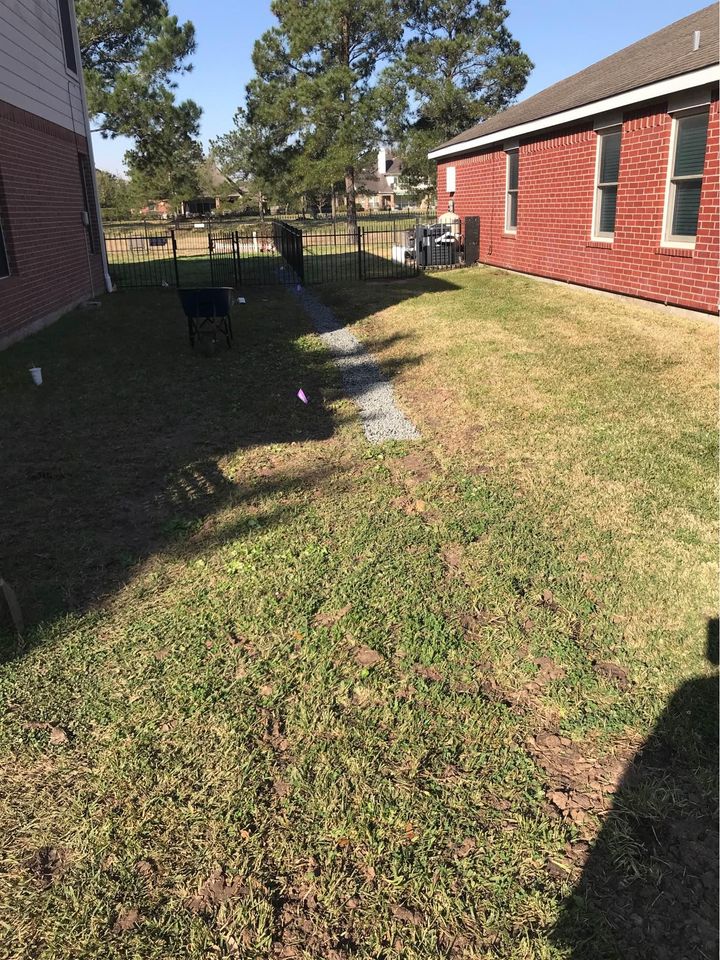
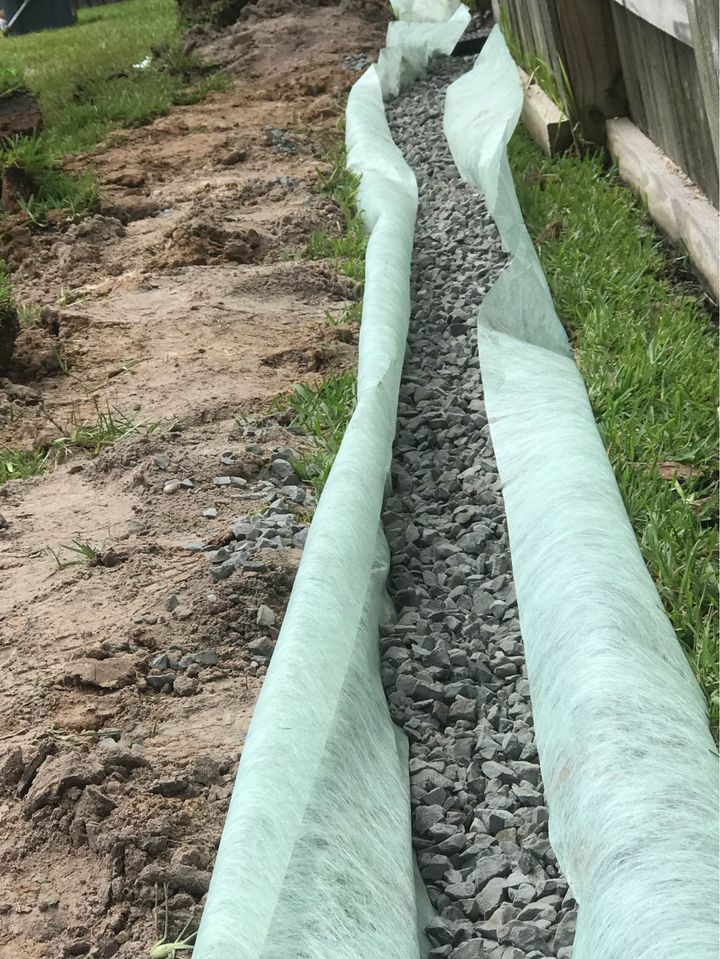
Give Hardscape Runoff a Controlled Path Before It Reaches the Problem Area.
Tell OE Landscape where water travels during rain, where it collects, and which hardscape surfaces are involved. We can review grading, collection points, underground piping, and practical drainage options for the property.