
How French Drains Help Protect Your Yard From Excess Groundwater
French drains can intercept shallow subsurface water before it keeps lawns, planting areas, and side yards saturated. The key is matching the system to the actual source and giving the collected water a responsible outlet.
French drains start with the right diagnosis
A yard can stay wet even when there is no obvious puddle on the surface. Water may be moving sideways through the soil, collecting above a dense layer, seeping from an uphill area, or repeatedly saturating the same strip of lawn after rain. When the problem is subsurface water, a properly planned French drain can intercept that flow and carry it toward an appropriate outlet before it keeps the landscape saturated.
A French drain is not a universal fix for every drainage problem. Surface runoff, roof discharge, isolated low spots, irrigation leaks, and water trapped with no gravity outlet may need different solutions. The useful question is not simply whether the yard is wet. It is where the water comes from, how it moves, and where it can be managed responsibly.
OE Landscape provides yard and landscape drainage services coordinated with grading, hardscape, planting, turf, and irrigation conditions.
1. What Excess Groundwater Looks Like in a Residential Yard
In a landscape, homeowners often use the term groundwater for any moisture that seems to rise from below. Sometimes that is shallow groundwater. In other cases, rain or irrigation infiltrates until it meets compacted soil, clay, bedrock, or another slow-draining layer, then moves laterally through the upper soil profile. This perched or subsurface flow can create a consistently wet band even after visible surface water is gone.
The source matters. A broken irrigation line can mimic a groundwater problem. A downspout can overload one planting bed. A neighbor's higher grade, a hillside seep, or water moving along a retaining condition can create repeated saturation. Diagnosis should begin with observation during and after rain, an irrigation check, and a review of surrounding elevations.
- A soggy strip that follows a slope or contour
- Water seeping from a bank, planter, or uphill edge
- Soil that stays wet well after nearby areas dry
- Recurring soft ground beside a wall, walkway, or lawn edge
- Plant decline or unusable turf in the same wet zone
2. How French Drains Collect Subsurface Water
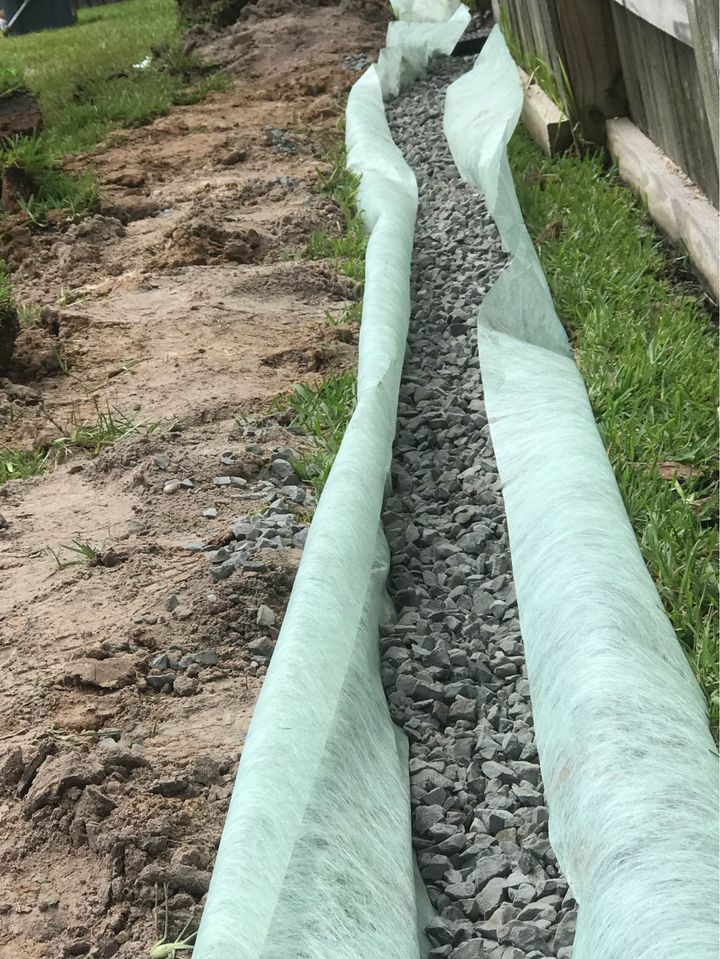
A typical French drain uses a narrow trench containing free-draining rock and perforated pipe, with filter fabric or another appropriate separator to help keep surrounding soil from migrating into the drainage path. Water in the soil moves toward the lower-resistance gravel zone, enters the pipe, and travels along the designed route.
University of Minnesota Extension describes a French drain as a gravel- or sand-filled trench with perforated pipe that can intercept surface water and some groundwater before it reaches a vulnerable area. The pipe is only part of the system. Trench position, depth, grade, filter material, pipe configuration, and the outlet all determine whether the installation performs as intended.
Once water has been collected, it still needs somewhere suitable to go. A French drain that ends in saturated soil, rises uphill, or discharges where water causes another problem is not a complete drainage plan.
3. What a French Drain Can Help Protect
By intercepting subsurface water, a French drain can reduce how long certain landscape areas remain saturated. That may improve the usability of lawns and side yards, reduce persistent mud, protect planting zones from prolonged wet conditions, and limit water movement toward hardscape edges or other sensitive areas.
On sloped properties, subsurface water can also contribute to erosion or unstable wet soil. A drain may create a controlled path for water that cannot simply be diverted at the surface. However, hillside, retaining-wall, foundation, or structural-water conditions can be complex and may require engineering, waterproofing, or specialized drainage beyond ordinary landscape work.
No landscape drainage system can guarantee that a property will never flood or experience water intrusion. A French drain should be designed for the identified water source and ordinary project conditions, with overflow and extreme-storm behavior considered as part of the review.
4. Signs a French Drain May Be the Right Solution
A French drain becomes a strong candidate when the problem follows a subsurface path rather than collecting only at a surface low point. The wet area may appear along the base of a slope, across an uphill boundary, or in a narrow corridor where water is moving through soil toward the yard.
The pattern should repeat under similar conditions. One puddle during an unusually intense storm does not prove that a French drain is needed. Document when the area becomes wet, how long it remains wet, and whether irrigation, downspouts, or nearby paving contribute. Photos during and after rain can be valuable during a professional site review.
- The wet zone has a clear uphill or lateral source.
- Water continues seeping after surface runoff has stopped.
- The problem is elongated rather than confined to one small depression.
- A workable route and lawful outlet can be established.
- Leaks, over-irrigation, and simple surface grading issues have been ruled out.
5. When Another Drainage Method Fits Better
French drains collect water from within the soil. They are usually not the first choice for every visible puddle. A catch basin or area drain can collect surface water at a low point. A channel drain can intercept runoff across a patio, gate, or driveway. Grading can move sheet flow toward a safe collection point, and downspout routing can keep roof water from overloading a planting bed.
A sump pump may be needed when water collects below the available gravity outlet. A dry well or infiltration feature depends on soil, setbacks, groundwater separation, and local rules. If the soil cannot accept more water, an infiltration-only solution may simply move saturation to a new location.
- Surface puddle at one low point: consider grading or an area drain.
- Runoff crossing pavement: consider a channel drain.
- Roof water causing the problem: correct downspout routing first.
- No gravity discharge route: evaluate a sump or engineered alternative.
- Water near a foundation or retaining structure: obtain the appropriate specialized review.
6. Why the Outlet Is as Important as the Trench
A French drain does not make water disappear. It changes the path and timing of that water. The outlet must be evaluated for elevation, erosion, property boundaries, public drainage rules, and the capacity of the receiving area or system.
Depending on the property and local requirements, collected water may discharge through solid pipe to a safe daylight location, an approved drainage connection, or a properly designed infiltration feature. It should not be sent onto a neighboring property or released where it creates a sidewalk, slope, erosion, or foundation problem.
The U.S. EPA notes that redirecting water is not appropriate in every location and recommends considering local regulations and the destination of the water to avoid property damage or unsafe conditions. That principle applies to any residential drainage route.
7. Site Conditions That Shape the Design
There is no standard trench that fits every yard. Soil texture, the elevation of the wet layer, available fall, trees and roots, utility locations, hardscape, access, and the distance to an acceptable outlet all affect the plan. A deeper drain may intercept more subsurface flow in some settings, but greater depth can also introduce excavation, utility, shoring, or geotechnical concerns.
Before digging, utilities must be located and the project should be checked against city, HOA, easement, and permit requirements. On hillside or structurally sensitive sites, the correct next step may be a civil, geotechnical, or waterproofing professional rather than a standard landscape drainage installation.
- Source and direction of water movement
- Soil and infiltration behavior
- Topography and available gravity fall
- Safe, legal outlet or storage capacity
- Utilities, roots, structures, and access
- Maintenance access and overflow behavior
8. Maintenance Keeps the Drainage Path Working
Even a buried system needs periodic attention. Keep visible outlets clear, watch for erosion or unexpected wetness, and check accessible cleanouts or inlets after significant storms. Sediment, roots, crushed pipe, outlet blockage, and landscape changes can reduce performance over time.
If the original wet pattern returns, do not assume the pipe alone is clogged. The water source may have changed, an irrigation leak may have developed, or new hardscape and grading may be sending additional water into the area. Re-evaluate the whole drainage path from source to outlet.
A French drain works only as part of a complete drainage path
French drains can be an effective way to intercept shallow subsurface flow and protect lawns, planting areas, side yards, and hardscape edges from repeated saturation. Success depends on diagnosing the source correctly, placing the collection trench in the path of the water, and providing a responsible outlet.
OE Landscape evaluates drainage as part of the complete outdoor system. For Southern California properties, that may mean a French drain, catch basin, channel drain, grading adjustment, downspout route, or a coordinated combination based on how water actually moves through the site.
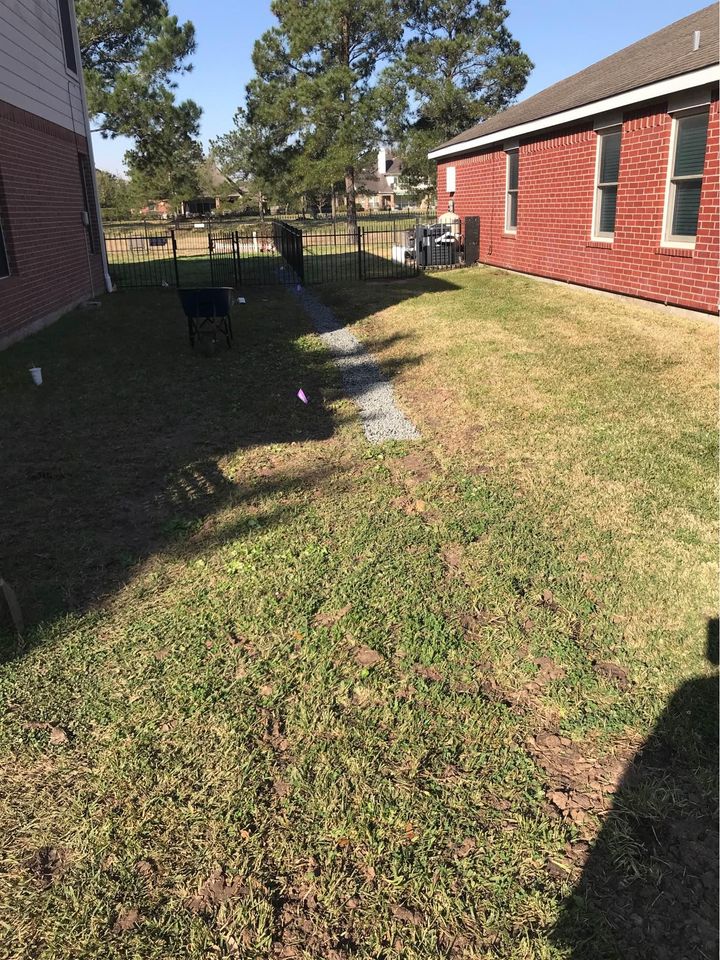
See French drain installation work in progress
Installation photos help show how trenching, pipe, drainage rock, and surrounding landscape conditions come together. Review real OE Landscape drainage documentation, then request a site-specific evaluation for your property.