
French Drain Placement: Where Underground Drainage Works Best
French drain placement works best where the trench can intercept water moving through saturated soil and carry it along a continuous route to an appropriate outlet. The right line follows the water problem, not simply the edge of the yard.
Start With the Water Path
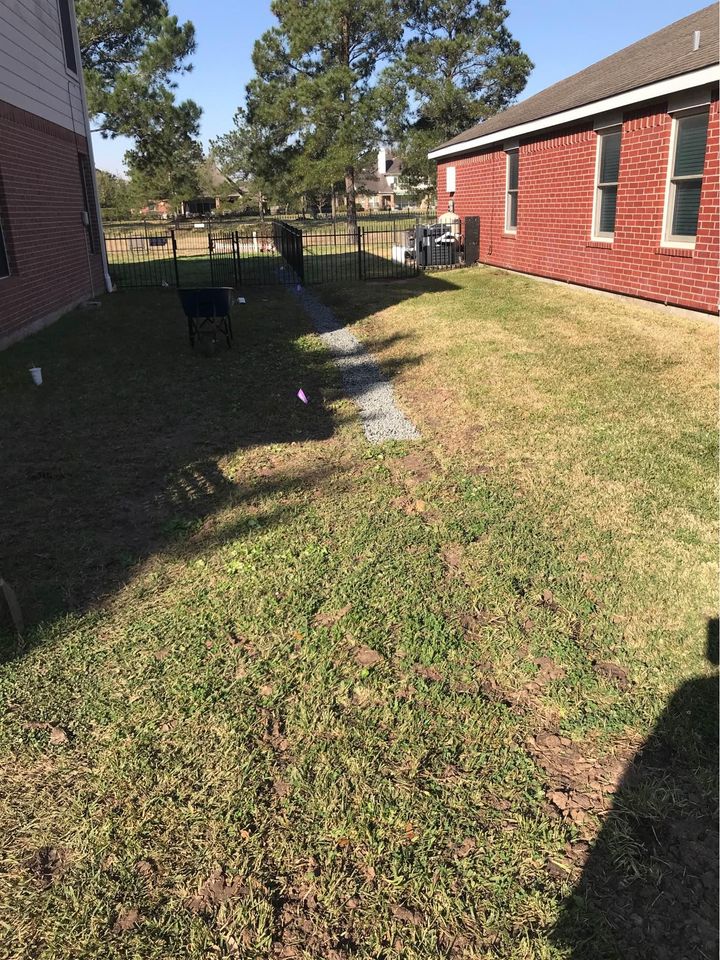
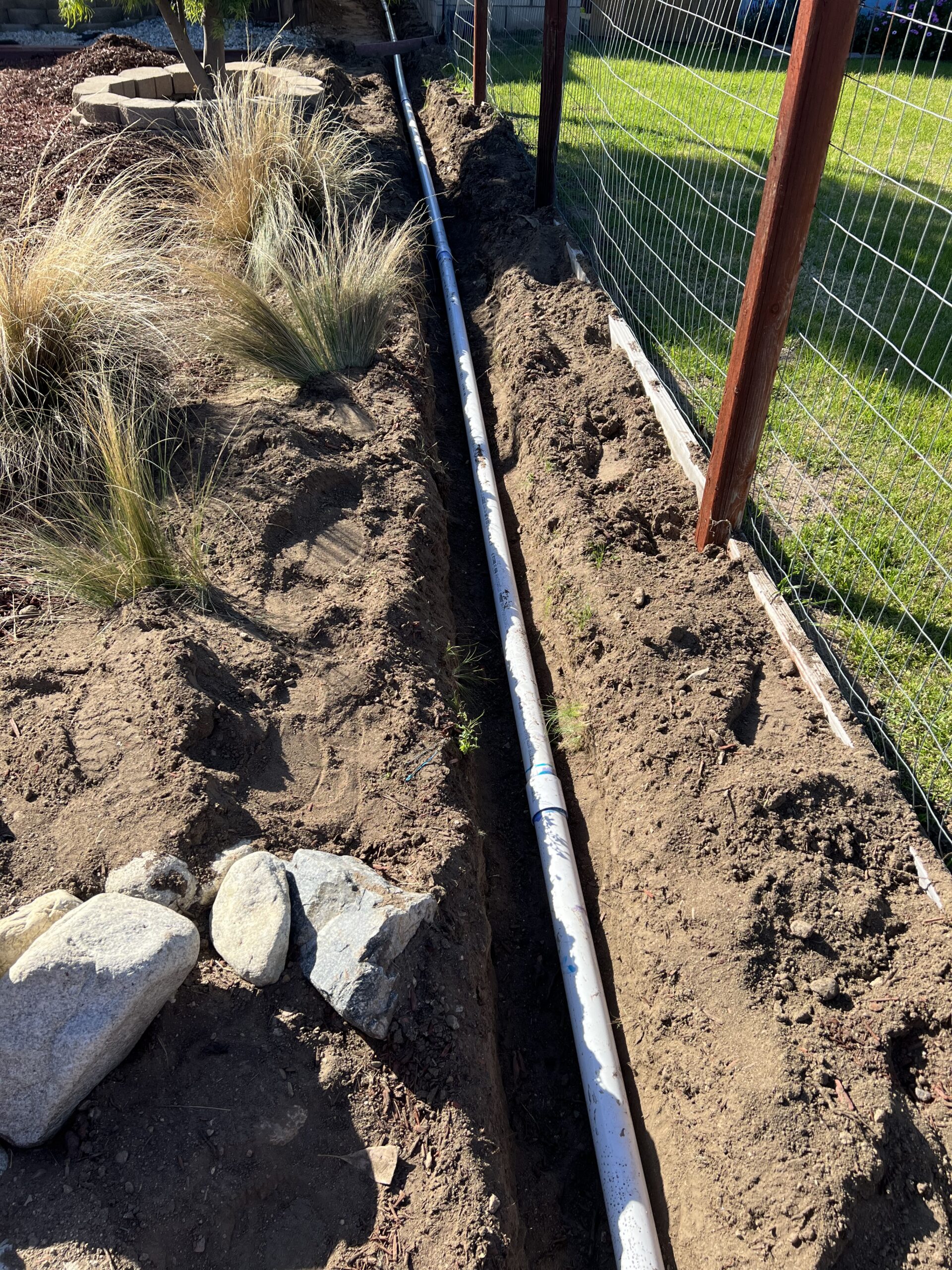
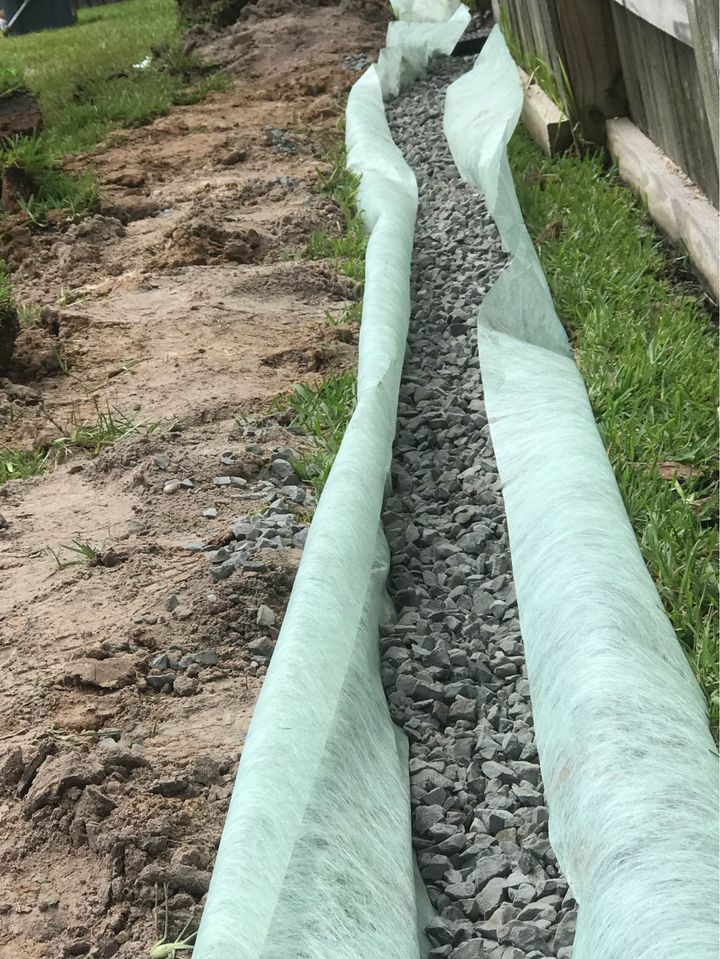
A French drain is a subsurface drainage path, usually built with perforated pipe and free-draining rock. It is useful when water is moving through soil or repeatedly saturating a landscape area. It is not automatically the best answer for every puddle, downspout, patio, or foundation concern.
Good placement identifies where the water enters the problem area, intercepts it before it spreads, and provides a route that can actually drain. Soil, grade, pipe capacity, and outlet conditions all affect performance. The University of Minnesota Extension likewise identifies depth, grade, pipe size, and layout as critical subsurface-drain design factors.
For Southern California homeowners, the practical first step is a whole-site review. OE Landscape evaluates drainage options alongside grading, hardscape, planting, irrigation, and other landscape work so the solution fits the property rather than treating one wet spot in isolation.
Every French Drain Needs a Source and an Outlet
The visible puddle is often only the final stop. Before choosing a trench line, determine whether the water comes from an uphill landscape, irrigation, a downspout, hardscape runoff, a neighbor's elevation, or slow-moving water within the soil. Observe the yard during rain if it is safe to do so, and compare that pattern with what happens during irrigation.
Next, identify where collected water can go. A French drain does not make water disappear; it relocates it. The route needs enough elevation change or another designed means of conveyance, adequate capacity, and a discharge point that does not create erosion, send water toward a structure, cross a property line improperly, or conflict with local requirements.
Where French Drain Placement Usually Works Best
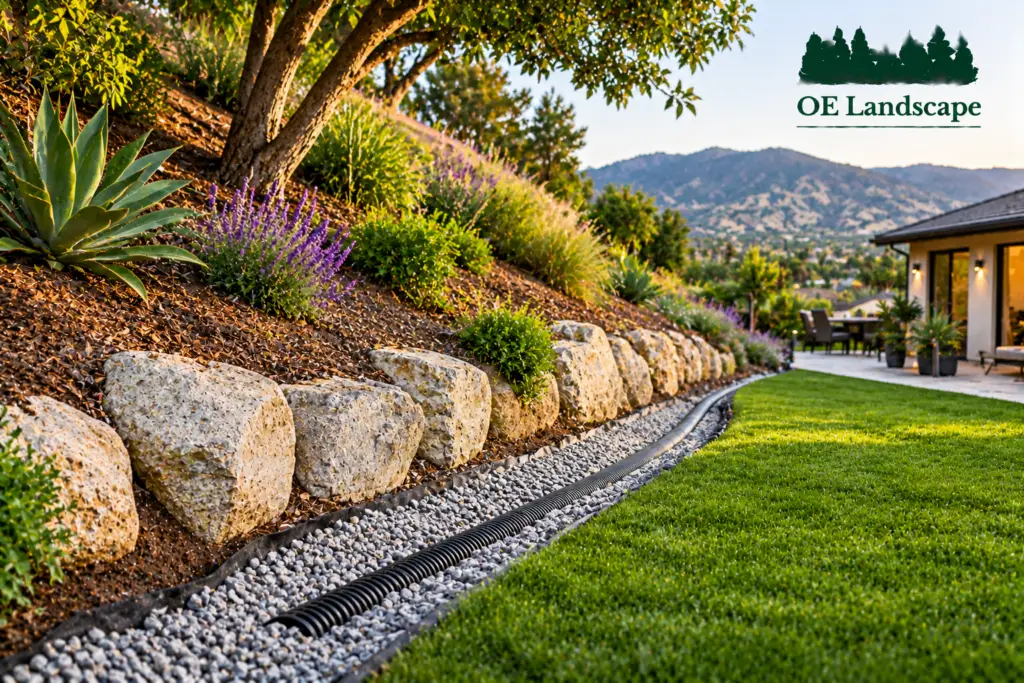
The strongest placements intercept water before it reaches the area you want to protect. On a sloped yard, that may mean a line across or along the upslope edge of a soggy lawn or planting bed. In a narrow side yard, it may mean a route through the repeatedly saturated soil between the water source and the house or walkway, provided the excavation and outlet are appropriate.
At the uphill edge of a wet zone
When subsurface water moves downslope, placing the drain above the soggy area can collect it before it spreads. The exact alignment should respond to contours and soil conditions. A drain at the lowest visible point may be too late if the goal is to keep a larger area from becoming saturated.
Along a persistently wet lawn or planting bed
A French drain can work beside or through soil that stays wet after normal irrigation or rain, especially when the problem extends along a line rather than forming one isolated surface puddle. The trench should intersect the wet soil and continue toward a workable outlet.
Beside a hardscape edge when the water is in the soil
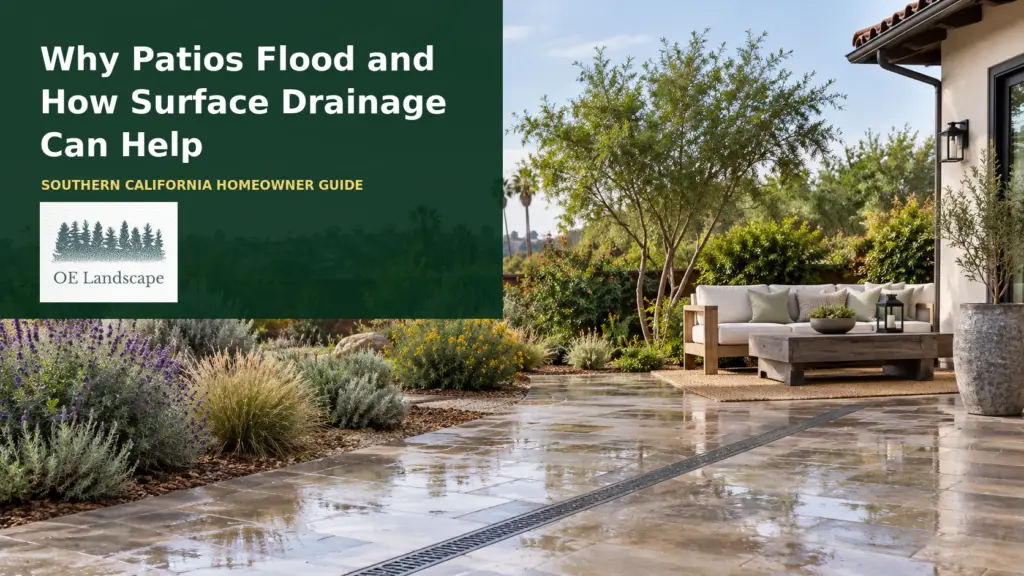
If water seeps from a planting bed toward a patio or walkway, a subsurface drain near the landscape side of that transition may be useful. If water is flowing across the pavement itself, a channel drain or surface grading is often more direct.
Above a slope or grade transition with professional review
Intercepting water before it reaches a slope can reduce saturation in some settings, but hillside drainage is sensitive. The outlet must not erode the slope or concentrate water at an unstable location. Steep, fire-affected, retaining-wall, or visibly moving slopes require qualified site-specific review.
When a French Drain Is Not the Best First Choice
Choosing the right drain type is as important as choosing the line. A French drain collects water through rock and perforations over part of its length. Other components are better at capturing water that is already concentrated on the surface.
Foundation moisture deserves special care. University of Minnesota Extension advises correcting grading, gutters, and downspouts before adding below-grade drainage because source control may solve or reduce the problem. A landscape French drain is not a substitute for foundation waterproofing, footing drains, or repairs when water is entering the structure.
Downspouts also should not simply dump large roof flows into a perforated French drain without a design that accounts for capacity and routing. A solid conveyance line keeps concentrated roof water contained until it reaches the intended destination.
Five Site Factors That Control the Trench Line
1. Elevations and grade
The entire route must be checked, including crossings below gates, paths, utilities, and existing drains. Guessing from the surface can miss a high point that traps water or forces the outlet too deep.
2. Soil and infiltration
Sand, loam, compacted fill, and clay move water differently. USDA guidance notes that infiltration depends on soil texture and structure. Soil also affects how quickly water reaches the trench and whether an aggregate or geotextile envelope should be specified.
3. Flow volume and pipe capacity
Pipe size, material, slope, and the contributing drainage area affect capacity. A line that handles irrigation seepage may not be sized for concentrated roof or hardscape runoff. Product specifications and site calculations should guide final dimensions.
4. Utilities, roots, and access
Excavation must account for buried utilities, irrigation lines, tree roots, footings, walls, and construction access. California excavators must contact DigAlert before digging; a ticket does not replace careful field verification of private lines and site features.
5. Discharge rules and neighboring property
Storm drains lead to waterways rather than wastewater treatment. California Water Boards warns that runoff can carry pollutants directly to lakes, rivers, or the ocean. Confirm local city, county, HOA, and property requirements before choosing a discharge point, and avoid creating a new problem downstream.
Details That Help Underground Yard Drainage Keep Working
Placement is only part of the system. A typical French drain also depends on a properly selected perforated pipe, clean drainage aggregate, a trench and envelope suited to the soil, consistent elevations, secure connections, and an outlet that remains accessible.
Filter fabric or a pipe envelope should be chosen for the soil and the intended hydraulic function, not added as a universal cure. The University of Minnesota Extension notes that envelope needs vary by soil texture and that professional judgment can be appropriate where soil movement is difficult to predict.
After installation, inspect the outlet and nearby ground during the first meaningful rain. Remove leaves, sediment, roots, or landscape material that blocks the discharge. If wet conditions return, reassess the water source rather than assuming the pipe alone has failed.
A Better Homeowner Plan for French Drain Placement
Before requesting an estimate, take photos of the wet area, the uphill and downhill sides of the yard, roof downspouts, nearby hardscape, and any existing drain outlets. Note how long water remains after rain or irrigation, whether the condition is seasonal, and whether it threatens a building, wall, slope, or neighboring property.
Those details help a drainage contractor compare French drains with grading, catch basins, channel drains, downspout routing, or a combined approach. They also help coordinate drainage with a broader landscape design, patio, turf, irrigation, or planting project before finished surfaces make the route harder to reach.
OE Landscape provides site-specific drainage planning for Southern California properties. Start with the free landscape estimate page and include photos or notes about where water begins, where it collects, and what happens after the storm ends.
Put the Drain Where the Water Can Be Managed
OE Landscape reviews the source, low points, grade, hardscape edges, irrigation, soil, routing, and outlet before recommending a French drain or another drainage component. The goal is a practical system that fits the property and coordinates with the surrounding landscape.
Plan the Drainage Line Before You Open the Trench
Tell OE Landscape where water starts, where it collects, and what sits downstream. A site review can determine whether French drain placement, grading, a surface drain, or a coordinated system best fits the property.