
Southern California yard drainage
How to Choose the Right Yard Drain for Low Spots and Lawn Areas
For visible rainwater pooling at a lawn low point, start by evaluating a grated area drain or catch basin. Choose a French drain when the problem is subsurface saturation, and confirm grading, pipe route, outlet, and local requirements before installation.
Answer first
Choose the drain by how the water behaves.
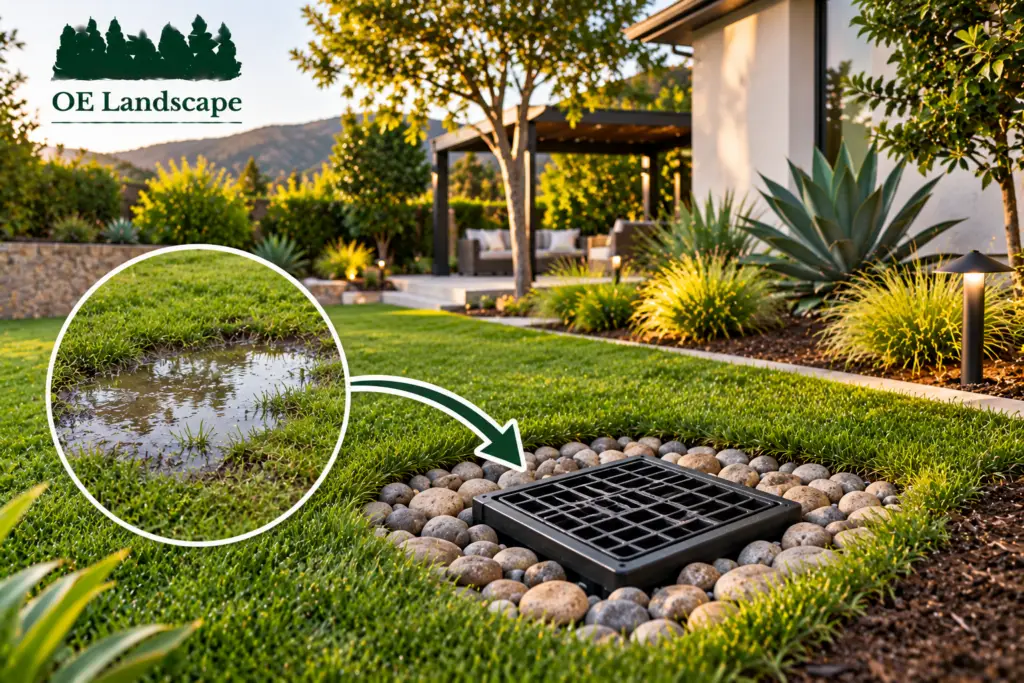
For a lawn low spot that collects visible rainwater, a grated area drain or catch basin is usually the first option to evaluate. If the soil stays saturated below the surface, a French drain may be more appropriate. The right choice still depends on grading, water source, pipe route, outlet, soil, and local discharge requirements.
That distinction matters because a drain is not a standalone fix. A grate placed in the wrong elevation, connected to a flat pipe, or routed to an unacceptable outlet can leave the original puddle in place or move the problem somewhere else.
OE Landscape plans drainage in the context of the whole yard, including lawn contours, hardscape, irrigation, downspouts, planting, and future maintenance. The guide below helps Southern California homeowners understand which collection method fits which symptom and what to verify before installation.
Review OE Landscape's drainage services or see how drainage can be coordinated with a complete landscape design.
Start With the Water, Not the Drain
The best yard drain for a low spot depends on how the water reaches that spot. A puddle that forms only during a hard rain is a surface-runoff problem. Grass that stays soft and saturated for days may point to slow-draining soil, a subsurface flow problem, or an irrigation leak. A basin can collect surface water efficiently, but it cannot fix every cause of wet soil.
Watch the area during rain if it is safe to do so. Note where water enters, how wide the ponded area becomes, whether nearby downspouts add flow, and how long the lawn stays wet after the rain stops. Repeat the observation during a normal irrigation cycle. Photos, simple depth marks, and a sketch of the slope are more useful than guessing from a dry yard.
Also check whether a patio, walkway, wall, or recent landscape change has redirected runoff. OE Landscape evaluates these relationships as part of its site-specific drainage planning because lawns, hardscape, grading, downspouts, and irrigation operate as one system.
- Surface water arrives quickly and visibly during rain: begin by evaluating an area drain or catch basin.
- Soil remains wet even without visible runoff: investigate irrigation, compaction, and subsurface drainage.
- Water travels along a patio or driveway edge: evaluate a linear channel drain and the surrounding slope.
- Water moves toward a structure or across a property line: obtain a site-specific professional review.
Match the Drain Type to the Problem
For a defined lawn low point where rainwater collects on the surface, a grated area drain or catch basin is often the most direct collection point. The surrounding grade should guide water toward the grate, and the connected solid pipe must carry it to an approved destination. A catch basin with a sump or debris basket can also make sediment and leaves easier to remove before they enter the pipe.
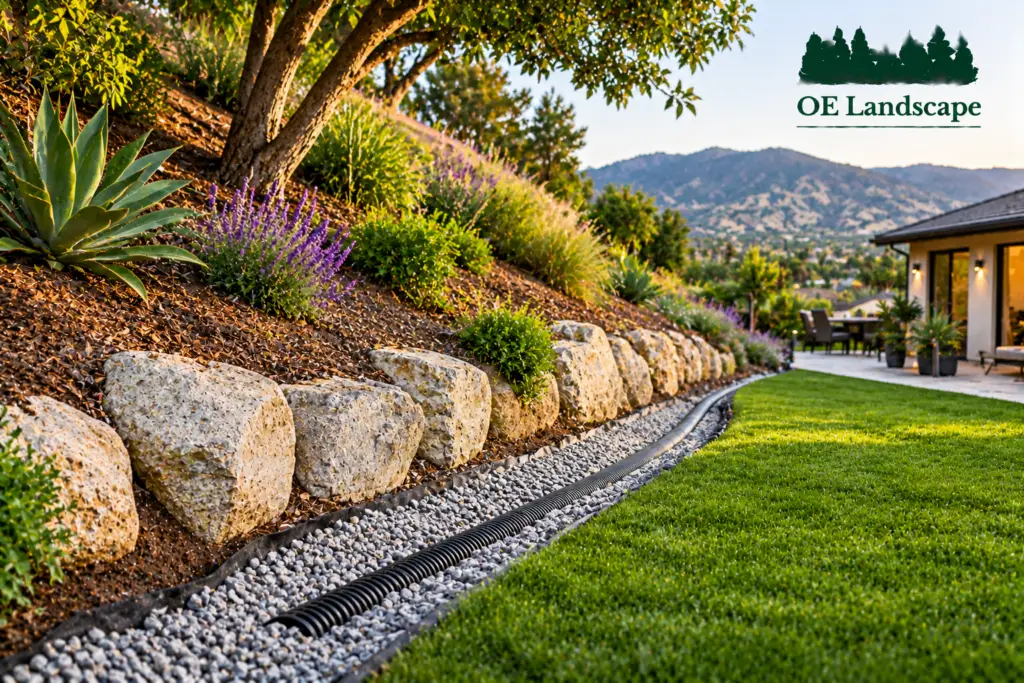
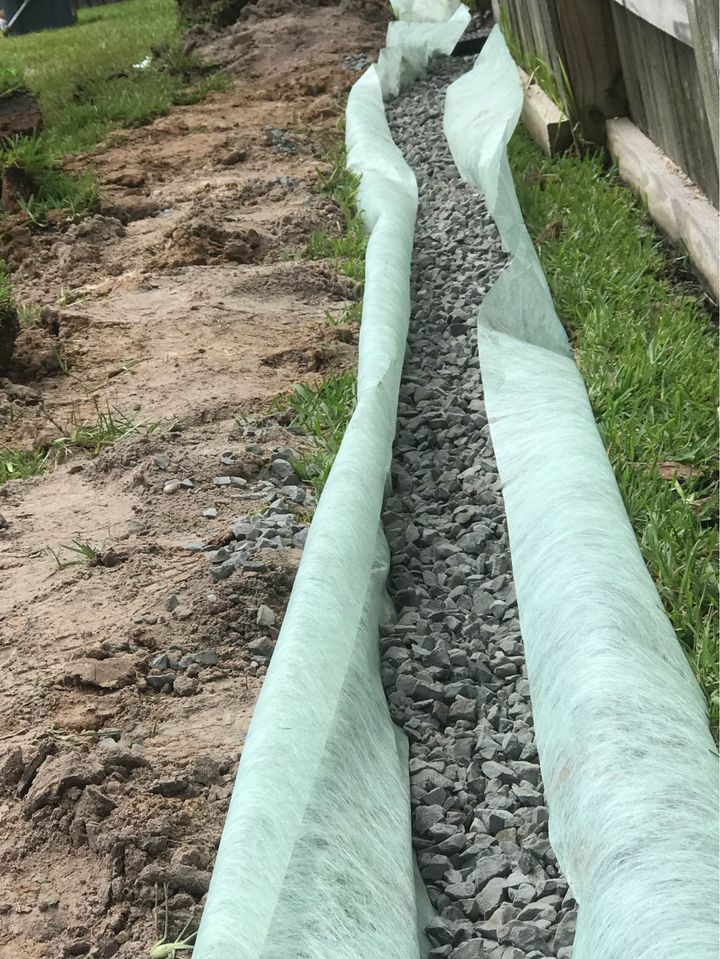
A French drain serves a different purpose. Its perforated pipe and gravel trench collect water through the length of the trench, which can help where soil stays saturated or water moves below the surface. The U.S. Department of Energy's Building America Solution Center describes French drains as an underground option for low areas and notes that the system still needs positive slope and an appropriate outlet.
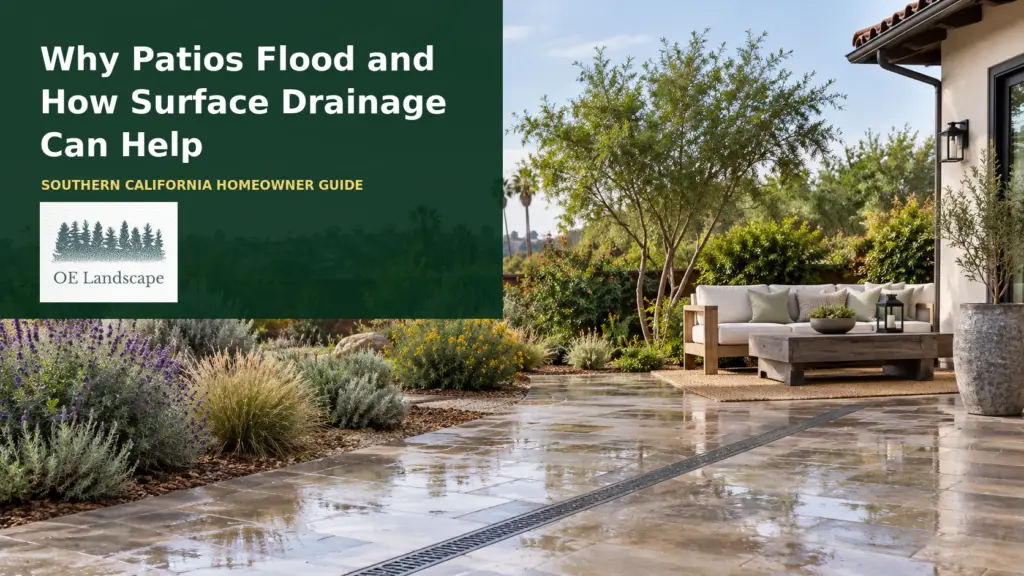
Channel or trench drains are usually better at a hardscape transition, such as the low edge of a patio, driveway, or gate, where runoff arrives across a line rather than at one point. A shallow swale, rain garden, or modest regrading may be preferable when the property has enough room to slow and infiltrate water onsite. In some yards, the right answer combines grading with more than one collection method.
- Area drain or catch basin: concentrated surface ponding in a lawn, planting bed, or side yard.
- French drain: persistent subsurface wetness or water that must be intercepted along a trench.
- Channel drain: sheet flow crossing a hardscape edge or other linear transition.
- Swale, rain garden, or regrading: space is available to slow, spread, or infiltrate runoff onsite.
Place the Collection Point Where Water Can Reach It
A drain installed near a puddle is not necessarily installed at the hydraulic low point. The lawn must be shaped so water reaches the grate without creating a new bowl beside it. The grate should finish flush with the intended lawn grade, remain accessible for cleaning, and avoid becoming a trip or mower hazard. In planting areas, an elevated atrium grate can keep mulch and leaves from covering the opening, but it is generally not suited to an active lawn surface.
One basin may work for a small, well-defined depression. A broad lawn with several contours may need more than one collection point or a grading correction before any drain will perform well. The inlet area, pipe capacity, and number of basins should be selected from the contributing drainage area, expected flow, soil, and available fall. There is no universal drain size that is right for every yard.
Before excavation, locate utilities and irrigation lines. Protect tree roots and avoid placing trenches where future root growth or heavy traffic is likely to damage the system. Drainage near foundations, retaining walls, steep slopes, or structural movement may require engineering or other specialized review.
Confirm the Pipe Route and Legal Outlet
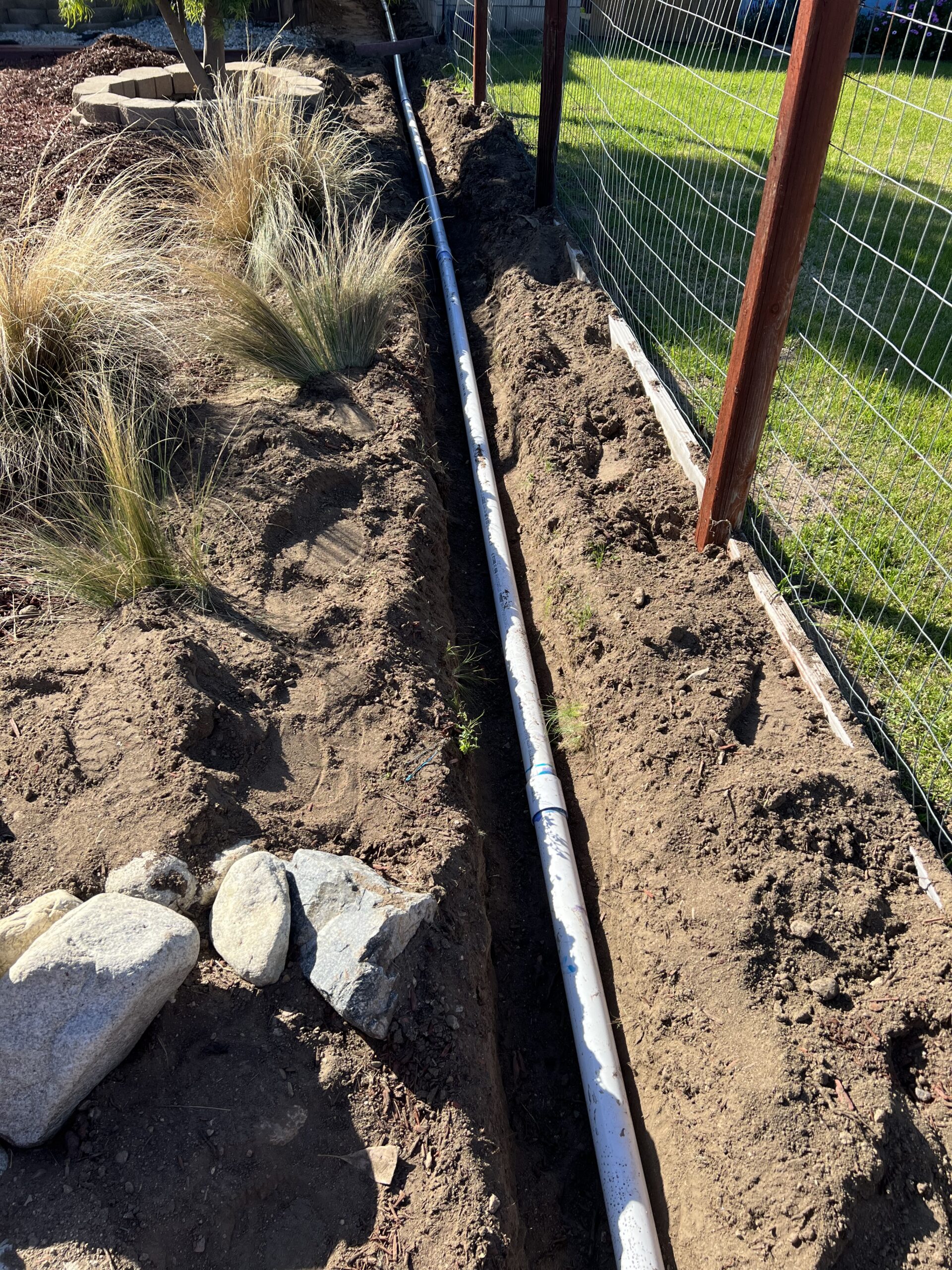
Every collection drain needs somewhere for the water to go. The pipe route should maintain positive fall where gravity drainage is planned, include practical cleanout access, and terminate at a location that will not erode soil, send water toward a building, or create a problem for a neighboring property. Depending on local rules and site conditions, options may include onsite dispersal, a dry well, a rain garden, a lower approved discharge point, or a permitted connection.
Southern California jurisdictions do not all treat runoff and non-stormwater discharges the same way. Orange County's H2OC program encourages residents to slow runoff, retain water onsite, and promote infiltration where appropriate. It also advises homeowners to consult local building or planning departments before modifying a yard for a rain garden. Local city, county, HOA, and utility requirements can affect the final route.
Do not assume that directing water to the curb, a storm drain, or a neighboring lot is automatically allowed. Confirm the receiving location before construction. Where a gravity outlet is unavailable, a pump may be considered, but the pump, basin, power supply, alarm strategy, and discharge point all need site-specific planning.
- Verify the outlet before choosing basin and pipe sizes.
- Keep discharge away from foundations and locations where it can cause erosion.
- Confirm municipal, county, HOA, and utility requirements that apply to the property.
- Plan cleanouts and maintenance access along the route.
Rule Out Irrigation and Soil Problems
A lawn drain should manage stormwater, not mask chronic overwatering. Run each irrigation zone separately and look for broken heads, buried leaks, overspray, runoff from a slope, or cycle times that exceed the soil's absorption rate. Clay-rich or compacted soil may accept water slowly, while thatch and repeated foot traffic can worsen surface sealing.
The County of San Diego's yard-drain guidance warns that French drains and subsurface drains are intended for stormwater, not irrigation runoff or wash water that may carry fertilizers, pesticides, and other pollutants. The H2OC program similarly recommends keeping irrigation on the landscape, fixing leaks, adjusting spray, and using shorter cycles to reduce polluted runoff.
If the low area becomes wet during irrigation but not during rain, correct the irrigation issue first. If the area ponds during both, the final plan may include irrigation repair, soil improvement or regrading, plus a drain sized for rainfall runoff.
Choose a System You Can Maintain
The most durable drainage plan includes access for inspection. Clear grass, leaves, mulch, and sediment from grates before the rainy season and after major storms. Empty basin sumps or debris baskets, check visible outlets for erosion or blockage, and flush accessible lines when reduced flow suggests sediment buildup. Keep roots and new planting away from pipe routes where they could interfere with future service.
After installation, observe the system during the first meaningful rain. Water should reach the inlets without bypassing them, ponding should recede as intended, and the outlet should discharge without erosion or backup. Small grading adjustments are easier to make early than after the lawn has fully re-established.
A professional drainage review is especially useful when water approaches a home, a retaining wall, a steep slope, a neighbor's property, or a location without an obvious lawful outlet. OE Landscape can coordinate catch basins, French drains, channel drains, grading, downspout routing, and landscape restoration as part of a broader outdoor plan.
- Before rain: clear grates and confirm outlets are open.
- After rain: check ponding time, bypass flow, erosion, and backup.
- Seasonally: remove sediment and inspect cleanouts, basins, and exposed outlets.
- After landscape changes: confirm soil, mulch, turf, or hardscape has not altered the drainage path.
Drainage planned with the landscape
A useful drain begins with a complete water path.
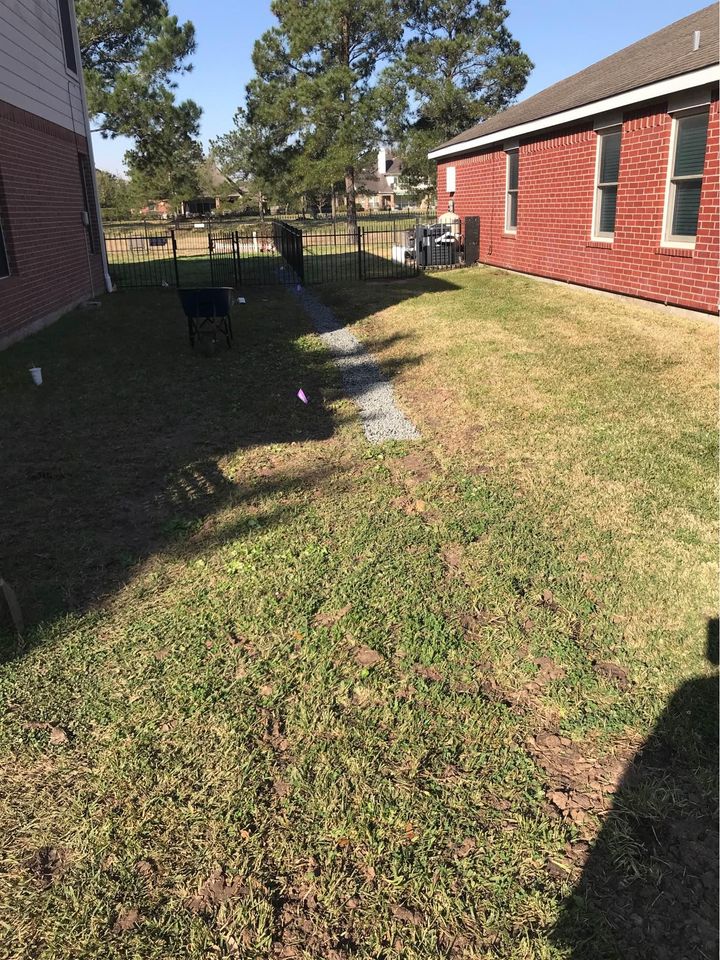
OE Landscape reviews the low point, contributing surfaces, soil, grade, pipe route, outlet, and finish work together. Depending on the property, the plan may combine catch basins, French drains, channel drains, downspout routing, grading, and landscape restoration.
Plan before the next rain
Turn the low spot into a drainage plan that works with the whole yard.
OE Landscape can review where water starts, where it collects, and how grading, collection points, pipe routing, and landscape restoration should work together.