
Choosing a Material Palette
for Contemporary Yards
Learn how concrete, pavers, stone, gravel, wood, metal, planting, color, texture, and scale can work together to create a contemporary yard that feels cohesive rather than complicated.
Create a Contemporary Yard That Feels Cohesive
Contemporary landscapes often look simple, but that simplicity usually comes from careful decisions.
One of the most important is the material palette.
The materials used for patios, walkways, walls, planting areas, steps, borders, and outdoor living spaces all contribute to how the yard feels. When too many materials compete with one another, even a well-built landscape can feel visually disconnected.
When the palette is thoughtfully coordinated, the property feels calm, intentional, and connected to the architecture.
At OE Landscape, we believe material selection should be based on more than appearance alone. Color, texture, scale, durability, maintenance, and the character of the home should all work together.
What Is a Landscape Material Palette?
A material palette is the group of hardscape and finish materials used throughout the property.
It may include:
- Concrete
- Pavers
- Natural stone
- Gravel
- Decomposed granite
- Wood
- Metal
- Tile
- Artificial turf
- Decorative rock
- Wall finishes
The goal is not to use as many materials as possible.
Contemporary landscapes usually become stronger when a limited number of materials are repeated consistently.
This creates visual continuity from one area of the yard to another.
Start With the Architecture
The home should usually provide the starting point. A coordinated landscape design can help connect those architectural cues to the yard.
Look at the materials already present on the building.
A contemporary property may include:
- Smooth stucco
- Concrete
- Wood siding
- Stone veneer
- Dark metal
- Glass
- Neutral exterior colors
The landscape does not need to match every architectural material exactly, but it should feel related.
For example, a house with warm wood accents may work well with natural stone, warm-toned pavers, and gravel.
A home with white stucco and black metal details may pair naturally with light concrete, darker accents, and simple planting.
The goal is to create continuity rather than introduce a completely separate visual language outdoors.
Limit the Number of Primary Materials
One of the most effective ways to create a contemporary landscape is to use restraint.
A yard with five different paving styles, several gravel colors, multiple stone types, and numerous borders can quickly feel busy.
Instead, choose a few primary materials.
For example:
- One main paving material
- One contrasting ground material
- One wall or accent finish
- One optional wood or metal element
These materials can then repeat throughout the property.
A paver used at the front entrance might reappear in the backyard.
The same gravel could be used between stepping pads and within selected planting beds.
This repetition helps the landscape feel unified.
Choose a Dominant Material
Most contemporary yards benefit from having one material that visually leads the design.
This may be large-format pavers, poured concrete, natural stone, or another durable surface.
The dominant material is often used in the largest areas, such as:
- Patios
- Main walkways
- Entry areas
- Pool decks
- Outdoor dining spaces
Other materials should support it rather than compete with it.
For example, a large concrete patio might be complemented by gravel planting areas and wood accents.
This creates hierarchy and keeps the design easy to understand.
Use Contrast Carefully
Contemporary design often benefits from contrast.
Light and dark materials can make each other more noticeable.
Smooth concrete may stand out against textured gravel.
Warm wood can soften cool stone.
Dark metal edging can provide a crisp boundary around lighter surfaces.
Contrast works best when it is controlled.
If every surface has a completely different color or texture, the design can lose cohesion.
A better approach is to create one or two deliberate contrasts within an otherwise restrained palette.
Consider the Color of the Home
Exterior color strongly influences material selection.
A warm beige or tan home may feel more connected to sand-colored stone, warm gray paving, and natural wood.
A white or light gray contemporary home may support cooler grays, charcoal accents, or pale concrete.
Dark architecture may benefit from lighter paving that creates contrast.
The landscape does not need to match the house exactly.
In fact, slight variation often produces a richer result.
The goal is for the materials to look as though they belong together.
Think Beyond Gray
Contemporary landscapes are often associated with gray concrete and dark metal, but modern design does not have to be monochromatic.
Warm neutral materials can create equally contemporary results.
Consider tones such as:
- Warm gray
- Sand
- Beige
- Taupe
- Charcoal
- Cream
- Natural brown
These colors can make a modern yard feel more inviting while maintaining a clean appearance.
Plants can then provide additional green, silver, blue-green, or seasonal color.
Use Large-Format Pavers for a Cleaner Look
Large-format pavers are commonly used in contemporary landscapes because they create fewer visible joints.
This can make patios and walkways feel larger and less visually cluttered.
Rectangular or square pavers can reinforce architectural geometry.
They may be installed as:
- Continuous paving
- Oversized stepping pads
- Linear walkways
- Patio grids
- Floating slabs within gravel
Spacing and alignment should relate to the surrounding architecture.
When paver dimensions and layout feel proportional to the home, the outdoor environment becomes more cohesive.
Consider Poured Concrete for Simplicity
Poured concrete and hardscape can create clean, simple surfaces that work well with contemporary homes.
It can be used for:
- Patios
- Walkways
- Steps
- Driveway areas
- Seating platforms
Joint placement is an important design consideration.
Control joints can be aligned with architectural features, paving transitions, or landscape edges so they feel intentional.
The finish also affects the final appearance.
A smooth or lightly textured surface can create a very different result from exposed aggregate or heavily decorative concrete.
Material selection should balance appearance with slip resistance, durability, and intended use.
Use Natural Stone to Add Warmth
Contemporary landscapes do not need to rely entirely on manufactured materials.
Natural stone can introduce texture and variation.
It may be used in:
- Retaining walls
- Garden walls
- Steps
- Accent paving
- Seating walls
- Decorative landscape features
The key is to select stone carefully.
Highly varied stone can become visually dominant.
For a contemporary property, a more consistent stone color or larger-format installation may fit better than a heavily mixed rustic pattern.
Natural stone works especially well when the goal is to soften clean architecture with a more organic material.
Use Gravel as a Supporting Material
Gravel is highly versatile in contemporary yards.
It can provide contrast without introducing another large hardscape surface.
Common uses include:
- Between stepping pads
- Within planting beds
- Along side yards
- Beneath selected trees
- Around drought-tolerant planting
- As a transition between surfaces
The color and size of the gravel matter.
Very bright or highly decorative rock can compete with the rest of the landscape.
Neutral gravel often provides a quieter background that allows plants and architecture to remain the focus.
Consider Decomposed Granite for Softer Areas
Decomposed granite can work well where a softer, less formal surface is desired.
It may be appropriate for:
- Garden paths
- Informal seating areas
- Secondary walkways
- Planting transitions
Its natural texture can provide contrast with smoother concrete or pavers.
Because it feels less rigid than solid paving, it can help contemporary landscapes avoid becoming overly hard.
Proper installation is important so the surface performs well for its intended use.
Use Wood as a Warm Accent
Wood can add warmth to contemporary yards dominated by concrete, stone, or metal.
Possible uses include:
- Pergolas
- Screens
- Benches
- Gates
- Planter details
- Outdoor structures
- Fencing
Wood does not need to be used extensively.
Even a small amount can create visual balance.
A wood privacy screen against a light stucco wall, for example, can add warmth without changing the overall modern character.
Color and finish should relate to the home and surrounding landscape materials.
Introduce Metal for Clean Details
Metal can provide precise edges and architectural contrast.
It may appear in:
- Landscape edging
- Gates
- Screens
- Railings
- Planters
- Pergolas
- Decorative panels
Dark metal finishes are common in contemporary landscapes because they create crisp contrast.
However, the metal should not feel disconnected from the rest of the property.
It works best when similar colors or finishes already appear in window frames, doors, lighting, or architectural details.
Let Planting Count as Part of the Palette
The landscape material palette should not be considered separately from planting.
Plants provide texture, color, and movement.
A yard with strong concrete surfaces may benefit from soft ornamental grasses.
A stone wall may be complemented by fine groundcovers.
A dark metal screen can become a backdrop for green foliage.
Planting can also influence which hardscape materials feel appropriate.
A drought-tolerant planting scheme may pair naturally with gravel, decomposed granite, and warm neutral paving. For California-specific plant water-use guidance, the UC Davis WUCOLS database is a useful reference.
A greener, more layered landscape might support stone and wood accents.
The materials and plants should be designed together.
Mix Smooth and Textured Surfaces
Texture adds depth to a contemporary yard.
If every surface is perfectly smooth, the landscape can feel flat.
Consider combining:
- Smooth concrete with textured stone
- Large pavers with gravel
- Stucco walls with wood
- Metal details with soft planting
- Clean paving with rough natural rock
The contrast should remain subtle.
The goal is not to make every surface different.
Instead, one textured material can provide enough variation to keep the landscape visually interesting.
Pay Attention to Scale
Material scale should match the size of the home and yard.
Large properties can often support larger pavers, broad wall surfaces, and bigger stone elements.
Small yards may benefit from simpler material transitions and fewer patterns.
Using very small materials across a large contemporary property can sometimes make the landscape feel overly busy.
Likewise, oversized paving may overwhelm a compact courtyard.
Proportion is just as important as color and texture.
Use One Material in Multiple Ways
A strong material palette becomes even more effective when the same material appears in different forms.
For example, one stone type might be used on:
- A garden wall
- A fire feature
- A step
- An outdoor kitchen
This creates continuity without requiring every element to look identical.
The same idea can be used with concrete, wood, metal, or pavers.
Reusing materials throughout the property creates a visual thread that connects separate areas.
Avoid Too Many Borders
Borders can help define paving or planting areas, but excessive borders can make a contemporary landscape feel overly detailed.
Every transition does not need another material.
Sometimes the cleanest solution is allowing one surface to meet another directly.
Concrete may meet gravel.
Pavers may meet planting.
Artificial turf may meet a simple metal edge.
Reducing unnecessary decorative bands helps keep the design visually calm.
Coordinate Materials Around Outdoor Living Areas
Outdoor living spaces often contain several different elements close together.
A patio may include:
- Flooring
- An outdoor kitchen
- Seating walls
- A fire feature
- Countertops
- Furniture
- Shade structures
Without coordination, these materials can quickly compete.
The palette should be considered as a whole.
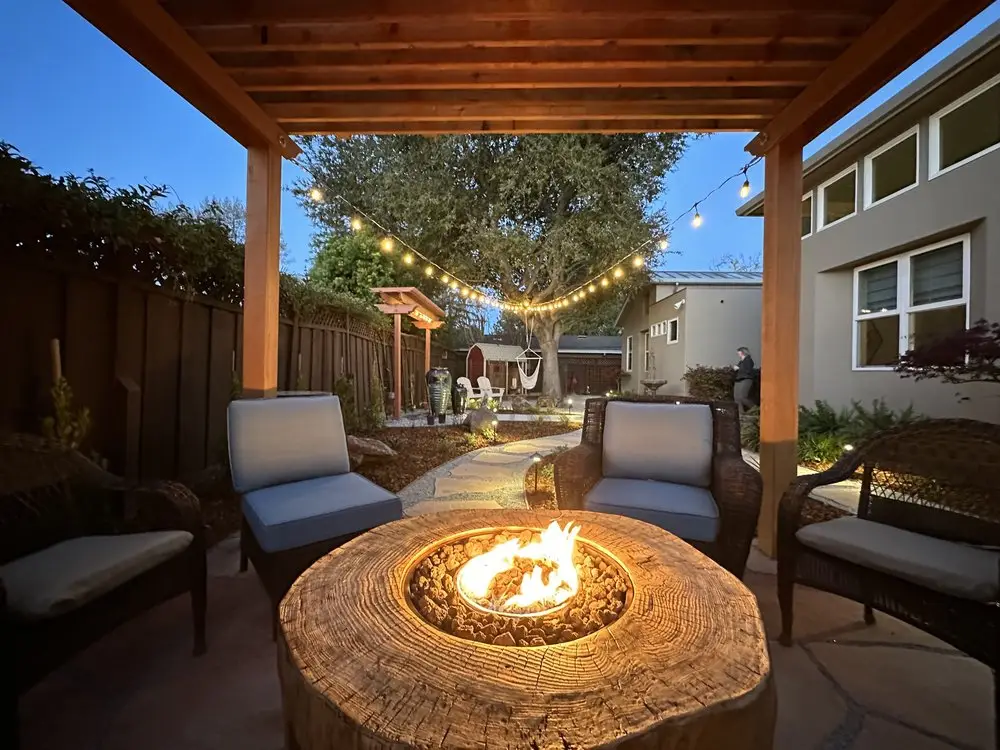
A concrete patio might pair with a stucco outdoor kitchen, stone accent wall, and wood pergola.
The individual materials are different, but their colors and textures can still feel related.
Give Fire Features a Material Connection
A fire pit or fireplace can easily become an isolated feature if its materials appear nowhere else in the landscape. You can see coordinated outdoor features in our project gallery.
One way to integrate it is to repeat a nearby material.
A fire feature might use the same stone as a retaining wall.
Its concrete finish could match a patio.
A metal detail might connect visually to fencing or lighting.
These small relationships make the feature feel intentional.
Coordinate Pool Materials With the Yard
For properties with swimming pools, the pool deck should be considered part of the larger landscape palette.
Pool coping, paving, walls, planting, and surrounding patios should relate to one another.
A highly decorative pool finish beside a minimal contemporary patio may feel disconnected.
The transition between pool area and yard should feel smooth.
Using consistent paving or complementary colors can help the pool become part of the overall design rather than a separate visual zone.
Treat Retaining Walls as Design Elements
Retaining walls are often necessary, especially on sloped properties.
Their material selection can have a major effect on the appearance of the yard.
Possible finishes include:
- Smooth stucco
- Concrete
- Stone veneer
- Masonry
- Wood accents
The best choice should relate to the architecture and surrounding hardscape.
A retaining wall can reinforce the material palette rather than simply functioning as an engineering requirement.
Planting around it can then soften the structure.
Keep Small Yards Especially Consistent
Material restraint becomes even more important in small yards.
When several different surfaces are visible at once, too much variety can make the space feel smaller.
A compact contemporary yard may work well with:
- One primary paving material
- One gravel type
- One wall finish
- A simple planting palette
Repeating the same materials across the space can make the yard feel more continuous.
This helps the eye move through the property instead of stopping at every transition.
Create Visual Continuity From Front to Back
The front yard and backyard do not need to look identical, but they should feel like they belong to the same property. This same principle supports stronger visual balance.
Repeating selected materials can create that connection.
For example, the paver used at the front entrance may appear again near the backyard patio.
A gravel color may repeat along both side yards.
The same wall finish could appear near the front entry and outdoor kitchen.
These repetitions create consistency as people move through the property.
Consider How Materials Look Wet
Materials can change significantly when wet.
Concrete may darken.
Stone can become more saturated.
Some surfaces become more reflective.
This matters around:
- Pools
- Irrigation zones and water-smart outdoor practices
- Fountains
- Outdoor showers
- Rain-exposed areas
Material performance is just as important as appearance.
Slip resistance, drainage, staining, and maintenance should all be considered before installation.
Consider Heat and Sun Exposure
Southern California properties can receive strong sunlight for long periods.
Dark paving and certain hardscape surfaces may absorb significant heat. The U.S. EPA's cool pavement guidance is a helpful reference when evaluating heat-sensitive paved areas.
This should be considered around areas where people regularly walk, sit, or gather.
Shade structures, trees, material color, and surface choice can all affect outdoor comfort.
A visually attractive material may not be the best choice for every location.
Material planning should account for how the space will actually be used.
Think About Maintenance
Every material has maintenance requirements.
Wood may require periodic care.
Certain stones can stain.
Gravel may shift.
Concrete can develop cracks.
Pavers may need occasional joint maintenance.
The right palette should fit the homeowner's expectations for long-term upkeep.
A contemporary yard often looks best when edges, joints, and surfaces remain clear and well maintained.
Selecting practical materials from the beginning can make that easier.
Coordinate Lighting With the Materials
Outdoor lighting can change how materials appear at night.
Textured stone may create dramatic shadows.
Smooth stucco may reflect soft light.
Wood can appear warmer beneath landscape lighting.
Dark surfaces may absorb more light and require careful fixture placement.
Lighting should be considered as part of the material design rather than added only after construction.
Subtle illumination can highlight texture and reinforce the overall atmosphere of the yard.
Use Sample Materials Before Finalizing
Photos can be helpful, but materials often look different in person.
Before committing to a major installation, it can be useful to compare actual samples at the property.
Look at them beside:
- Exterior walls
- Existing stone
- Window frames
- Roofing
- Plants
- Other hardscape materials
Also check them at different times of day.
Morning sun, afternoon light, and shade can significantly change how colors appear.
This can help prevent a material from looking unexpectedly warm, cool, dark, or bright once installed.
Avoid Choosing Every Material Independently
One of the easiest ways to lose cohesion is to select materials one project at a time.
A patio may be installed first.
Later, a wall gets another finish.
Then a fire pit introduces another stone.
Eventually, every feature looks unrelated.
Creating a material palette early helps prevent this.
Even if the landscape is installed in phases, having a clear direction allows future improvements to connect visually with earlier work.
Let Materials Support the Landscape, Not Dominate It
Contemporary design does not have to mean a property filled with concrete and hardscape.
Materials should support the way the outdoor space functions while leaving enough room for planting.
Trees, shrubs, grasses, and groundcovers add life to the built surfaces around them. For more planting-focused ideas, explore our sensory garden ideas.
A large patio becomes more comfortable when framed by greenery, especially when the space is planned around outdoor wellness and everyday use.
A concrete walkway becomes softer beside planting.
A stone wall becomes more inviting when surrounded by texture and foliage.
The strongest landscapes create a balance between built materials and living elements.
Build a Palette That Will Age Well
Material trends change.
A successful landscape should still feel appropriate years after installation.
Choosing simple materials, natural textures, and colors connected to the architecture can help create a more lasting design.
It is often better to use one strong material consistently than several trendy finishes that may quickly feel dated.
The architecture of the property should remain the main guide.
Create a Contemporary Yard That Feels Cohesive
Choosing materials is about more than selecting attractive pavers or stone.
It is about creating relationships between surfaces, structures, planting, and architecture.
A successful palette usually has hierarchy.
One material leads.
Others support it.
Colors relate.
Textures provide contrast.
Repeated finishes connect different areas.
Plants soften the harder surfaces.
At OE Landscape, we help Southern California homeowners transform outdoor spaces through professional landscape installation and hardscaping, plant installation, irrigation systems, artificial turf, and outdoor living improvements.
By choosing materials with the entire property in mind, a contemporary yard can feel clean and refined without becoming cold or overly complicated.
Planning a contemporary outdoor transformation? Contact OE Landscape to explore material, hardscape, planting, and outdoor living options that complement your home and create a cohesive landscape, or use our Project Estimator to get started.
Let Materials Support the Landscape Instead of Competing With It
A strong contemporary material palette usually has a clear hierarchy: one material leads, supporting materials repeat in strategic places, colors relate to the architecture, textures add contrast, and planting softens the harder surfaces.
See How Hardscape, Planting, and Outdoor Living Connect
Explore OE Landscape projects where paving, gravel, planting, walls, turf, outdoor living features, and architectural details are coordinated as one complete landscape.
Explore Project Gallery
Planning a Contemporary Outdoor Transformation?
Tell OE Landscape what you want to improve and start planning a yard where hardscape, planting, color, texture, scale, and outdoor living features feel connected from front to back.