The Beauty of Clean Lines
and Open Spaces
Discover how simple geometry, open areas, focused planting, clear circulation, and thoughtful hardscape can create a landscape that feels calmer, larger, and easier to enjoy.
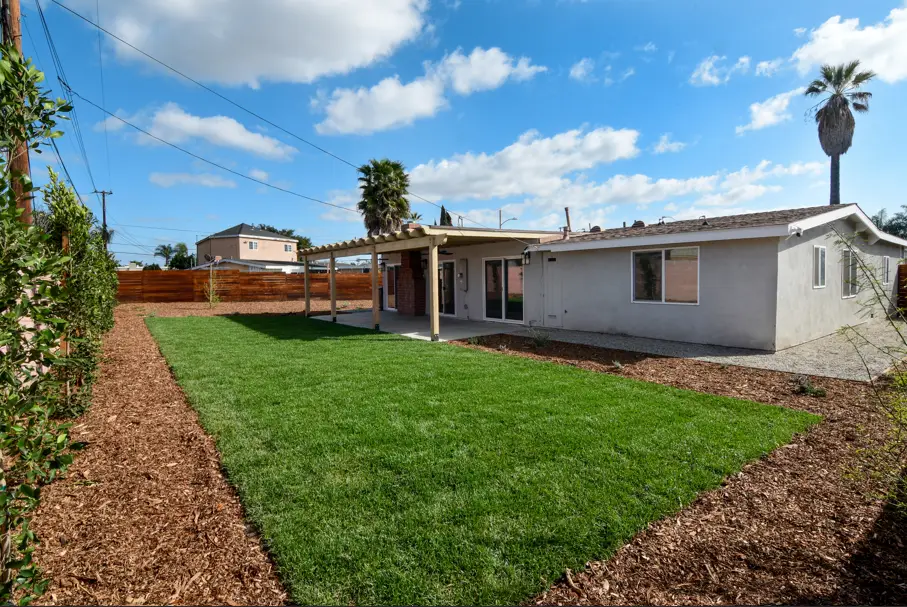
Why Open Space Can Make a Landscape Feel More Complete
Some landscapes make an immediate impression because they contain dramatic features, bold colors, or dense planting.
Others stand out for the opposite reason.
They feel calm.
The layout is easy to understand. The walkways are clear. Plants have room to grow. Hardscape edges feel intentional. Open areas give the eye somewhere to rest.
This is the beauty of clean lines and open spaces.
At OE Landscape, we believe a well-designed yard does not need to feel crowded to feel complete. Thoughtful structure, simple geometry, carefully selected plants, and intentionally open areas can create a landscape that feels refined while remaining comfortable and functional.
What Do Clean Lines Mean in Landscape Design?
Clean lines are clear visual boundaries that help organize an outdoor space.
They may appear in:
- Walkways
- Patio edges
- Planting beds
- Retaining walls
- Steps
- Turf areas
- Gravel zones
- Raised planters
- Seating walls
These lines help define where one area ends and another begins.
A straight walkway clearly directs people toward an entrance.
A simple rectangular patio or hardscape area creates an obvious outdoor living area.
A defined planting edge separates soft landscaping from hardscape.
The goal is not to make every landscape perfectly geometric.
Instead, clean lines create structure that makes the overall space easier to understand.
Open Space Is an Important Design Element
Open areas are sometimes mistaken for unfinished areas.
But in professional landscape design, open space can be just as intentional as planting.
Open space may include:
- Lawn
- Artificial turf
- Gravel
- Simple paving
- A courtyard
- Clear patio space
- Gaps between planting groups
These areas provide visual relief.
They allow important features to stand out and prevent the yard from feeling overfilled.
An open lawn can emphasize a mature tree.
A simple gravel area can make sculptural plants more noticeable.
An uncluttered patio can feel more spacious and comfortable.
Open space is not the absence of design.
It is part of the design.
Clean Lines Create Visual Order
When too many shapes overlap, a yard can begin to feel confusing.
Planting beds curve in several directions.
Paving changes materials repeatedly.
Walkways intersect at awkward angles.
Small areas become divided into even smaller sections.
Clean lines simplify those relationships.
Instead of creating many competing shapes, the landscape can rely on several strong forms.
For example, one broad planting bed may create more impact than several small beds scattered around the property.
A single large patio may feel more useful than multiple disconnected hardscape areas.
Visual order often begins with simplifying the overall layout.
Open Areas Make Landscapes Feel Larger
This is especially important in smaller yards.
Trying to use every square foot can sometimes make the property feel more cramped.
A compact yard filled with several plant varieties, furniture groups, decorative features, and paving patterns may visually shrink.
Open space allows the eye to move farther.
A clear sightline from the house toward the back of the yard can create a stronger sense of depth.
Simple planting along the perimeter can preserve that openness while still adding greenery and privacy.
Sometimes creating the feeling of more space requires adding less.
Let the Architecture Influence the Layout
Clean landscape design often works best when it responds to the architecture.
Look at the home's:
- Rooflines
- Windows
- Doors
- Exterior walls
- Materials
- Major architectural proportions
These elements can provide a starting point for outdoor geometry.
A walkway might align with the front entrance.
A patio may continue the direction of a major exterior wall.
A planting bed could begin at an architectural corner.
This creates continuity between the building and surrounding landscape.
The outdoor space begins to feel like an extension of the home rather than something added separately.
Use Strong Shapes Instead of Many Small Ones
Large, simple shapes are usually easier to understand than numerous small shapes.
Consider the difference between a lawn divided into several irregular sections and one clear rectangular or gently curved lawn area.
The simpler shape often feels larger and more intentional.
The same principle applies to:
- Patios
- Planting beds
- Turf
- Gravel
- Pool decks
- Outdoor seating areas
Strong shapes create a visual foundation.
Plants and other features can then add texture and interest without making the layout feel chaotic.
Keep Pathways Clear
Movement through the landscape should feel natural.
People should immediately understand how to reach:
- The front door
- Backyard
- Patio
- Pool
- Outdoor kitchen
- Side gate
- Garden area
Clear walkways improve both function and appearance.
Overly complicated paths can consume valuable space and create unnecessary visual lines.
A straightforward route is often more effective.
Planting can soften the walkway, while lighting can make it easier to use after dark.
The path itself remains visually simple.
Use Planting to Soften the Edges
Clean lines do not mean the landscape has to feel hard or sterile.
Plants create contrast.
A straight concrete edge can be softened with ornamental grasses.
A rectangular patio can be framed by shrubs and groundcovers.
A crisp retaining wall may be balanced with layered greenery.
This contrast is important.
Hardscape provides structure.
Plants introduce movement, texture, and natural variation.
The result can feel organized without becoming rigid.
Keep Planting Masses Easy to Read
One way to preserve clean visual structure is to plant in groups.
Instead of scattering individual plants throughout a bed, use repeated clusters or masses.
For example:
- Several ornamental grasses together
- A repeated shrub forming a background layer
- Groundcover connecting larger plants
- One specimen tree anchoring the composition
Grouped plants create stronger shapes.
They also prevent the planting from feeling like a collection of unrelated specimens.
The landscape becomes easier to understand from a distance.
Create Breathing Room Around Plants
Plants need physical room to grow, but they also benefit visually from space.
When everything is planted too closely, individual shapes disappear.
Shrubs blend into one continuous mass.
Tree trunks become hidden.
Grasses compete with surrounding foliage.
Proper spacing preserves each plant's character.
This is especially important for specimen trees or sculptural plants.
Giving them open space around their forms makes them much more noticeable.
Use Negative Space Intentionally
Negative space is the quieter area between visual elements.
In landscaping, it may be a simple gravel surface, lawn, paving, or an open section between plant groups.
Negative space creates contrast.
It allows a planting bed to feel more substantial because it is not surrounded by equally detailed areas.
It also gives focal points greater impact.
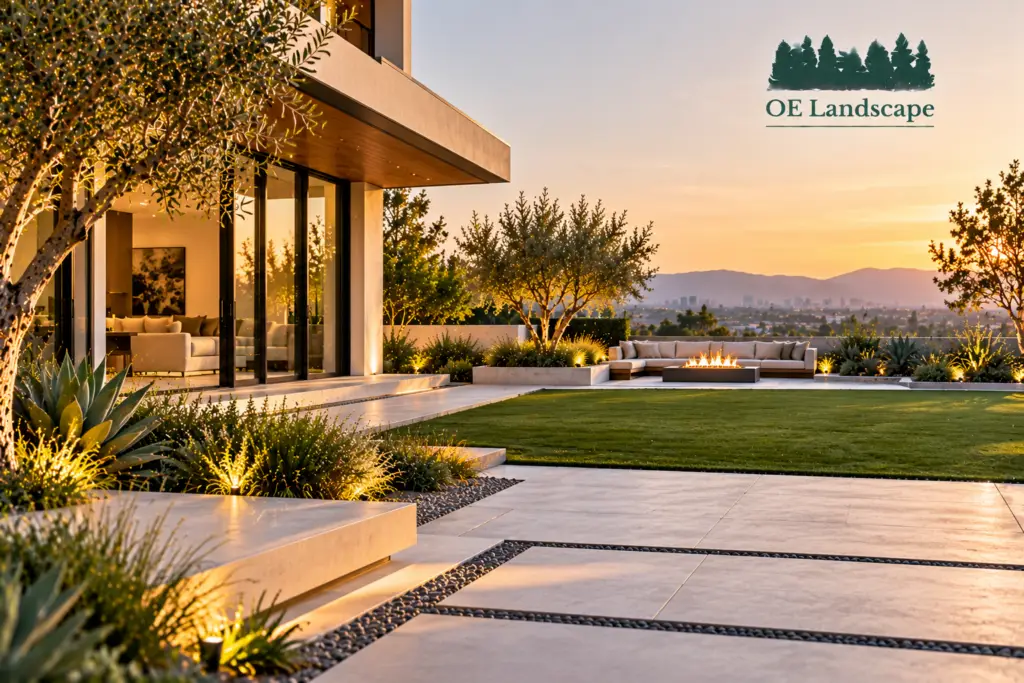
A fire feature can become more noticeable when the surrounding patio remains simple.
A specimen tree can feel more dramatic against an uncluttered background.
Open areas help important elements become easier to see.
Limit the Number of Materials
Clean landscapes generally benefit from a focused material palette.
Using too many paving colors, stone types, borders, and finishes can make an otherwise simple yard feel busy.
A restrained palette might include:
- One primary paving material
- One gravel type
- One wall finish
- One accent material such as wood or stone
These materials can repeat throughout the property.
Repetition creates continuity.
The front yard, side yard, and backyard may have different functions, but shared materials make them feel related.
Use Large-Format Materials Where Appropriate
Large-format pavers and broad concrete surfaces can strengthen the appearance of clean lines.
Fewer joints can create a calmer surface.
Large paving pieces may also relate well to the proportions of contemporary architecture.
They can be used for:
- Patios
- Entry paths
- Stepping pads
- Outdoor dining areas
- Pool surrounds
The size should still be appropriate for the property.
Oversized materials can overwhelm very small spaces, while small repetitive patterns may feel too busy in a large yard.
Scale matters.
Let Gravel Create Simple Transitions
Gravel can be an effective way to create open space without leaving areas completely bare.
It works especially well around:
- Stepping pads
- Drought-tolerant planting
- Side yards
- Trees
- Secondary seating areas
Because gravel forms a relatively uniform surface, plants can stand out more clearly against it.
It can also create a smooth transition between hardscape and planting.
Neutral tones usually work best when the goal is visual simplicity.
Simplify Turf Areas
Whether a property uses natural lawn or artificial turf, the shape of the turf matters.
Large, clean turf areas often look more intentional than several small pieces.
Tiny leftover strips can feel awkward.
Instead, define one useful shape based on function.
That turf area might serve as:
- Play space
- Pet space
- Recreation
- Visual openness
- A transition between outdoor zones
Keeping it simple can reduce unnecessary edges and make maintenance easier.
Use Trees as Strong Anchors
Trees can provide some of the most important structure in a landscape.
A single well-positioned tree may define an entire section of the yard.
It can:
- Shade a patio
- Frame the home
- Create privacy
- Anchor a planting bed
- Become a focal point
- Improve views from inside
In simple landscapes, trees often have more presence because fewer elements compete with them.
Their canopy shapes become easier to appreciate.
Changing shadows also add natural variation to otherwise clean surfaces.
Maintain Open Views From Inside
Clean outdoor design should also be considered from inside the home.
Look through:
- Living room windows
- Kitchen windows
- Bedroom windows
- Home offices
- Sliding doors
What do you see?
If the view is filled with overlapping plants and features, simplifying the landscape may create a stronger composition.
A clear view toward one tree, a planting group, or a simple patio can be more visually effective than several competing focal points.
Open sightlines also strengthen the connection between indoor and outdoor spaces. For more planting-focused ideas, explore our sensory garden ideas.
Use Open Space to Highlight Views
If the property has an attractive view, the landscape should avoid unnecessarily blocking it.
Planting can frame the view rather than covering it.
Trees may be placed toward the edges.
Lower plants can preserve sightlines.
Patios can orient seating toward the open area.
This is another example of how less can create more impact.
The landscape supports the experience without competing with what is already there.
Keep Privacy Strategic
Open landscapes can still provide privacy.
The key is to screen specific areas rather than surrounding the entire property with dense vegetation.
Privacy may be most important around:
- Outdoor dining
- Lounge seating
- Pools
- Spas
- Bedroom windows
Trees, shrubs, walls, or decorative screens can be positioned where they provide the greatest benefit.
Other areas can remain more open.
This preserves space while creating comfort in the places where privacy matters.
Create Outdoor Rooms Without Closing Them Off
An open yard can still contain several functional zones.
For example:
- Dining
- Lounging
- Cooking
- Fire pit seating
- Lawn
- Garden space
These zones do not need walls.
Subtle changes can define them.
A different paving direction may mark a dining area.
A tree canopy could establish a lounge.
A planting bed may create separation around an outdoor kitchen.
The overall yard remains connected even though each area has its own purpose. This same relationship between function and comfort is important in wellness-focused outdoor spaces.
Use Furniture With Restraint
Outdoor furniture influences how open a landscape feels.
Too many pieces can make even a large patio feel crowded.
Choose furniture based on how the area will realistically be used.
Allow space for circulation.
Keep major views open.
One properly sized seating arrangement often works better than several small groups.
The landscape should still have room to be seen.
Keep Containers Simple
Planters are useful for adding greenery near patios and entrances, but they can accumulate quickly.
A collection of many small pots often creates visual clutter.
Consider fewer, larger containers.
Choose similar materials or colors.
Place them where they support the architecture or define important areas.
A single large planter may create more impact than several smaller ones arranged together.
Reduce Decorative Borders
Decorative borders can become unnecessary visual lines.
A patio does not always need a contrasting band around it.
A planting bed may not require multiple edging materials.
Simple transitions usually work better in landscapes built around clean lines.
Allow major materials to meet directly where practical.
This keeps the design focused on the larger composition instead of small decorative details.
Give Front Yards a Clear Structure
Front yards benefit greatly from clean lines and open space.
Visitors should immediately understand:
- Where the entrance is
- How to reach it
- Which planting areas are intentional
- Where the architecture should draw attention
A simple front landscape might include a strong walkway, one feature tree, repeated shrubs, and a clearly defined planting area.
Open space can keep the home visible.
This often creates stronger curb appeal than filling the entire frontage with dense landscaping.
Design Backyards Around Everyday Use
The backyard should not only look organized.
It should function comfortably.
Open space can provide flexibility for:
- Family activities
- Entertaining
- Pets
- Children
- Temporary seating
- Future landscape improvements
Overdesigning every square foot can make the yard less adaptable.
Leaving some areas open gives homeowners more options as their needs change.
Keep Fire Features Visually Grounded
Fire pits and fireplaces often become strong focal points. See examples of complete outdoor-living features in our project gallery.
They usually do not need many decorative features around them.
A simple hardscape surface, comfortable seating, and restrained planting may be enough.
This allows the fire feature itself to remain visually important.
Too many surrounding materials or accessories can reduce its impact.
Open space helps create a more relaxed gathering environment.
Simplify Pool Areas
Pool landscapes can easily become visually crowded with:
- Furniture
- Planters
- Decorative stone
- Paving changes
- Outdoor accessories
A cleaner approach may include consistent paving, selected planting, clear circulation, and open areas for lounging.
Plants can provide shade and privacy without covering every edge.
Keeping the pool surroundings relatively simple can make the entire backyard feel more spacious.
Use Lighting to Preserve Simplicity
Outdoor lighting can support clean lines after sunset.
Focus on necessary and important areas.
Lighting may highlight:
- Steps
- Walkways
- Trees
- Walls
- Entryways
- Outdoor living areas
Avoid illuminating every plant.
Darkness can act as negative space at night.
The contrast between illuminated features and quieter areas creates depth and can make the landscape feel more refined.
Let Shadows Add Detail
Simple landscapes do not have to look static.
Natural light adds constant variation.
A tree may cast moving shadows across a plain wall.
Ornamental grasses can create fine patterns in late-afternoon light.
Pergolas can project linear shadows across patios.
These effects add interest without requiring additional materials or decorative features.
The changing sunlight becomes part of the landscape.
Use Repetition to Create Rhythm
Clean landscapes often rely on repeated elements.
These may include:
- Trees
- Grasses
- Pavers
- Lights
- Planters
- Shrubs
Repetition creates rhythm and guides the eye through the property. It is also one of the techniques discussed in how professional designers build visual balance.
For example, a series of grasses may follow a pathway.
Several large stepping pads can lead toward an entrance.
Repeated trees may define a property edge.
The pattern becomes stronger because unnecessary visual elements have been reduced.
Design for Mature Growth
A clean landscape can quickly become crowded if plant growth is not considered.
Newly installed plants may look small, but their mature dimensions should guide spacing.
Trees need room for canopies.
Shrubs need width.
Grasses spread.
Groundcovers expand.
Proper spacing helps preserve open space as the landscape develops.
It can also reduce excessive pruning and maintenance.
Choose Plants That Hold Their Form
Some plants work especially well in clean landscapes because they maintain recognizable shapes as they mature.
Depending on the property, useful forms may include:
- Upright
- Rounded
- Arching
- Mounded
- Sculptural
- Ground-hugging
Mixing several strong forms within a focused palette can create interest without excessive plant variety.
The plants provide natural geometry that complements the hardscape.
Keep the Color Palette Controlled
Color can add personality without sacrificing calm.
A landscape may use a foundation of greens, silver foliage, and neutral materials.
One or two flowering colors can then provide accents.
This approach keeps bright areas from competing with each other.
Color becomes more noticeable because it appears selectively.
The result can feel fresh without being visually busy.
Make Maintenance Part of the Design
Clean lines only remain clean when the landscape is practical to maintain.
Plant size, irrigation, drainage, material performance, and access should all be considered.
Choosing appropriate plants can reduce constant trimming.
Grouping plants with similar water needs can improve irrigation efficiency. California homeowners can compare plant water-use classifications through the UC Davis WUCOLS database.
Clear paving transitions can simplify upkeep.
A landscape that is easier to maintain has a better chance of preserving its intended appearance. The U.S. EPA WaterSense outdoor guidance also offers practical information about water-smart landscapes and irrigation.
Clean Does Not Mean Sterile
One concern with simplified landscapes is that they may feel cold.
That usually happens when the design relies too heavily on hard surfaces without enough planting or natural texture.
Trees, grasses, shrubs, stone, wood, and groundcovers can add warmth.
A clean landscape should still feel alive.
The goal is balance.
Strong geometry provides structure while natural materials and planting create comfort.
Open Space Creates Flexibility
A landscape should be able to evolve.
Families change.
Outdoor activities change.
Furniture changes.
Plants mature.
A yard with some open space can adapt without requiring a major renovation.
An open lawn may later become a garden.
A clear gravel area could become a seating space.
A simple patio can accommodate different furniture arrangements.
Leaving room for change can make the landscape more useful over time.
Know When the Design Has Enough
One of the most important skills in landscape design is knowing when to stop.
A yard may already have:
- Clear circulation
- Comfortable seating
- Shade
- Privacy
- Attractive planting
- Functional lighting
Adding another feature may not improve the space.
In some cases, it may make the design weaker.
Clean lines and open spaces remind us that good landscapes are not defined by the number of elements they contain.
They are defined by how well those elements work together.
Create More Beauty Through Clarity
Clean lines provide order.
Open spaces provide breathing room.
Plants bring life and movement.
Trees create structure.
Hardscape supports everyday function.
When these elements are balanced carefully, a landscape can feel complete without feeling crowded.
At OE Landscape, we help Southern California homeowners transform outdoor spaces through professional landscape installation and hardscaping, plant installation, irrigation systems, artificial turf, drainage solutions, and outdoor living improvements.
Whether you are creating a new landscape or simplifying an existing yard, a thoughtful combination of clean lines and open space can create an outdoor environment that feels larger, calmer, and easier to enjoy.
Ready to create a cleaner, more open outdoor environment? Contact OE Landscape to explore landscape improvements designed around your home, property, and everyday lifestyle, or start with our Project Estimator.
A Landscape Can Feel Complete Without Feeling Crowded
Clean lines provide order, open spaces create breathing room, and planting adds life and movement. When those elements are balanced thoughtfully, the yard can feel calmer, more spacious, and more useful without relying on excessive materials or decorative features.
See Open Space, Hardscape, and Planting Working Together
Explore OE Landscape projects where patios, turf, planting, walkways, gathering areas, lighting, and open zones are planned as one complete outdoor environment.
Explore Project Gallery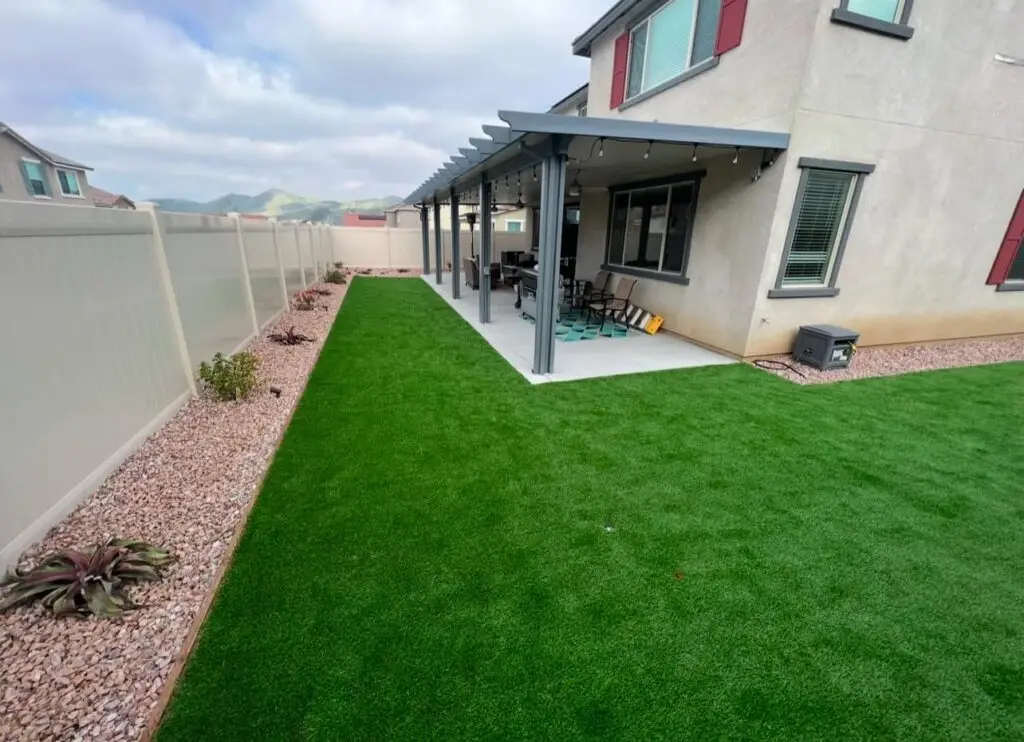
Ready to Create a More Open Outdoor Environment?
Tell OE Landscape what you want to simplify, improve, or rebuild, and start planning a yard where hardscape, planting, circulation, open space, drainage, and outdoor living work together naturally.