
Softening Sharp Architecture
with Planting
Discover how trees, grasses, shrubs, groundcovers, texture, movement, and layered planting can make clean modern architecture feel warmer without hiding its strongest features.
Let Planting Bring Warmth to Modern Architecture
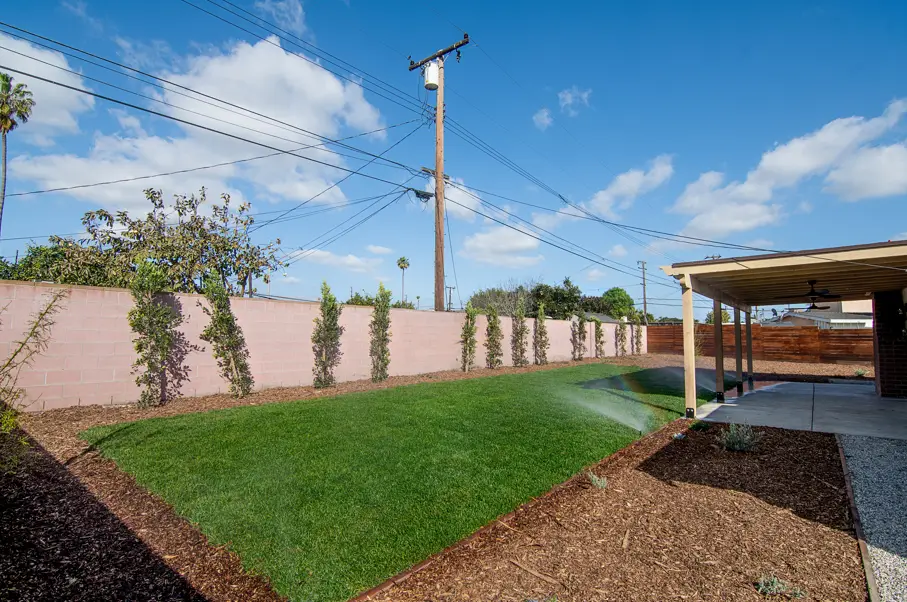
Modern homes often make a strong visual statement through clean lines, large walls, geometric forms, concrete surfaces, and crisp architectural edges.
These features can create a sophisticated and contemporary appearance, but without thoughtful landscaping, they can sometimes make an outdoor space feel too rigid, exposed, or visually harsh.
Planting provides one of the most effective ways to create balance.
Trees, grasses, shrubs, groundcovers, and other landscape elements can soften architecture without hiding it. The goal is not to cover strong design features, but to introduce movement, texture, depth, and natural variation around them.
At OE Landscape, we believe the best landscapes work with the architecture of the home. Thoughtful planting can help modern structures feel more welcoming while preserving the clean character that makes them distinctive.
Let Plants Contrast With Hard Surfaces
One of the simplest ways to soften architecture is through contrast.
Concrete, stucco, stone, glass, and metal tend to create solid, structured surfaces.
Plants provide the opposite qualities.
They move.
They change with the seasons.
Their shapes are less predictable.
They introduce different textures and shades of green.
Placing soft planting against hard architectural materials can make both elements more noticeable.
For example, ornamental grasses beside a smooth concrete wall create a strong contrast between rigid structure and natural movement.
The wall appears cleaner, while the plants feel even softer.
Use Planting Without Hiding the Architecture
Softening does not mean covering every wall with vegetation.
Strong architecture should still be visible.
Instead of planting a continuous screen directly in front of the building, designers can place plants selectively around key architectural features.
A sculptural tree might sit beside a large blank wall.
A low planting bed could run beneath horizontal windows.
Grasses may soften the base of a retaining wall without covering the entire surface.
This approach allows the architecture and landscape to remain distinct while still feeling connected.
Soften Corners With Layered Planting
Sharp building corners can attract a lot of visual attention.
Planting around these areas can create a more gradual transition between the house and landscape.
Instead of placing one large shrub directly against a corner, consider using several plant heights.
A taller plant might establish the background, while medium shrubs and lower grasses create softer layers in front.
This helps the corner feel less abrupt.
The architectural form remains visible, but the surrounding planting allows it to transition more naturally into the landscape.
Use Ornamental Grasses for Movement
Ornamental grasses are particularly useful in contemporary landscape design.
Their narrow leaves and natural movement contrast beautifully with straight walls and geometric hardscape.
Depending on the design, grasses can be used:
- Along walkways
- Beside patios
- At the base of walls
- Around stepping pads
- Within gravel planting areas
- Around raised planters
Grasses also change throughout the day as wind and light move through them.
This creates subtle visual activity around architecture that would otherwise remain completely static.
Introduce Curved Plant Forms
Sharp architecture does not always need curved hardscape to feel softer.
Plants can provide those curves naturally.
Rounded shrubs, spreading groundcovers, arching grasses, and broad tree canopies can all contrast with rectangular buildings.
A rounded planting mass beside a long straight wall creates visual relief without changing the architecture itself.
This is often more effective than introducing many decorative curves into the paving or hardscape.
The planting provides softness while the overall design remains clean.
Use Trees to Break Up Large Walls
Large blank walls are common in modern homes.
They can look dramatic, but they may also feel visually heavy.
A carefully positioned tree can help reduce that effect.
The trunk creates vertical structure, while the canopy introduces irregular shape, filtered light, and movement.
A tree does not need to completely cover the wall.
Often, a partial canopy overlapping the architecture creates a more interesting composition.
From inside the home, the tree may also become an attractive focal point through windows or glass doors.
Create Depth in Front of Flat Surfaces
A wall or fence can look especially harsh when everything in front of it is planted at the same depth.
Layered planting creates greater dimension.
A typical arrangement might include:
- Taller background plants
- Medium shrubs
- Ornamental grasses
- Low groundcovers
These layers create visual distance between the viewer and the wall.
The architecture becomes part of a deeper landscape composition rather than appearing as a flat boundary.
This approach can be especially effective along property lines and around retaining walls and hardscape features.
Let Plants Spill Slightly Over Edges
Clean edges are important in modern landscapes, but allowing some plants to extend gently over those edges can create a more natural appearance.
Groundcovers may soften the edge of a raised planter.
Grasses might lean slightly over a concrete border.
Low foliage can overlap stone or pavers.
This controlled softness prevents every boundary from feeling overly precise.
The key is balance.
Plants should soften the edge without completely hiding walkways or interfering with circulation.
Use Groundcovers to Reduce Hardness at the Base
The base of a wall is often where architecture can feel most disconnected from the landscape.
Low-growing plants can help create a smoother transition.
Groundcovers can fill the area between larger plants and hard surfaces while introducing texture and color.
They may also help visually connect separate planting groups.
When selected appropriately, groundcovers create a planted foundation that makes walls, fences, and retaining features feel more integrated into the landscape.
Combine Gravel With Soft Planting
Gravel and hardscape materials are frequently used in modern landscapes because they create clean, simple surfaces.
On its own, however, a large gravel area can feel sparse.
Introducing plants within the gravel helps balance that appearance.
Grasses, succulents, sculptural shrubs, or drought-tolerant plants can rise directly from the gravel surface.
This creates a contemporary look while avoiding the feeling of an empty hardscape area.
The gravel provides structure and simplicity, while the planting adds life and movement.
Use Repetition to Keep Soft Planting Organized
Softening architecture does not mean creating an uncontrolled garden.
Repetition can keep natural planting visually connected to modern design.
Instead of using many different plant varieties, designers may repeat a limited selection.
For example, the same grass can appear along several wall sections.
One shrub variety may be repeated around different architectural features.
A groundcover may connect multiple planting beds.
This consistency allows planting to feel relaxed without becoming visually chaotic.
Frame Architectural Features Instead of Covering Them
Some architectural elements deserve to remain visible.
A strong entryway, distinctive wall, large window, or sculptural facade may become more powerful when planting frames it rather than hiding it.
Low plants can keep important sightlines open.
Taller plants may be positioned toward the sides.
Trees can frame the structure from a distance.
This approach helps the landscape support the architecture rather than competing with it.
Use Plants to Balance Tall Vertical Elements
Tall walls, narrow structures, and vertical architectural features can sometimes feel imposing.
Planting can reduce that visual weight.
A tree canopy can create horizontal contrast.
Layered shrubs can widen the composition at ground level.
Grasses and lower plants can create a gradual transition from the tall structure into the surrounding landscape.
The goal is not to match the height of the wall with equally tall plants.
Sometimes horizontal or spreading plant forms provide a more effective counterbalance.
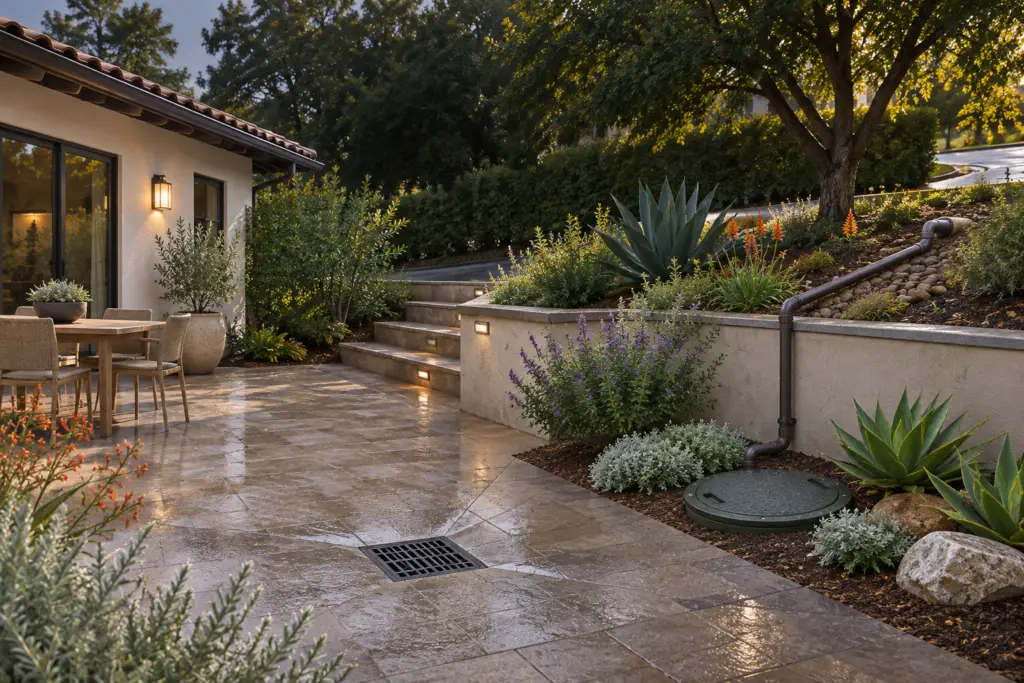
Soften Retaining Walls
Retaining walls are often necessary for sloped properties, but they can become visually dominant.
Planting can help integrate them into the landscape.
Options may include:
- Cascading plants above the wall
- Grasses along the base
- Shrubs in front
- Trees nearby
- Groundcovers between wall sections
If there are multiple terraces, planting can help visually connect each level.
This reduces the appearance of large uninterrupted wall surfaces and makes the slope feel more natural.
Use Planting Around Steps and Stairs
Modern stairways often use straight runs, broad concrete steps, or sharp geometric landings.
Plants can soften these transitions.
Low grasses or groundcovers beside steps can create contrast without obstructing movement.
Planting should remain clear of walking surfaces and allow enough room for mature growth.
The goal is to create a softer visual edge while preserving safe, obvious circulation.
Create Contrast Around Large Windows
Large windows are a defining feature of many modern homes.
Planting near them should be chosen carefully.
Too much vegetation can block light and views.
Too little may leave the architecture feeling exposed.
Low planting beneath windows can soften the building without covering glass.
Taller trees can be positioned farther away to frame views and create depth.
From inside the home, these plants become part of the daily view, helping create a stronger connection between the architecture and landscape. For more ideas, explore our sensory garden ideas.
Add Texture Around Smooth Stucco
Smooth stucco is common in Southern California architecture.
Because the surface is so clean, textured planting can provide an effective contrast.
Fine grasses, layered shrubs, plants with broad foliage, and sculptural forms can all add visual interest.
A simple white or neutral wall may become an ideal backdrop for plants because the architecture allows their forms to stand out clearly.
This combination often works particularly well in contemporary landscapes.
Use Planting to Break Up Long Fence Lines
Straight fences and walls can make a yard feel narrower or more enclosed.
Planting can help break up those long lines.
Instead of creating one continuous hedge, consider a layered arrangement with different heights and spacing.
A tree may interrupt one portion of the fence.
Several shrubs might form another group.
Grasses or groundcovers can connect the areas between them.
This creates visual rhythm and prevents the property boundary from becoming the dominant feature.
Create Softer Transitions Around Patios
A large patio or hardscape area can sometimes feel disconnected from the surrounding yard, particularly when it has sharp rectangular edges.
Planting around the perimeter can create a smoother transition.
Low plants can sit close to the hardscape.
Medium shrubs may be placed behind them.
Trees can provide height and shade farther out.
This layered approach helps the patio feel like part of the landscape rather than a hard surface placed within it.
Contrast Structural Plants With Loose Planting
Some plants have strong architectural shapes of their own.
Succulents, upright grasses, and sculptural evergreen plants can work well around modern homes.
However, using only rigid plant forms may reinforce the hardness of the architecture.
Combining structured plants with softer foliage creates better balance.
For example, a sculptural plant may become a focal point while surrounding grasses provide movement.
This creates a landscape that still feels contemporary without becoming too severe.
Use Shade Trees to Create a More Comfortable Scale
Large modern homes can sometimes feel visually oversized in relation to the yard.
Trees can help bring the property back to a more comfortable human scale.
A tree canopy creates a middle layer between the height of the house and the person using the space.
This can make patios, walkways, and gathering areas feel more sheltered.
Trees also introduce filtered light and moving shadows, which can soften large walls and paved surfaces throughout the day.
Keep Planting Away From the Structure When Needed
Softening architecture does not mean planting directly against every wall.
Adequate spacing is important for maintenance, mature growth, irrigation, and building access.
Plants should be selected based on their full size rather than how small they look at installation.
Leaving appropriate space around the structure can help avoid excessive pruning and prevent planting from overwhelming windows, doors, or architectural details.
Professional planning creates visual softness without sacrificing function.
Use Drought-Tolerant Plants Without Losing Softness
Drought-conscious landscaping can still feel lush and inviting.
Many climate-appropriate plants provide:
- Fine texture
- Silver-green foliage
- Seasonal flowers
- Sculptural form
- Soft movement
- Ground-level coverage
For Southern California properties, thoughtful plant combinations can create visual softness while supporting more practical water use.
Grouping plants with similar water requirements can also improve irrigation efficiency and simplify long-term care.
Choose a Limited Color Palette
Color can influence how soft or structured a landscape feels.
Modern architecture often benefits from a controlled planting palette.
A foundation of green, blue-green, or silver foliage can create a calm backdrop.
Selected flowering plants can then introduce softer accents.
White, pale purple, blue, or muted colors can work beautifully around neutral architecture.
Brighter colors can still be used, but they may be most effective in smaller amounts.
A focused color palette helps plants soften the architecture without creating visual clutter.
Use Shadows as Part of the Design
Plants do more than occupy physical space.
They also create changing shadows.
A tree canopy may cast moving patterns across a plain wall.
Grasses can create delicate shadows in late-afternoon light.
Sculptural plants may produce dramatic shapes against smooth stucco.
These shadows add depth and movement to architecture that might otherwise appear static.
The effect changes throughout the day, giving the property a different character in the morning, afternoon, and evening.
Add Landscape Lighting Carefully
Landscape lighting can preserve the relationship between plants and architecture after dark.
Instead of illuminating every surface, focus on a few important elements.
Uplighting a tree can project its form against a wall.
Soft lighting beneath grasses can emphasize texture.
A low-level light along a planting bed can separate greenery from a hardscape edge.
Subtle lighting generally creates a more refined result than excessive brightness.
The goal is to reveal both the structure and the planting.
Allow Nature to Introduce Controlled Imperfection
One of the qualities that makes planting so effective around modern architecture is that plants are never completely static or perfect.
Leaves shift.
Branches grow.
Grasses move.
Flowers appear and disappear.
These natural changes create contrast with fixed architectural geometry.
A professional landscape can still maintain clean lines and organized planting while allowing nature to introduce small variations.
That controlled imperfection often makes contemporary outdoor spaces feel more comfortable and lived in.
Balance Softness With Structure
Too much softness can also work against modern architecture.
If every edge disappears beneath planting and every wall is covered, the clarity of the architecture may be lost.
The strongest landscapes usually balance both approaches. This same principle is explored in how professional designers build visual balance.
Hardscape establishes the main structure.
Planting softens selected edges.
Open space gives the composition room to breathe.
Trees provide scale.
Groundcovers connect surfaces.
Grasses introduce movement.
Together, these elements create a landscape that feels natural without losing the clean character of the home.
Create a Modern Landscape That Feels More Inviting
Sharp architecture does not need to feel cold. Thoughtful planting can also support more comfortable outdoor spaces designed around wellness.
With carefully selected plants and thoughtful placement, even the most geometric home can be surrounded by a landscape that feels warm, comfortable, and connected to nature.
The key is to work with the architecture rather than trying to disguise it.
At OE Landscape, we help Southern California homeowners transform outdoor spaces through professional landscape installation and hardscaping, plant installation, irrigation systems, artificial turf, and outdoor living improvements.
By combining strong architectural forms with layered planting, natural textures, trees, grasses, and climate-appropriate plant choices, a property can maintain its modern character while feeling more welcoming and complete.
Ready to soften the landscape around your home? Contact OE Landscape to explore planting and outdoor improvement ideas designed to complement your property's architecture.
Create a Modern Landscape That Feels More Inviting
Planting can soften walls, patios, retaining features, windows, steps, and other strong architectural elements while preserving the clean lines that give a modern home its character.
See How Planting and Hardscape Work Together
Explore OE Landscape projects where grasses, trees, shrubs, hardscape, outdoor living areas, and structured planting work together to create a more comfortable outdoor environment.
Explore Project Gallery
Ready to Soften the Landscape Around Your Home?
Tell OE Landscape what you want to improve and start planning an outdoor environment where planting, architecture, hardscape, and everyday use work together naturally.