Landscape Grading: Why the Direction of Water Flow Matters
Landscape grading for drainage helps control where rainwater and irrigation runoff travel. Learn why even small elevation changes matter, how grading supports catch basins and other drainage systems, and why the direction of water flow should be planned before finished landscaping is installed.
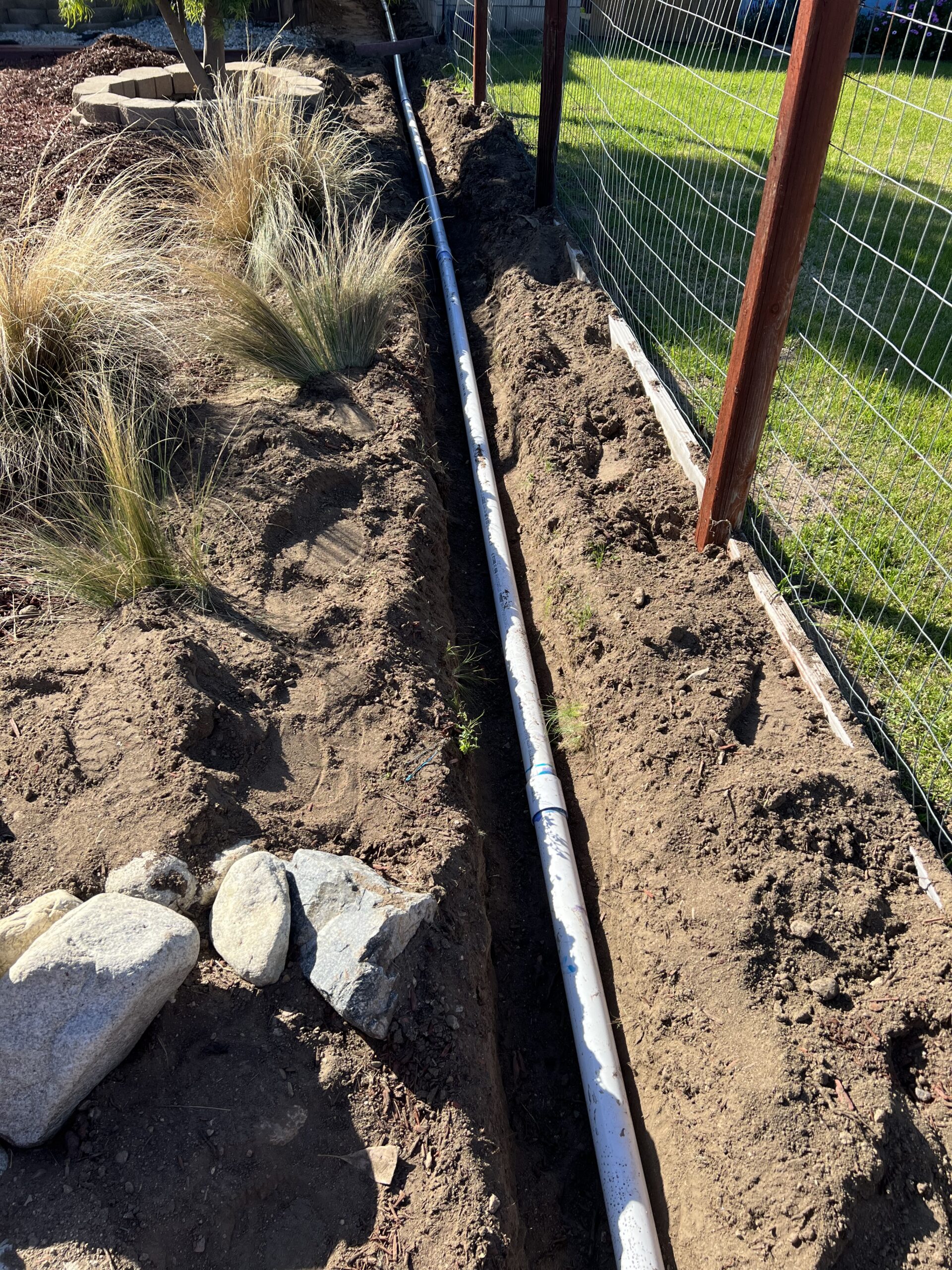
Why Landscape Grading for Drainage Matters
Landscape grading for drainage starts with a simple principle: water always looks for the lowest point.
That simple fact influences almost every drainage decision around a home.
When a yard is graded correctly, rainwater and irrigation runoff are guided away from sensitive areas and toward locations where the water can be collected, absorbed, or discharged appropriately.
When grading is poor, water may travel toward the house, settle in low areas, wash soil from slopes, collect beside patios, or repeatedly create soggy sections of lawn.
At OE Landscape, we view landscape grading as one of the most important foundations of a successful drainage system. French drains, catch basins, channel drains, sump pumps, and underground piping can all help manage water, but they work best when the shape of the landscape helps move water in the right direction.
For additional context on runoff from paved and developed surfaces, see the U.S. EPA overview of urbanization and stormwater runoff.
What Is Landscape Grading for Drainage?
Landscape grading for drainage is the process of shaping the ground to control elevation and water movement.
Even small changes in height can influence where runoff travels.
A properly graded yard may use subtle slopes to direct water:
- Away from the home
- Toward yard drains
- Toward catch basins
- Away from patios and doors
- Toward appropriate drainage outlets
- Around outdoor living areas
- Away from unstable slopes
Grading does not always mean dramatic earthwork.
In many residential landscapes, the changes are gradual enough that homeowners barely notice them.
The water notices them.
Why Water Direction Matters
Rainfall does not disappear when it reaches the ground.
It must either:
- Soak into the soil
- Flow across the surface
- Enter a drainage system
- Collect in a low area
If the landscape does not provide a controlled direction, water chooses its own route.
That can lead to runoff flowing toward:
- Foundations
- Garage doors
- Sliding doors
- Retaining walls
- Side yards
- Planting beds
- Neighboring low areas
The purpose of grading is to create a predictable surface-water flow path before the water begins creating problems.
Water Should Generally Move Away From the Home
One of the most important grading goals is keeping unnecessary runoff from moving toward the structure.
The soil around a home should not function like a bowl that collects rainwater.
Instead, the surrounding grade should help encourage water to move outward toward a planned drainage path.
If the grade slopes toward the house, even moderate rainfall can begin collecting near exterior walls.
Roof runoff from gutters and downspouts can make the situation worse.
A drainage system works best when both the roof and landscape direct water away from sensitive areas.
Small Elevation Changes Can Make a Big Difference
A yard may look flat even when it is not.
A difference of only a few inches can determine whether water:
- Reaches a catch basin
- Stops before a drain
- Flows toward the house
- Pools beside a patio
- Continues toward an outlet
This is why visual inspection alone does not always reveal the entire drainage problem.
In complicated yards, elevations may need to be measured to understand how the property actually falls.
The goal is to create positive drainage, meaning water has a clear downhill route toward the intended destination.
Low Spots Create Standing Water
Standing water often forms where the landscape contains a depression.
These low areas may develop because of:
- Original grading
- Soil settlement
- Construction
- Tree removal
- Hardscape installation
- Erosion
- Repeated foot traffic
Once a depression forms, water naturally travels toward it.
Adding a catch basin may help, but the surrounding area still needs to guide water toward the drain.
If the basin sits higher than the actual low point, the water may continue pooling beside it.
Grading and drainage inlets should be planned together.
Grading Can Reduce the Need for Additional Drains
Not every drainage problem needs another pipe or catch basin.
Sometimes the issue is simply that the surface is directing water toward the wrong location.
Correcting the grade may allow water to reach an existing drain or move naturally toward an appropriate outlet.
This can create a simpler drainage system with fewer mechanical or underground components.
Before adding drainage infrastructure, it is worth asking whether the land itself can be reshaped to improve water movement.
Grading and Catch Basins Work Together
Catch basins collect water at specific low points.
Good grading helps deliver the water to those locations.
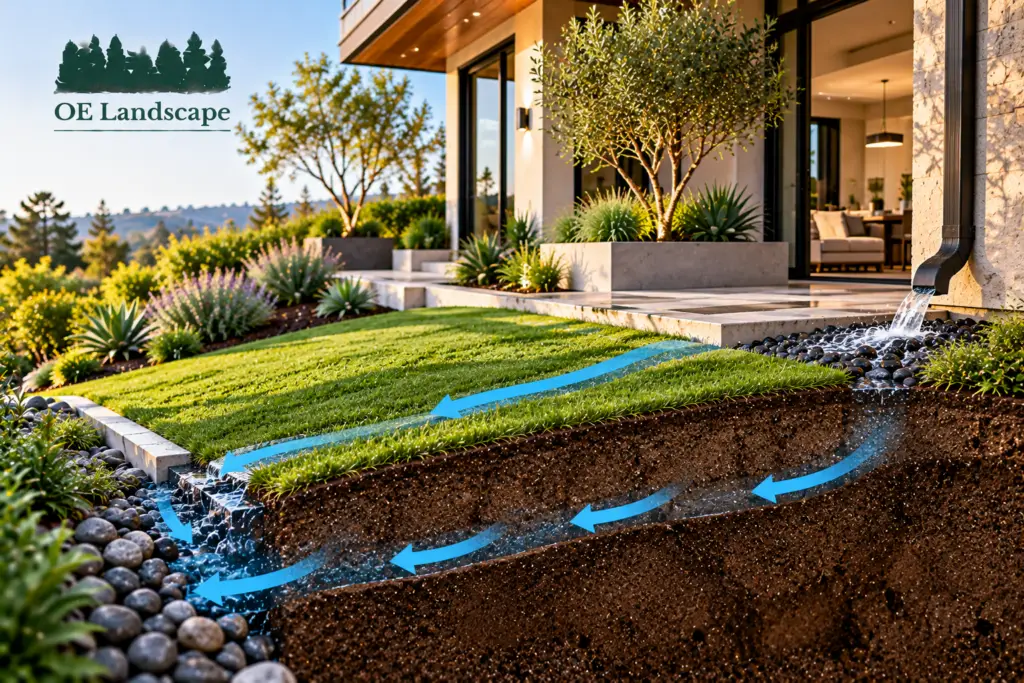
A typical surface drainage pattern may look like:
High area → gentle slope → catch basin → underground pipe → outlet
If the first part of that sequence is wrong, the basin cannot perform effectively.
This is why catch basin placement should usually be based on the finished grade rather than chosen independently.
The drain should sit where the water naturally wants to go.
French Drains Do Not Replace Surface Grading
French drains are excellent for certain subsurface drainage problems.
But they should not automatically replace correct grading.
If large amounts of surface runoff are traveling toward a house, simply installing a French drain may not address the entire problem.
Surface water should first be managed through:
- Proper slope
- Catch basins
- Swales
- Channel drains
- Other appropriate collection methods
The French drain can then help manage water moving through saturated soil.
Surface and subsurface drainage often require different strategies.
Grading Around Patios Is Essential
Patios need carefully planned elevations.
Water should generally move away from the home and toward an appropriate drainage area.
If a patio is nearly level or slopes toward a doorway, rainwater may collect against the building.
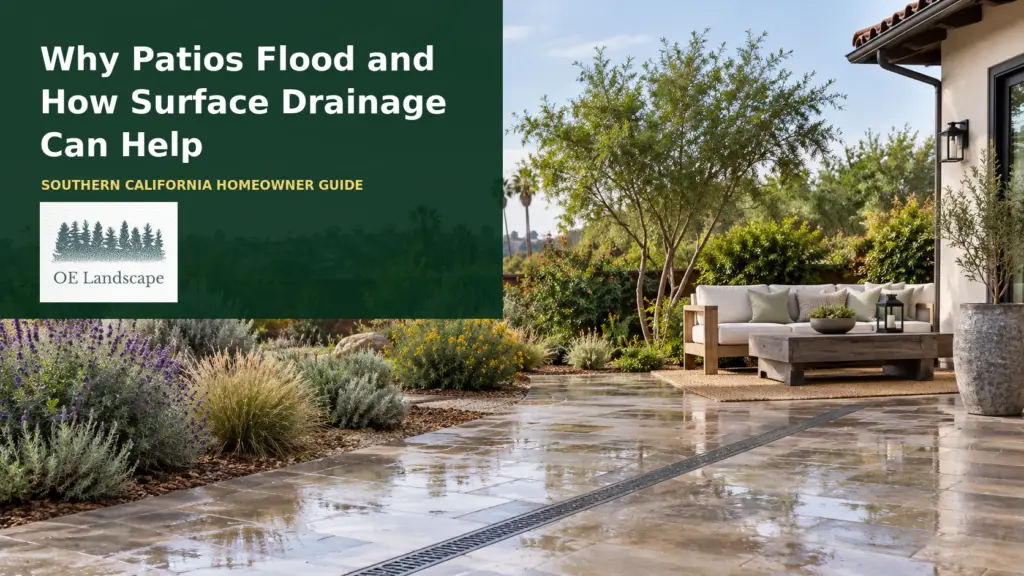
Proper patio drainage may involve:
- Surface slope
- Channel drains
- Catch basins
- Adjacent landscape grading
The finished hardscape and surrounding soil should be considered as one drainage system.
A patio that drains correctly but sends all its water into a low planting bed may simply move the problem elsewhere.
Driveways Can Create Large Runoff Areas
Driveways often collect significant amounts of rainfall.
Because they are hard surfaces, most of that water moves across the surface rather than soaking into the ground.
The driveway grade determines where the runoff travels.
Ideally, water should not be directed toward:
- The garage
- Low side yards
- The foundation
- Neighboring properties
In some situations, grading can direct water toward the street or another approved outlet.
In others, a channel drain may be needed to intercept runoff.
The best solution depends on the site's elevation.
Walkways Can Redirect Water Unexpectedly
Walkways seem small compared with driveways or patios, but they can still change runoff patterns.
A concrete walkway can act almost like a small channel.
Water may follow its edge and eventually collect near:
- Steps
- Doors
- Side yards
- Planting beds
When walkways are installed, their slope and relationship to surrounding grades should be considered.
A beautiful path should not unintentionally become the route that sends water toward the house.
Side Yards Are Often Difficult to Grade
Side yards can be challenging because they are narrow and may contain:
- Utility lines
- Fences
- Air-conditioning equipment
- Walkways
- Downspouts
- Limited elevation difference
If both neighboring grades and hardscape restrict the available slope, water may collect in the middle.
A side-yard drainage solution may require:
- Regrading
- Catch basins
- Underground pipe
- Downspout connections
- A sump pump if no gravity outlet is available
The available elevation often determines which option is practical.
Swales Can Direct Water Without Underground Pipe
A swale is a shallow graded depression designed to guide surface water.
Unlike a trench drain or underground pipe, a swale uses the shape of the land itself.
Swales may be:
- Grassed
- Planted
- Gravel-lined
- Integrated into larger landscape areas
They are often useful where there is enough space to create a broad, shallow drainage route.
The design should prevent erosion while maintaining a clear downhill path.
Slopes Need Controlled Water Flow
Water moving down a slope can gain speed.
If runoff becomes concentrated, it may create:
- Ruts
- Exposed roots
- Washed-out soil
- Sediment buildup
- Damage to planting
Grading on hillsides should control not only where the water goes, but also how quickly it moves.
Possible strategies may include:
- Terracing
- Swales
- Planting
- Erosion-control materials
- Drainage inlets
- French drains
- Retaining structures
A hillside drainage plan should consider runoff velocity as well as runoff direction.
Grading Can Help Reduce Erosion
Erosion often occurs when water is concentrated into a narrow path.
A poorly shaped yard may accidentally funnel runoff through one small section.
Correct grading can spread water more evenly or redirect it toward a controlled drainage feature.
Vegetation can also help stabilize soil.
Trees, shrubs, groundcovers, and grasses can reduce exposed soil and support slope stability.
Drainage and erosion control should be planned together.
Roof Runoff Changes the Grading Equation
Gutters and downspouts can add substantial water to the landscape.
A yard that handles direct rainfall adequately may become overwhelmed if several downspouts release water into the same area.
When evaluating grading, always look at:
- Where each downspout ends
- Which direction the ground slopes
- Whether water reaches a drain
- Whether roof runoff crosses hardscape
In some situations, downspouts should be connected to solid underground pipe rather than discharged onto the surface.
The roof and landscape should function as one property-wide runoff system.
New Hardscape Can Change Existing Drainage
A landscape may drain well until a new patio, driveway, or walkway is installed.
Hardscape changes both elevation and permeability.
An area that once absorbed rainfall may begin sending runoff toward another part of the property.
This is why grading should be reviewed whenever significant hardscape is added.
The project should determine:
- Where the new surface will drain
- Whether surrounding soil can handle the added runoff
- Whether new drains are needed
- Whether existing outlets have enough capacity
Drainage planning should occur before the final hardscape elevations are established.
Retaining Walls Change the Shape of the Property
Retaining walls can significantly alter drainage patterns.
A wall may create:
- A high terrace
- A lower flat area
- A new low point
- A barrier to surface runoff
Water may collect above, below, or behind the structure.
Grading around retaining walls should therefore be coordinated with subsurface drainage.
Depending on the project, this may include:
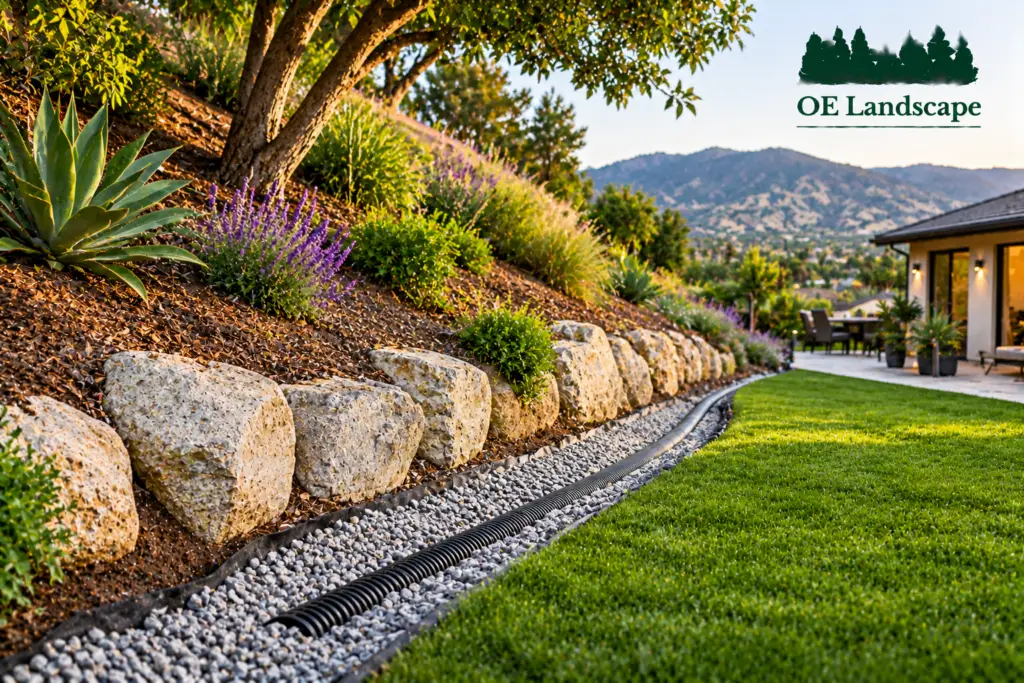
- Gravel
- Perforated pipe
- Surface drains
- Swales
- Outlets
The goal is to prevent water from becoming trapped around the structure.
Planting Beds Need Correct Elevation Too
Planting beds are sometimes built higher than surrounding areas for appearance.
That can be useful, but it may also change runoff direction.
If the bed is raised beside a house, water may be redirected toward the structure.
If the bed is too low, it may become a collection basin.
Planting areas should be shaped so excess water has a way to leave.
The needs of the plants should also be considered.
Some species tolerate moisture better than others.
Grading and Irrigation Should Be Coordinated
Poor grading can magnify irrigation problems.
Water from sprinklers may run downhill and collect in low areas.
Drip irrigation may also contribute to saturated soil if it is concentrated in areas that already drain slowly.
When evaluating a wet yard, ask whether the water is coming from:
- Rain
- Irrigation
- Roof runoff
- Neighboring slopes
- A combination
A drainage solution should address the actual source rather than simply removing water after it accumulates.
Artificial Turf Still Needs Proper Grading
Artificial turf does not eliminate the need for drainage.
The surface may allow water through, but the base underneath still needs to direct that water somewhere.
If the underlying grade contains low areas, moisture may collect beneath the turf.
Before installation, the site may need:
- Regrading
- Base preparation
- Catch basins
- Drainage pipe
- A sump system in very low areas
Drainage should be corrected before the finished turf surface is installed.
Lawn Areas Can Reveal Grading Problems
Natural lawn often makes drainage issues easy to identify.
Watch for:
- Persistent muddy spots
- Yellow or stressed grass
- Areas that remain soft after rain
- Water collecting along edges
These symptoms may indicate a low point or poor drainage route.
Regrading can sometimes improve the issue by moving water toward an existing outlet.
Other situations may require catch basins or subsurface drainage.
Gravel Does Not Automatically Fix Poor Grading
Replacing a muddy area with gravel may improve appearance, but it does not necessarily correct the drainage pattern.
Water can still collect beneath the gravel if the underlying surface is low.
The area may look dry while the soil below remains saturated.
Gravel should be installed over a properly planned grade.
If the area receives significant runoff, a drainage inlet may also be necessary.
Grading Should Consider Neighboring Elevations
Water does not recognize property lines.
A yard may receive runoff from higher neighboring areas.
Likewise, grading changes should not direct excessive runoff onto adjacent properties.
A drainage plan should consider:
- Existing neighboring elevations
- Fences
- Walls
- Slopes
- Shared drainage patterns
The goal is to manage water within the property in a responsible way while following applicable requirements.
Flat Properties Can Be More Difficult Than Sloped Ones
A steep property clearly shows which direction water will travel.
Flat yards can be more complicated.
There may be very little natural fall available for drainage pipe.
In these situations, small elevation changes become extremely important.
A drainage plan may need to create subtle slopes across long distances.
If there is no lower outlet available, a sump pump may eventually be required.
Gravity Is the Simplest Drainage Tool
Whenever possible, drainage systems often work best when they can rely on gravity.
Gravity:
- Requires no electricity
- Has no mechanical pump
- Operates continuously
- Generally needs less maintenance
Good grading makes gravity work for the property.
Rather than fighting the natural movement of water, the landscape is shaped to take advantage of it.
Pumps are useful when needed, but grading should usually be evaluated first.
When Grading Alone Is Not Enough
Some properties have limitations that cannot be solved simply by reshaping the surface.
Examples include:
- A yard below street level
- A sunken patio
- Deep low points
- Restricted side yards
- Retaining walls
- Existing structures
In these situations, grading may still help direct water toward collection points, but additional drainage systems may be required.
Possible solutions include:
- Catch basins
- French drains
- Channel drains
- Sump pumps
The grading establishes the flow path; the drainage system finishes the job.
Channel Drains Depend on Surface Grading
Channel drains are especially effective across paved surfaces, but only when water is directed toward them.
A driveway channel drain can be installed perfectly, yet runoff may bypass it if the surface slopes toward the ends.
The hardscape should funnel water across the collection line.
This is another example of why drain placement and finished elevation must be designed together.
Catch Basins Should Sit at True Low Points
A catch basin should generally be placed where water naturally gathers.
If the surrounding grade is altered after the basin is installed, the drain may no longer sit at the low point.
This can leave standing water nearby.
During landscape construction, final elevations should be checked carefully before surrounding surfaces are completed.
A few inches can determine whether the basin captures the water or misses it.
Sump Pumps Solve Elevation Problems
If grading can direct water to a low point but there is no lower gravity outlet, a sump pump may be used.
The grading sends water toward:
- Catch basins
- Channel drains
- French drains
These systems feed a sump basin.
The pump then lifts the water to an appropriate discharge elevation.
This shows how grading remains important even in pumped drainage systems.
The pump moves the water vertically; grading gets it to the pump.
Watch the Yard During Rain
One of the best ways to understand grading is to watch the property during a storm.
Look for:
- Where water first appears
- Which direction it travels
- Where separate flows combine
- Where water slows down
- Where puddles develop
- Which drains receive water
- Which drains are bypassed
Video can be especially useful because it shows movement rather than only the final puddle.
These observations can reveal drainage patterns that are difficult to see during dry weather.
Look for Evidence After the Storm
Even if you cannot watch the yard during rain, the landscape may leave clues afterward.
Look for:
- Debris lines
- Washed-out mulch
- Gravel movement
- Soil erosion
- Water stains
- Muddy areas
- Sediment around drains
These patterns often show where runoff traveled.
They can help identify both the high points and the low points of the yard.
Do Not Assume the Biggest Puddle Is the Only Problem
Standing water shows where runoff ends.
It does not necessarily show where the drainage problem begins.
A large backyard puddle may receive water from:
- The roof
- A patio
- A slope
- A side yard
- Irrigation
Simply installing a drain in the puddle may help, but understanding the upstream flow can lead to a better solution.
Sometimes the water should be intercepted before it reaches the low point.
Landscape Renovations Are a Good Time to Correct Grades
If a property is already being renovated, grading should be evaluated early.
Before installing:
- New plants
- Irrigation
- Artificial turf
- Pavers
- Lighting
- Outdoor kitchens
the drainage pattern can be corrected.
This allows underground drainage infrastructure to be installed before finished surfaces are completed.
Proper construction sequencing can reduce the need to tear out new landscaping later.
Grading Can Improve Outdoor Living Areas
Good grading is not only about preventing drainage problems.
It also improves usability.
A patio that drains correctly dries faster.
A lawn without low spots stays more usable.
Walkways remain cleaner.
Planting beds are less likely to become muddy.
Drainage is one of the hidden systems that helps a finished landscape remain comfortable after rain.
Avoid Making Slopes Too Abrupt
Water needs slope to move, but more slope is not always better.
An excessively steep grade can increase runoff speed and erosion.
The design should create enough fall for drainage while maintaining stability and usability.
Gentler, controlled slopes are often preferable where space allows.
The correct grade depends on the surface and site conditions.
Transitions Need Special Attention
Drainage problems often develop where one surface meets another.
Examples include:
- Patio to lawn
- Driveway to garage
- Walkway to planting
- Slope to flat yard
- Retaining wall to lawn
These transitions can create unexpected low points.
During grading, elevations should be checked across the entire transition rather than treating each surface independently.
The water must be able to continue moving from one zone to the next.
Grading Can Help Protect Landscape Materials
Uncontrolled runoff can move:
- Mulch
- Gravel
- Soil
- Decomposed granite
Correct grading reduces the tendency for water to cut through landscape materials.
It can also direct flow toward stabilized areas or drainage inlets.
This helps preserve the finished appearance of the landscape after storms.
Drainage Should Follow the Property, Not Fight It
Every property has natural elevation patterns.
Good landscape planning works with those conditions where possible.
Trying to force water in the opposite direction may require:
- Deeper excavation
- More drainage pipe
- Pumps
- Additional infrastructure
Sometimes a better solution is to use the existing slope and redirect water toward an outlet that already makes sense.
Understanding the site before designing the landscape can simplify the drainage system.
Common Landscape Grading Mistakes
Drainage problems can develop when:
- Soil slopes toward the home
- Catch basins are installed above low points
- Patios drain toward doors
- Downspouts discharge into depressions
- New planting beds block existing drainage paths
- Hardscape redirects water into small landscape areas
- Slopes concentrate runoff too aggressively
- Final elevations are changed after drainage is installed
These issues show why grading should be treated as part of the overall landscape plan, not a final adjustment.
Good Grading Can Be Almost Invisible
The best grading usually does not look dramatic.
A visitor may never notice the subtle slope across a lawn or patio.
They simply notice that the property does not remain flooded after rain.
This is one of the strengths of good drainage design.
The infrastructure and elevations quietly guide water without becoming the main visual feature of the yard.
A Drainage System Starts With Direction
Effective landscape grading for drainage begins before choosing a French drain, catch basin, channel drain, or sump pump. Start with a more basic question:
Which direction should the water travel?
Once that is understood, the rest of the drainage system becomes easier to plan.
Grading determines the path.
Drains collect the water.
Pipes carry it.
Outlets provide the destination.
Each part depends on the one before it.
At OE Landscape, we help Southern California homeowners address drainage challenges through landscape grading, French drains, yard drains, catch basins, channel drains, sump pumps, gutter and downspout drainage, erosion-control solutions, irrigation improvements, and complete landscape renovations.
By shaping the property so water moves in the right direction from the beginning, homeowners can create outdoor spaces that function better during storms and remain easier to use throughout the year.
OE Landscape – CA C-27 License #1109316 | Bonded & Insured
Concerned about standing water, runoff, or the direction water moves across your property? Contact OE Landscape to discuss grading and drainage solutions designed around your home's elevation, hardscape, landscape, and water-flow conditions.
Plan Elevations, Collection Points, Pipe Routes, and Outlets as One System
Grading determines where surface water wants to travel. OE Landscape can coordinate grading with catch basins, French drains, channel drains, sump systems, hardscape, irrigation, artificial turf, planting, and broader landscape improvements.
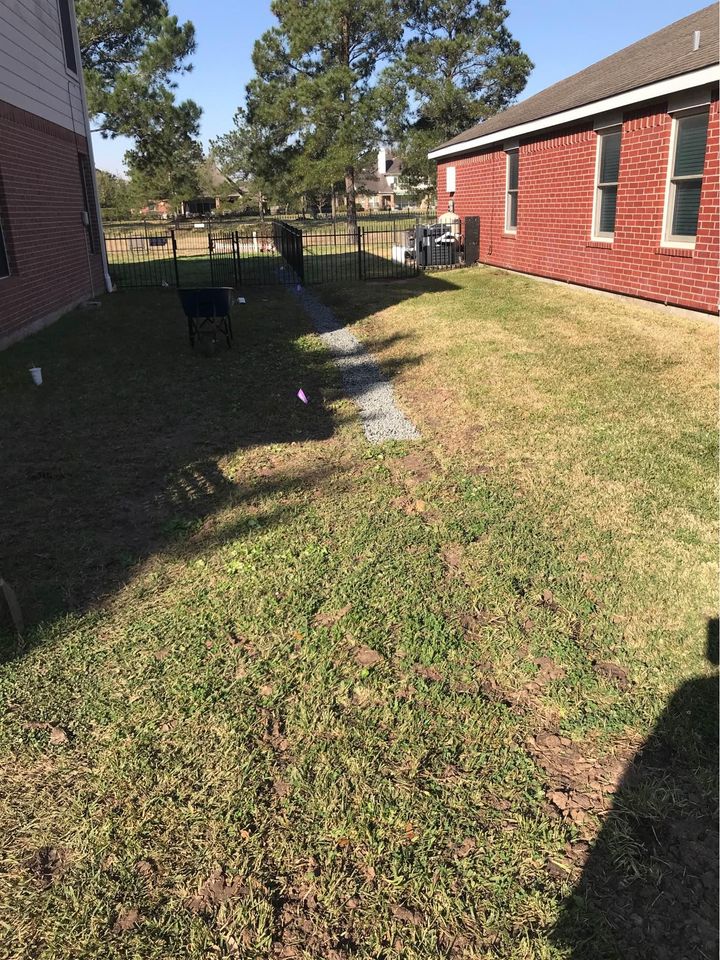
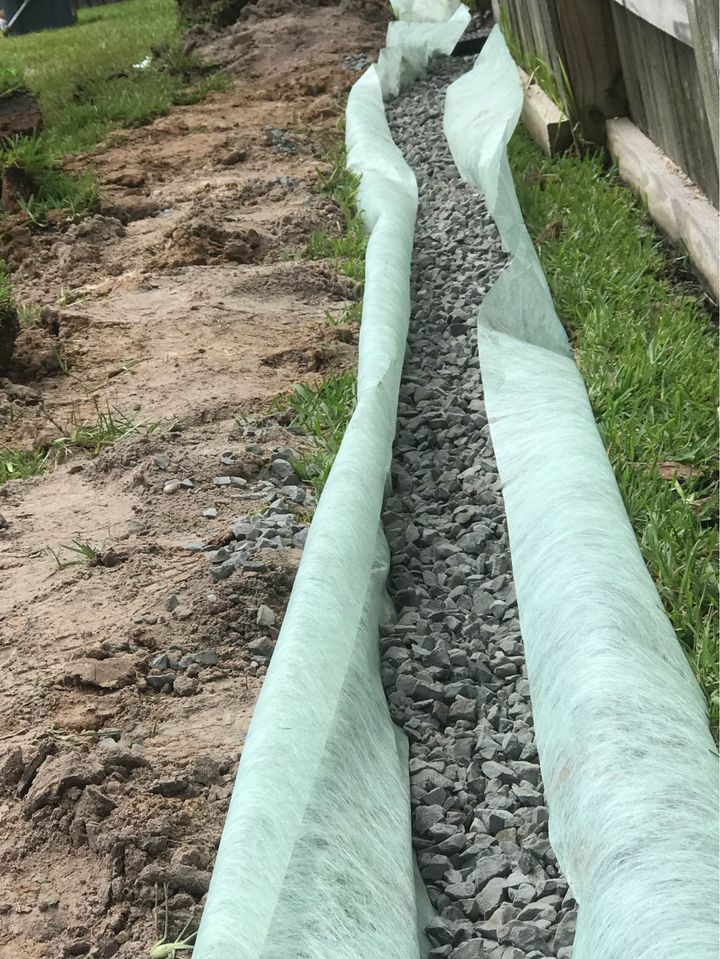
Start With the Direction of Water Flow Before Choosing the Drainage Hardware.
Tell OE Landscape where water starts, where it travels, where it collects, and which hardscape or landscape areas are involved. We can review grading, collection points, underground piping, and practical drainage options for the property.