
OE Landscape | Patio Water Management
Why Patios Flood and How Surface Drainage Can Help
Patios flood when water collects faster than it can leave. Patio surface drainage combines grading, collection, and a suitable outlet to help guide runoff away from vulnerable areas.
Start with the water path
A puddle is a clue, not the whole problem
A Southern California patio can collect water after a strong rain, irrigation overspray, or roof runoff. A shallow puddle may point to a low spot; water moving toward a door or foundation deserves closer attention.
Effective patio surface drainage begins by tracing water from its source across the paving and onward to a suitable destination. OE Landscape's drainage services consider the surrounding landscape, hardscape, and available drainage routes together.
Why does a patio flood?
Concrete and other impervious surfaces shed water. If the patio is too flat, slopes toward the house, has settled into a depression, or is bordered by higher ground or walls, water may have no clear way off the surface. Leaves and sediment can also block an existing drain.
The patio may receive more than the rain that falls directly on it. A downspout, an uphill yard, adjacent paving, or irrigation overspray can add flow. Pavers are not automatically permeable: drainage depends on the complete surface, joints, base, soil, and design.
Water at a threshold or against a foundation can increase the risk of intrusion. The U.S. Department of Energy's Building America guidance recommends directing nearby impervious surfaces away from foundations; a local professional should assess the applicable requirements and site constraints.
Trace the water before choosing a fix
When it is safe, observe from a protected position during rain and take photos or short videos. Note whether water comes from a roof outlet, higher planting bed, paved area, or irrigation. Mark the first place it gathers, whether it reaches a door, and how it leaves after rainfall stops.
- Locate puddles and the apparent low edge.
- Look for blocked grates and downspouts.
- Note nearby walls, steps, and thresholds.
- Identify the likely route beyond the patio.
Do not walk through deep or fast-moving water, or approach electrical equipment in wet areas. Water entering the home, persistent saturation near a foundation, erosion, or movement around a retaining wall warrants prompt professional assessment.
Patio surface drainage solutions
Grading and repair: Correcting a local low spot or rebuilding part of a patio can give water a route away from the home. Door heights, accessibility, paving, and nearby elevations all limit what can be changed.
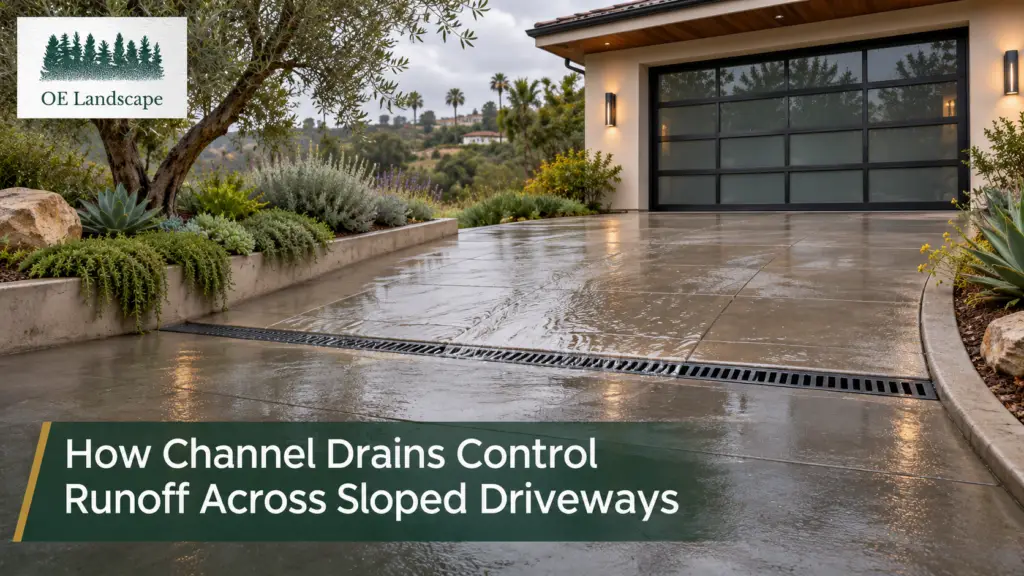
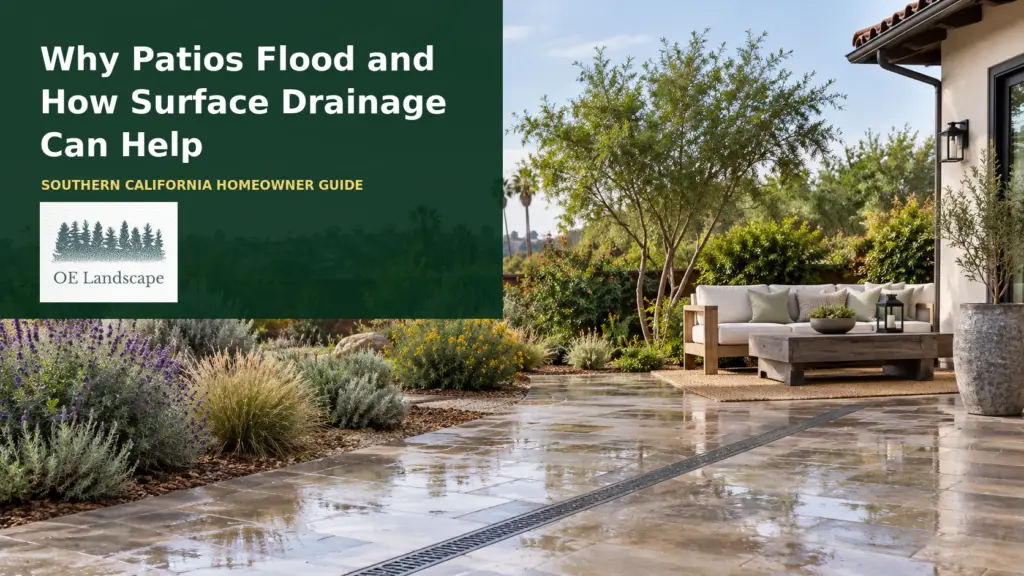
Channel or area drains: A channel drain can intercept flow along a patio edge, while a catch basin may collect water converging at a low point. The paving must direct water to the inlet, and the drain needs a properly planned outlet. Read more about channel drains for patios and driveways.
Swales and landscape areas: Where space and site conditions allow, a shallow swale can guide runoff through the landscape. A properly designed rain garden or permeable paving system may help manage some runoff, but soil infiltration, setbacks, overflow, and local rules matter. The EPA explains these green infrastructure approaches.
A French drain generally addresses water moving through saturated soil; it is not automatically a replacement for an inlet designed to capture water flowing across a paved patio. Some sites need more than one approach.
Where will the collected water go?
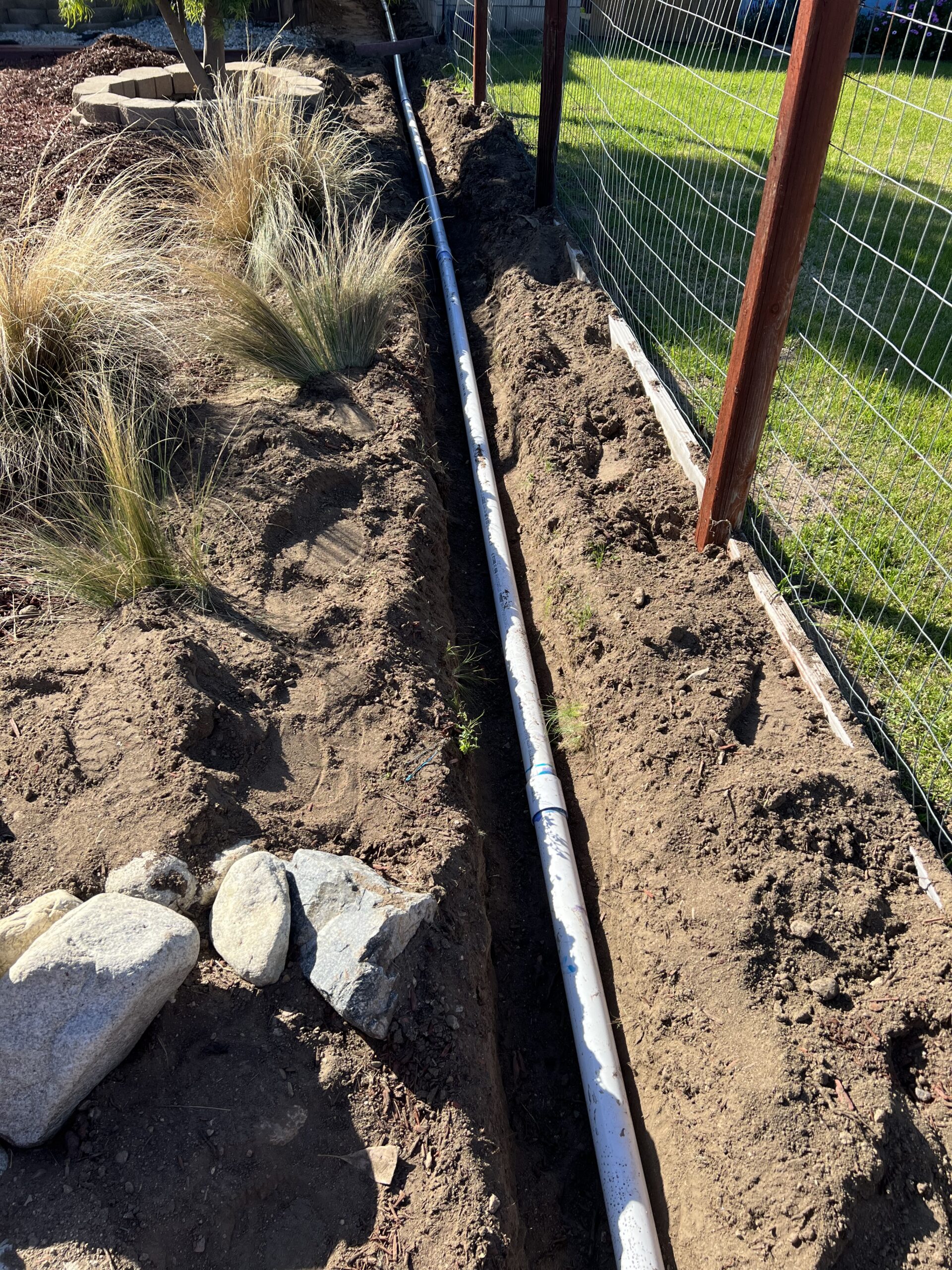
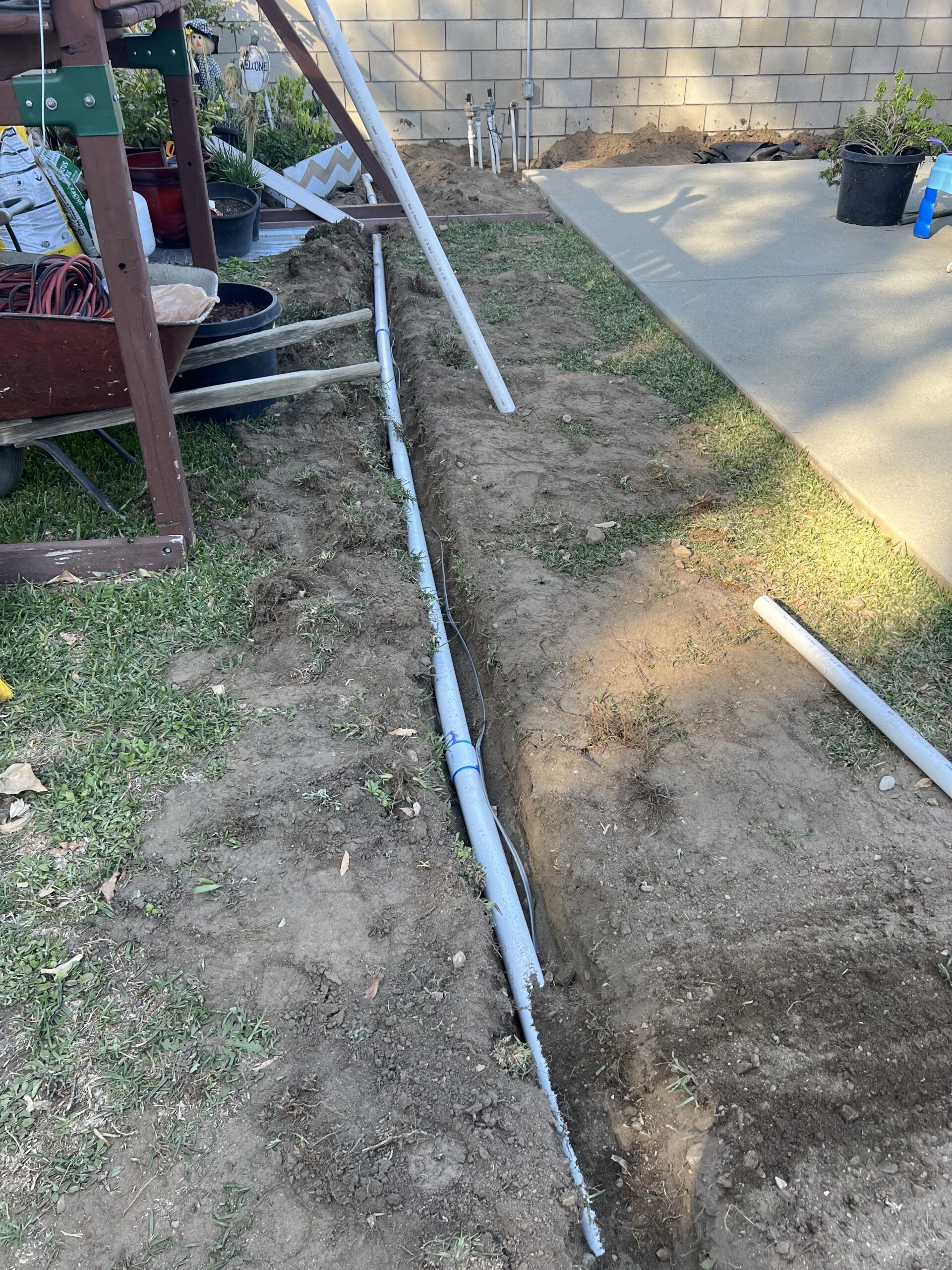
A grate is the beginning, not the end. Review the route, pipe elevation and capacity, cleanout access, and receiving location before cutting paving. A gravity outlet must be lower than the collection point. A recessed patio without a workable gravity route may need an engineered sump and pump, including a plan for maintenance and power interruptions.
There is no universal fix and no drainage system can guarantee freedom from flooding in every storm. The objective is a site-appropriate plan for the runoff and conditions it is designed to handle.
Keep the route open
Before the rainy season and after storms, clear accessible leaves and debris from grates, gutters, and visible flow paths. Follow the manufacturer's instructions when removing a grate. Keep planters and stored items from obstructing inlets, and check for recurring sediment, pooling, or irrigation overspray.
Share photos and observations when requesting help. OE Landscape can review drainage options alongside patio and hardscape work and landscape planning. Request a free estimate and describe where water starts, collects, and travels.
Drainage + Hardscape
Plan for the whole water path
OE Landscape reviews drainage with the surrounding grading, paving, downspouts, and landscape. The right combination depends on the property's elevations and a suitable discharge route.
A clearer path for runoff
Ready to address patio flooding?
Tell OE Landscape where water collects and what happens during rain or irrigation.