


Channel Drains for Patios and Driveways: Preventing Runoff Problems
Channel drains for patios and driveways intercept surface water across a continuous line before it reaches a garage, doorway, low patio edge, or overloaded planting bed. They work best when placement, slope, capacity, underground piping, and the final discharge point are designed together.
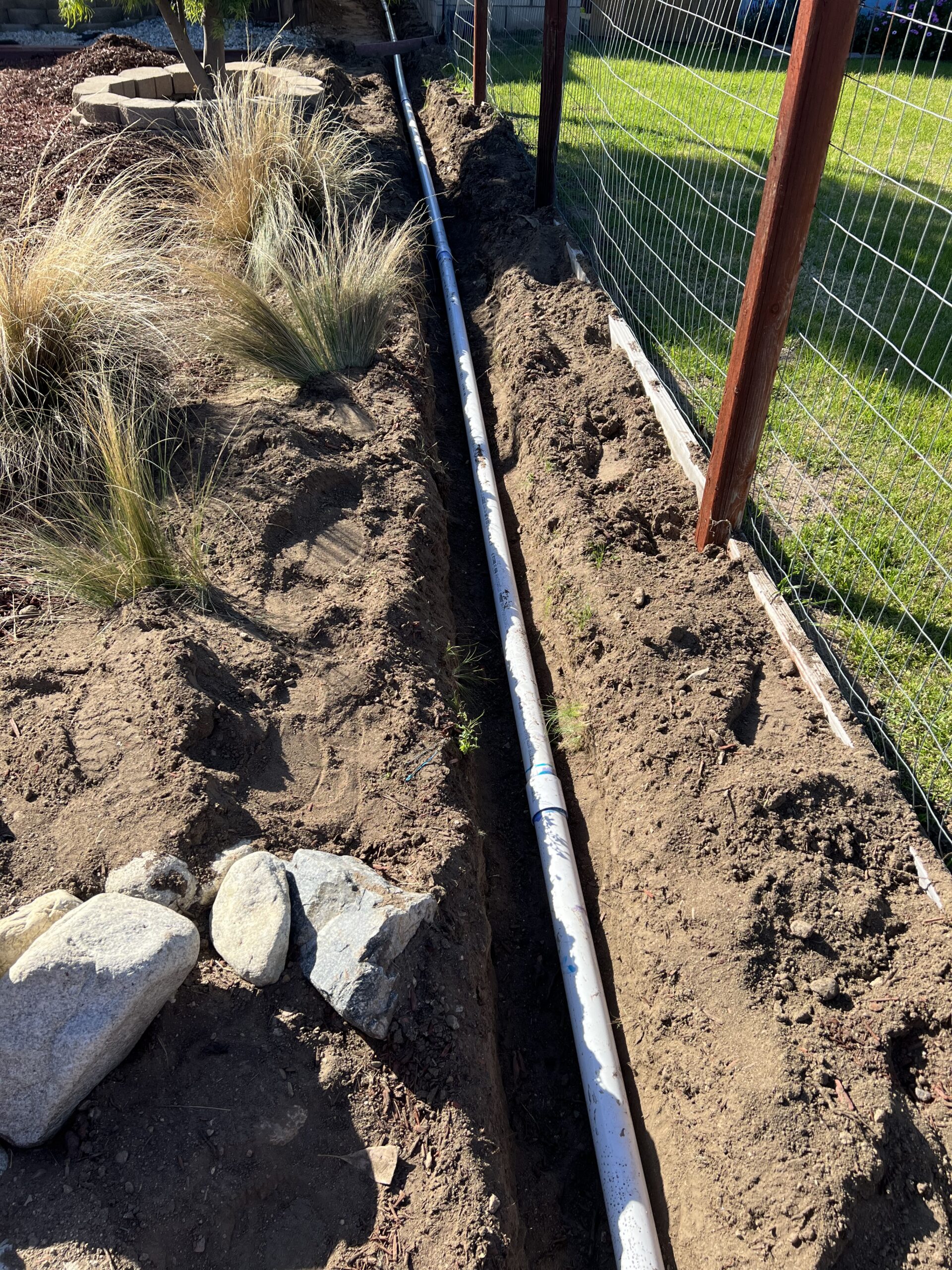
A Drain Is Only as Good as the Route Beyond It
Concrete, pavers, and other hard surfaces shed water instead of absorbing it. On a sloped driveway or patio, that runoff can move across a broad edge and reach a garage, sliding door, side yard, or planting bed before one small point drain can collect it.
A channel drain, also called a linear or trench drain, creates a longer collection line. Water enters through the grate, moves through the channel, and leaves through connected solid pipe. That simple sequence only works when the surrounding hardscape directs water toward the grate and the outlet has somewhere appropriate to discharge.
OE Landscape evaluates channel drains as part of a complete residential drainage strategy, together with grading, roof runoff, catch basins, French drains, and hardscape elevations. California's Water Boards also note that runoff moving from driveways and streets into storm drains can carry pollutants directly to waterways, so collection and discharge planning must account for water quality and local rules.
How a Channel Drain Controls Hardscape Runoff
A channel drain is a narrow trough covered by a removable grate. Unlike a catch basin, which collects water at one low point, a channel drain intercepts flow across a line. This makes it useful where rainwater moves across the width of a driveway, along a patio edge, or toward a broad doorway.
The intended path is straightforward: hardscape runoff reaches the grate, enters the channel, moves to an outlet, and travels through solid pipe to an approved destination. The grate must sit at the receiving elevation, and the finished surface must slope toward it. If the drain is higher than the actual low point, water can pond beside the grate or bypass it.
Where Channel Drains for Patios and Driveways Make Sense
Placement should follow the way water already moves or the way a new hardscape will be graded. Across a driveway, the drain may intercept runoff before a garage threshold. Along a patio, it may collect water at a low edge, a doorway transition, or the boundary between paving and a planting area that cannot safely receive the entire paved-surface flow.
- Across a driveway that slopes toward a garage
- Along the low edge of a patio or courtyard
- Near a sliding door or other vulnerable threshold
- At a transition between hardscape and turf or planting
- Across a narrow side yard or walkway
- At the base of a ramp or below-grade approach
Placement close to a building does not replace proper hardscape slope. The surrounding surface should still move water away from the structure and toward the collection line. New construction offers the best opportunity to coordinate drain elevation, paving, pipe routing, and finish details before concrete or pavers are installed.
Design the Collection, Pipe, and Outlet as One System
Good channel-drain performance depends on more than the visible grate. The design should account for the area draining to it, the steepness of the surface, rainfall intensity, roof water that may reach the pavement, pipe size, pipe slope, and outlet capacity. A long driveway receiving runoff from downspouts presents a different demand than a small patio edge.
Gravity drainage is generally simpler when the outlet is lower than the drain. A sunken driveway, recessed courtyard, or low patio may not have enough elevation for gravity to work; a properly designed sump basin and pump may be required. Where possible, roof runoff should be evaluated separately so downspouts do not unexpectedly overload the hardscape drain.
Discharge rules vary by jurisdiction and site. Do not redirect water onto neighboring property or assume that any curb, street, or storm connection is permitted. Confirm local requirements, easements, and outlet conditions before work begins.
Choose the Grate and Channel for the Actual Use
A patio drain and a driveway drain do not face the same loads. Driveway components must be rated for the vehicles expected to cross them and properly supported within the surrounding pavement. Pedestrian areas need a comfortable, stable grate with openings appropriate for the location. In every case, the grate should be removable for cleaning.
- Load rating suited to foot or vehicle traffic
- Channel capacity matched to expected inflow
- Outlet size coordinated with the connected pipe
- Durable materials for sun and wet conditions
- Grate pattern that admits water without trapping hazards
- Finish that integrates with the hardscape design
Appearance matters, but the narrowest or least visible product is not automatically the right choice. Capacity, structural support, serviceability, and connection details come first.
Keep the Drain Clear Before and During Rainy Weather
Leaves, mulch, gravel, soil, grass clippings, and trash can cover the grate or settle inside the channel. A drain that looks clear from a distance may still have sediment restricting the outlet. Inspect the full run before the rainy season and after major storms, then remove the grate as the manufacturer allows and clear accumulated material safely.
Reduce recurring blockages by keeping loose landscape material away from the inlet, maintaining edging, and correcting irrigation overspray. California's Water Boards advise sweeping driveways instead of hosing pollutants into storm drains. In the San Diego region, driveway and patio wash water is specifically treated as a non-stormwater discharge that must be kept out of the municipal storm-drain system; homeowners elsewhere should check their own city or county requirements.
When Another Drainage Solution May Be Better
Channel drains are designed for surface runoff moving across hardscape. A catch basin may be more appropriate where water converges at one low point. A French drain is generally used for subsurface water moving through saturated soil. Regrading may solve a shallow low spot without adding a drain, while a sump system may be necessary when gravity cannot carry collected water to a lower outlet.
Many properties need a combination: a channel drain at the driveway, catch basins in low landscape areas, solid pipe for roof water, and grading that keeps flow away from the house. The right solution starts with observing where water originates, how it travels, and where it can responsibly go.
OE Landscape can review drainage alongside hardscape planning, existing grading, irrigation, planting, and broader landscape improvements so the visible surface and the underground water path support each other.
Coordinate the Surface Before You Cut or Pour
The cleanest channel-drain installations begin with a site review: identify the drainage area, mark the true low points, confirm outlet elevation, and coordinate the drain with paving joints, door thresholds, downspouts, and planting beds.
OE Landscape helps Southern California homeowners plan drainage as part of a complete outdoor system rather than treating the grate as an isolated product.
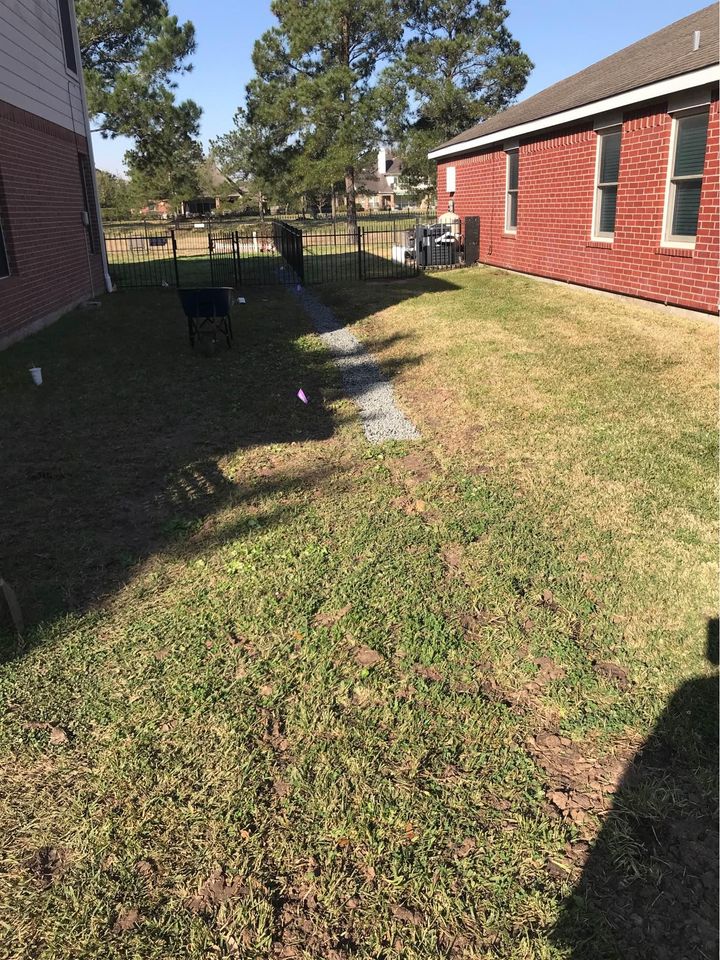
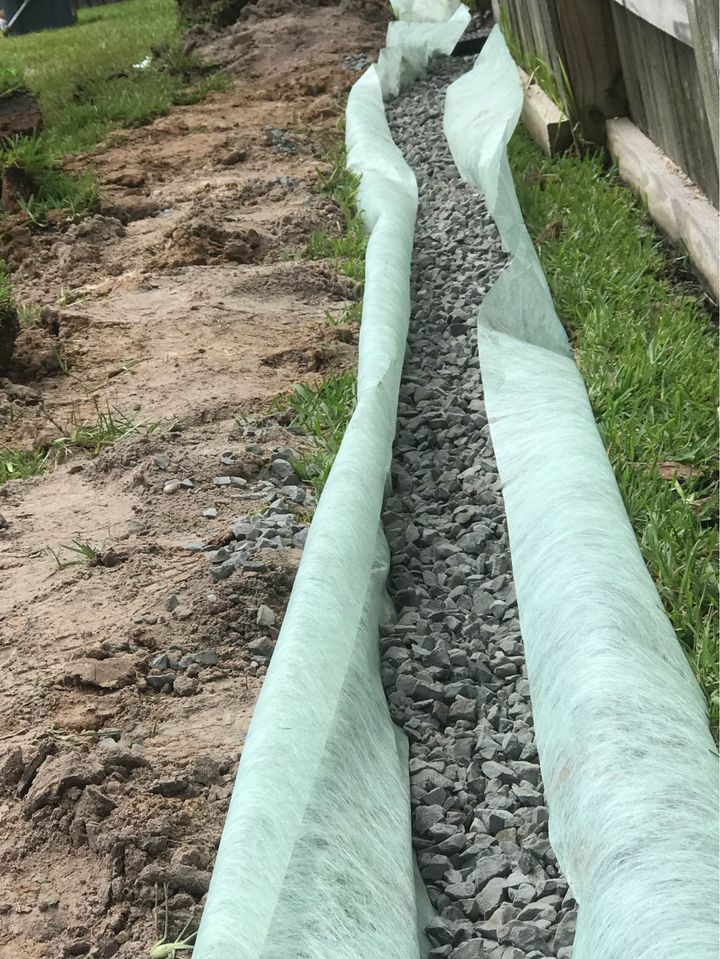
OE Landscape drainage installation images. These photographs illustrate drainage work and are not represented as channel-drain examples.
Give Hardscape Runoff a Clear Path Before the Next Storm
Tell OE Landscape where water starts, where it travels, and where it collects. A site review can connect the right collection point with grading, pipe capacity, and a practical outlet.