 OE LANDSCAPE • SOUTHERN CALIFORNIA DRAINAGE GUIDE
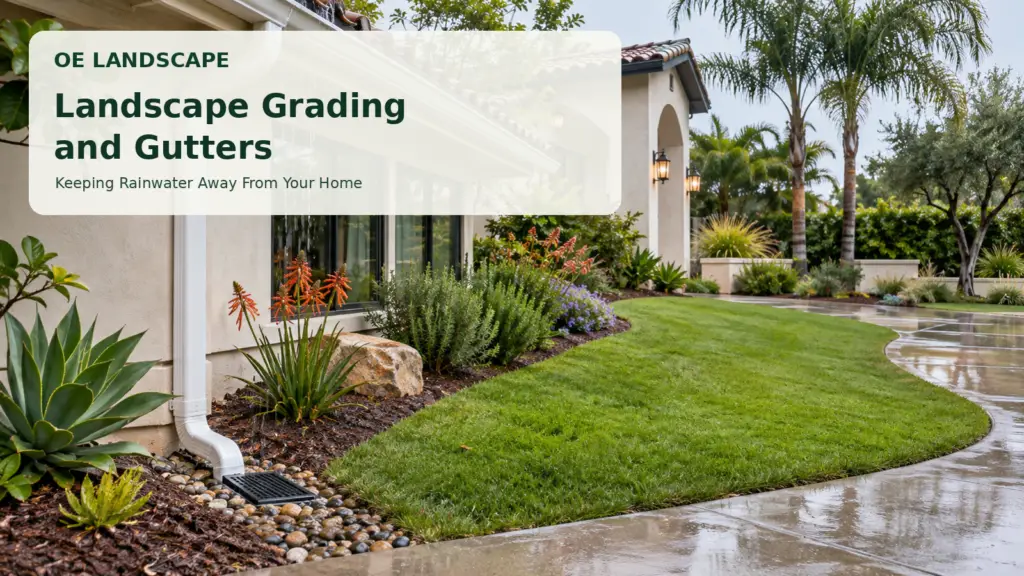
Landscape Grading and Gutters: Keep Rainwater Away From Your Home
Landscape grading and gutters work best as one connected drainage system. Learn how slope, downspouts, surface drains, solid pipe, and a planned outlet can help move rainwater away from vulnerable areas around the home.
Why Landscape Grading and Gutters Need to Work Together
A rainy day can reveal drainage problems that remain hidden during dry Southern California weather. Roof gutters may collect rainfall correctly, but a downspout that releases water beside the home can concentrate runoff in exactly the wrong place.
At the same time, soil or paving that slopes toward the structure can send water back even when the downspout ends several feet away. That is why landscape grading and gutters should be evaluated together rather than as separate systems.
The strongest approach follows water from the roof, through the gutter and downspout, across the landscape, into any collection drains, and finally to an appropriate discharge point. OE Landscape also explains this property-wide approach on our Drainage service page and downspout drainage guide.
How Landscape Grading Helps Protect the Home
Landscape grading shapes the ground so surface runoff travels away from walls, door thresholds, garages, and other vulnerable openings. Even small elevation changes can determine whether rainwater reaches a drain or settles against the home.
The U.S. Environmental Protection Agency's Moisture Control Guidance describes positive drainage principles around foundations and gives a commonly used design reference of about a 5 percent slope, or roughly 6 inches over 10 feet, away from the foundation, subject to site constraints and more stringent local requirements.
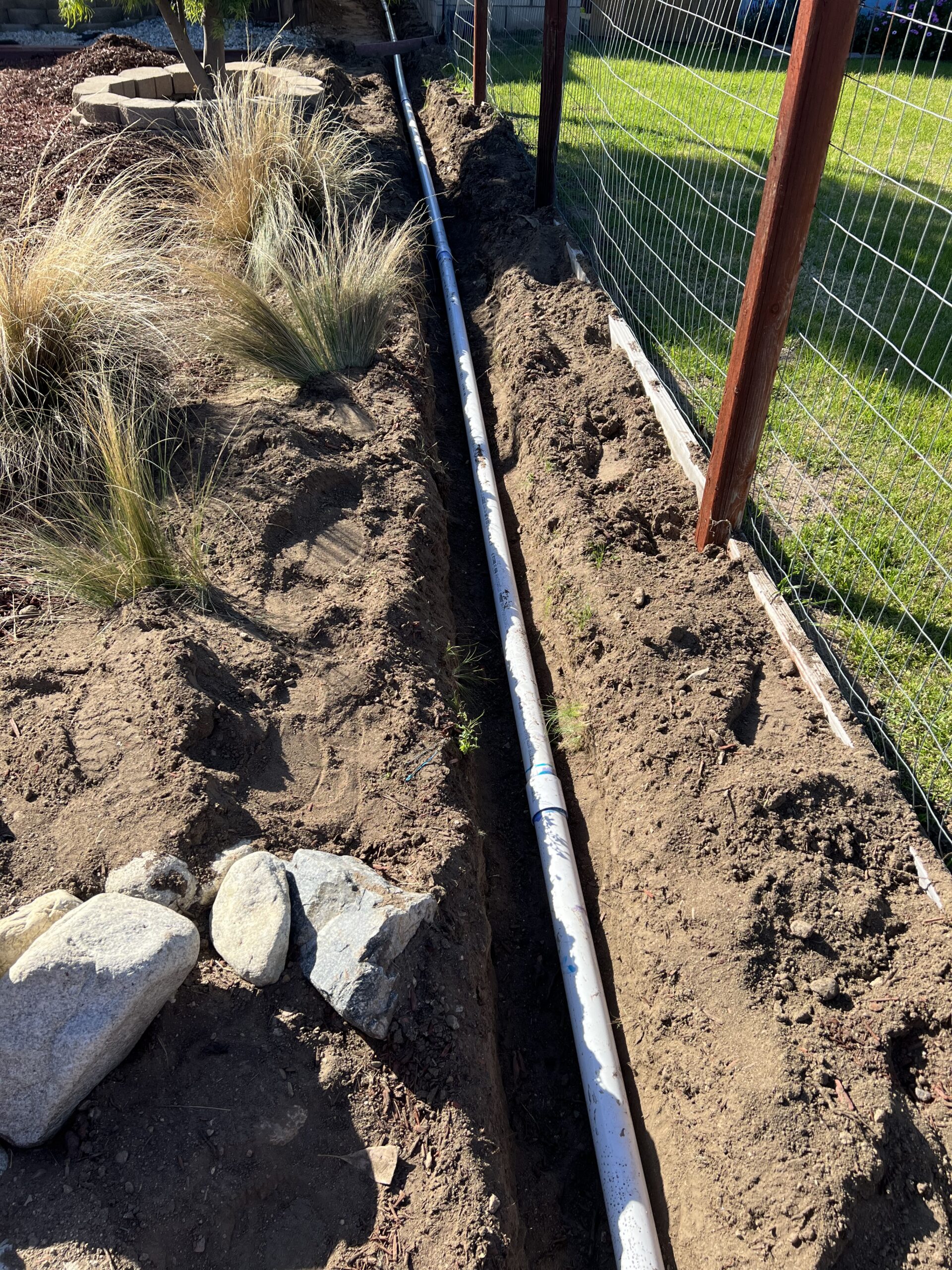
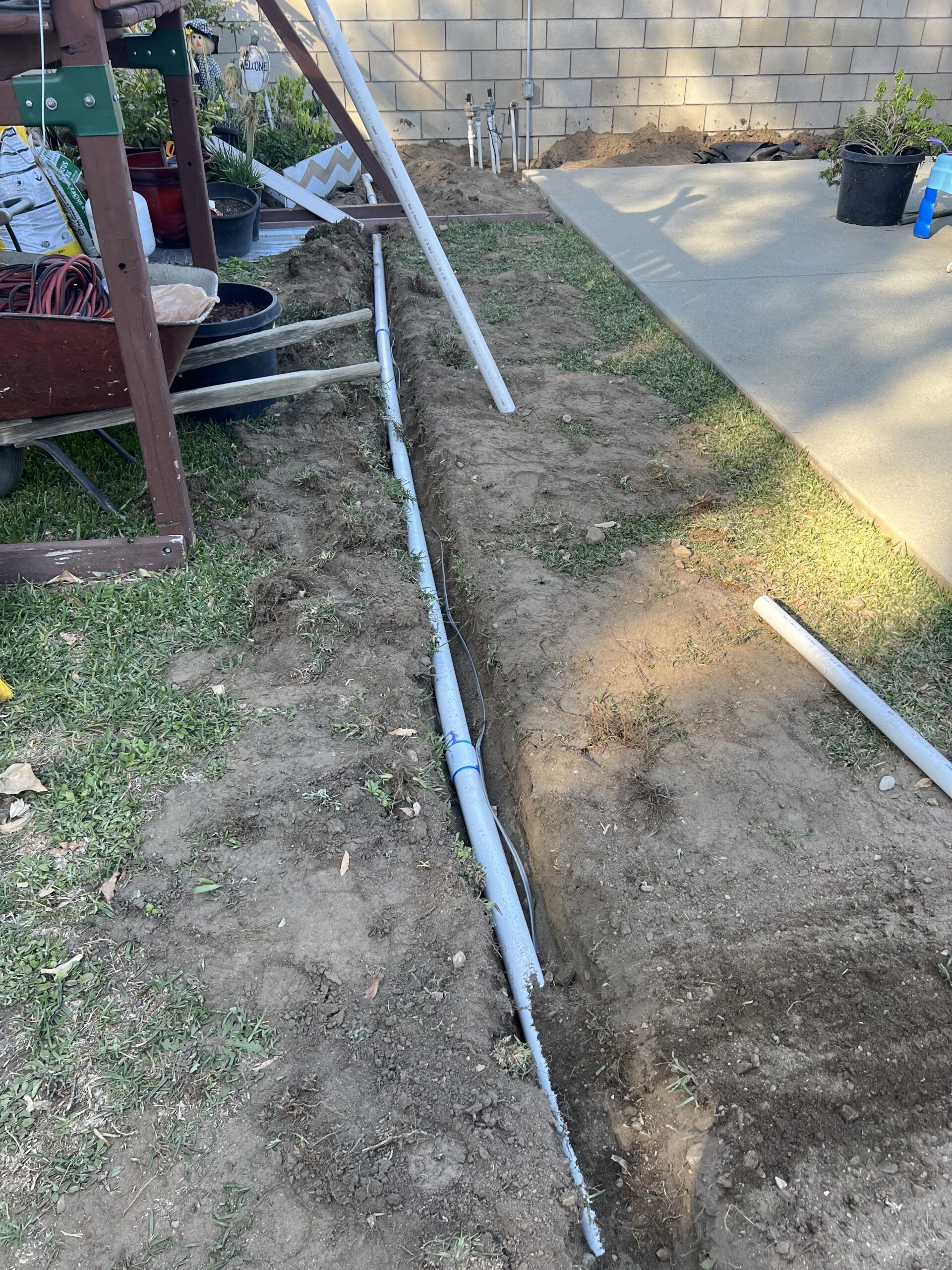
Where the desired surface slope cannot be achieved, the solution may involve swales, catch basins, channel drains, solid underground pipe, or another drainage method that safely continues the water path.
What Gutters and Downspouts Actually Do
Gutters capture rainfall at roof edges and direct it toward downspouts. They are the first stage of roof runoff management, but they do not complete the drainage path.
If a gutter is clogged, poorly pitched, damaged, or overwhelmed, water can spill directly beside the home. If the downspout ends at the foundation, it concentrates water from a large roof area into one small landscape zone.
Depending on the property, a downspout extension, splash block, or solid underground drainpipe may help route roof runoff toward a more suitable location. OE Landscape's downspout drainage article explains how roof runoff and yard drainage should work together.
- Keep gutters clear of leaves and debris
- Check that downspouts stay connected
- Route concentrated roof runoff away from vulnerable areas
- Plan the final outlet before installing underground pipe
Where Landscape Grading Alone Is Not Enough
A low side yard, flat backyard, or driveway that slopes toward the garage may need a collection system in addition to grading.
Yard drains and catch basins can collect runoff at low points, while channel drains can intercept water moving across patios, walkways, and driveways.
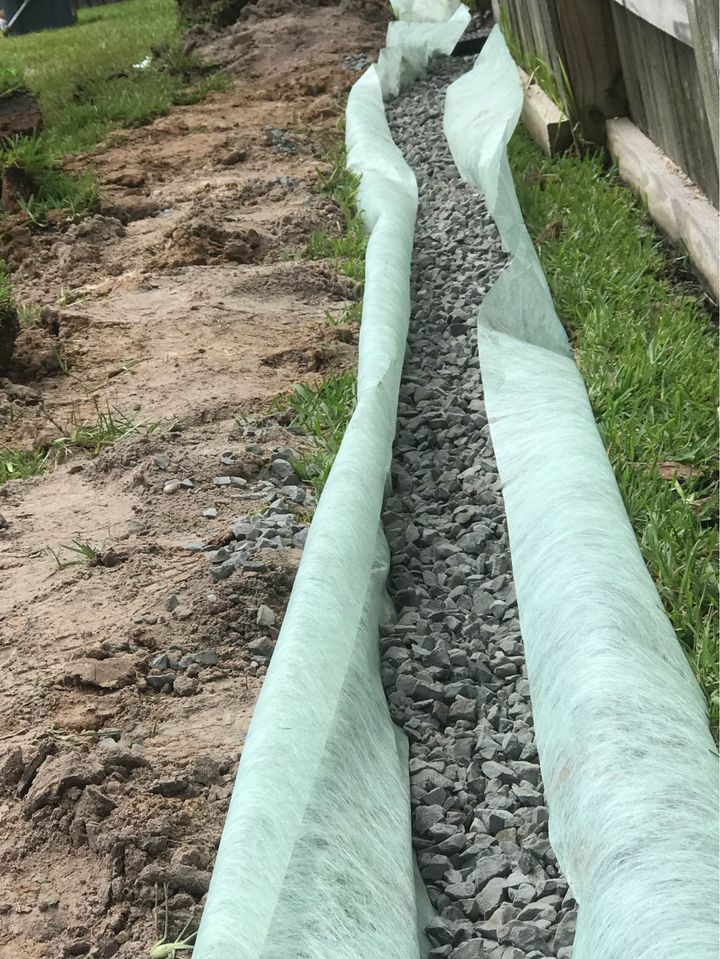
A French drain serves a different purpose. It is primarily intended for subsurface water moving through saturated soil rather than concentrated roof runoff. Where the problem is a soggy yard, the French drain for soggy yard guide provides a closer comparison.
For properties without a practical gravity outlet, a sump basin and pump may be considered. OE Landscape's sump pump drainage guide explains when elevation can make pumping necessary.
Warning Signs to Check Before the Next Storm
Walk the property during or after rainfall only when conditions are safe. Repeated water patterns can show where grading, gutter performance, or drainage collection needs attention.
- Puddles beside exterior walls
- Water crossing walkways toward doors
- Gutters overflowing during rain
- Soil erosion below downspouts
- Standing water near the garage
- Planting beds staying saturated
- Channel drains being bypassed
- Water stains or sediment lines on hardscape
Also inspect downspout elbows, visible pipe connections, drain grates, and outlet areas for debris or separation. The University of Minnesota Extension maintains homeowner guidance on water and moisture problems around buildings.
A Practical Drainage Improvement Sequence
Start by observing where runoff begins and where it ends up. A drainage system is easier to plan when the complete water path is understood first.
- Clear and inspect gutters
- Check downspout discharge locations
- Observe surface grades around the home
- Identify true low points
- Choose collection points only after understanding flow
- Confirm a viable discharge route
- Install underground drainage before new finished surfaces
- Keep cleanouts and grates accessible for maintenance
Coordinate drainage before installing new patios, pavers, artificial turf, irrigation, or planting. This can reduce the need to remove finished work later and lets drainage, hardscape, artificial turf, and irrigation work as one system.
Landscape Grading and Gutters for Southern California Properties
Southern California yards vary widely, from compact side yards to hillside landscapes with retaining walls and extensive hardscape. Soil conditions, elevation changes, roof area, existing drainage, and concentrated winter storms can all affect how water moves.
No single drain type solves every property. OE Landscape provides drainage and grading services that can include downspout routing, catch basins, channel drains, French drains, surface grading, sump pumps, erosion-control improvements, and related landscape construction.
The goal is a site-specific plan that reduces standing water and gives runoff a controlled route from collection to discharge.
For broader technical context, the U.S. EPA explains how impervious surfaces can increase runoff in its stormwater runoff overview.
Plan the Grade, Downspout Route, Drain, Pipe, and Outlet Together
OE Landscape can coordinate drainage with hardscape, planting, irrigation, artificial turf, and other outdoor improvements so the visible landscape and underground systems support each other.
Plan Drainage Before Rainwater Becomes a Recurring Problem.
OE Landscape can review grading, downspout routing, surface drainage, underground piping, and related landscape construction needs across Southern California.
OE Landscape • California C-27 License #1109316 • Bonded & Insured • (714) 400-9017