 Southern California drainage
Prevent Soil Erosion With Better Drainage
Soil erosion often begins with water moving too quickly, concentrating in the wrong place, or repeatedly saturating the same area. A coordinated drainage plan can help guide runoff, protect planting beds, and reduce avoidable landscape damage.
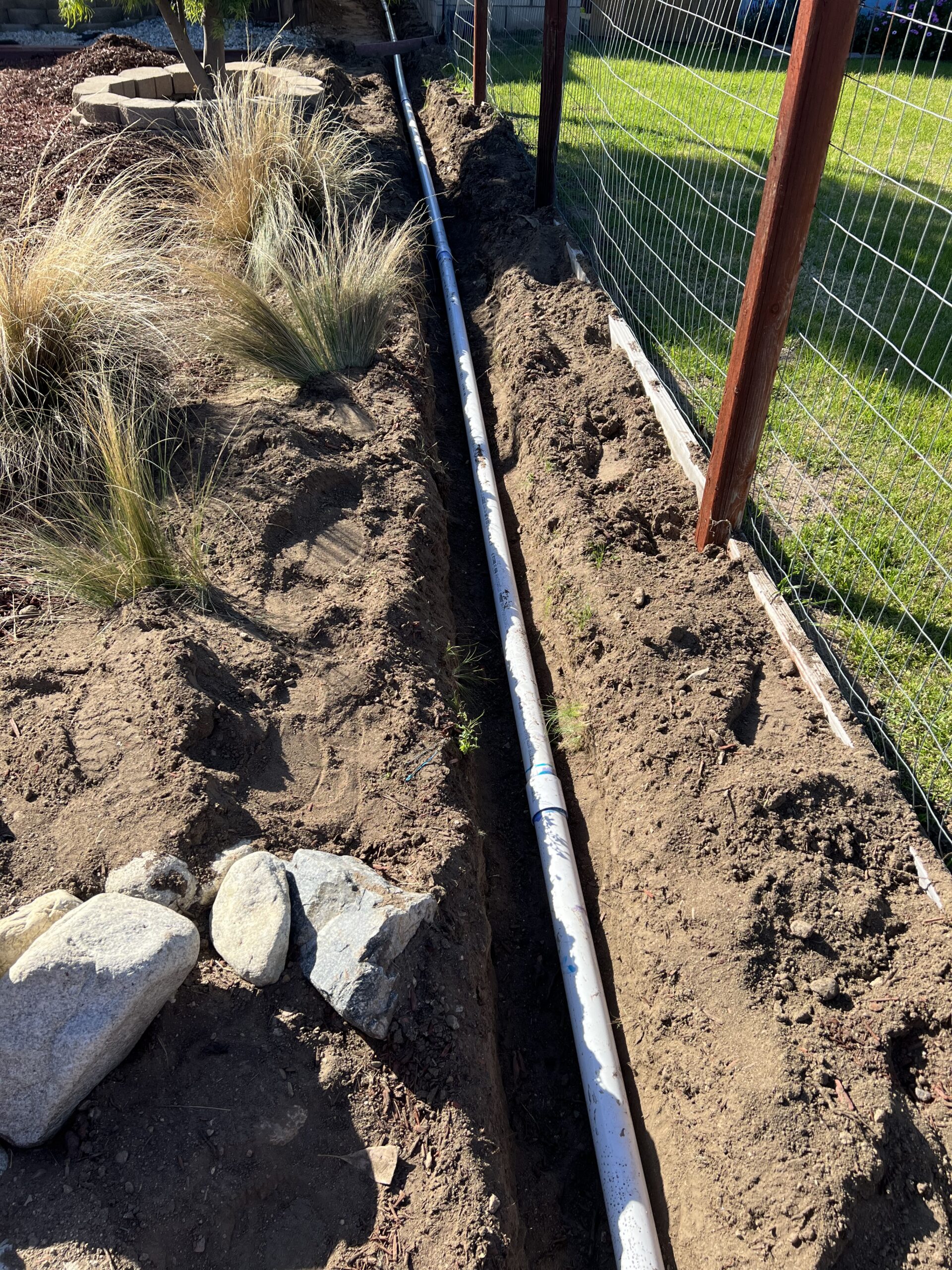
Protect the landscape by understanding the flow
Rain and irrigation water do not always soak in where they land. Roofs, patios, compacted soil, slopes, and hardscape can concentrate runoff. As that water gains speed, it can carry soil, mulch, gravel, and sediment into low areas or across walkways.
Good drainage planning starts by tracing the water from its source to an appropriate destination. It can combine grading, collection points, underground piping, planting, and maintenance rather than relying on one product for every yard. OE Landscape approaches these conditions as part of a broader landscape drainage plan.
For additional technical background, the University of California IPM program discusses landscape practices that can reduce runoff and support water quality.
Recognize the Warning Signs of Soil Erosion
Look for small channels in bare soil, exposed roots, displaced mulch, muddy deposits at the bottom of a slope, gravel movement, or water repeatedly collecting near a patio or building. Standing water and stressed plants can also point to a drainage issue, although irrigation, soil compaction, leaking lines, and other conditions may contribute.
Observe the yard during or just after a safe, ordinary rain from a protected location. Photograph where water enters, concentrates, changes direction, and settles. These patterns can help distinguish an isolated low spot from a larger runoff problem.
Start With a Site-Specific Drainage Assessment
Follow runoff from downspouts, paved surfaces, irrigation, slopes, and higher ground. Note low areas, changes in grade, retaining features, hardscape edges, buildings, utilities, and neighboring properties. The right plan depends on the amount of water, soil behavior, slope, available space, and a suitable discharge or overflow route.
Water should not simply be moved from one problem area to another. A drainage plan should consider the complete path from collection to discharge and how that path interacts with the rest of the landscape.
Choose Drainage and Erosion-Control Solutions Together
Surface grading and swales: Thoughtful grading and shallow channels can guide surface water toward an appropriate collection or discharge area. The route still needs enough capacity and should not create a new erosion problem farther downhill.
Catch basins and solid drainage lines: A basin can collect runoff at a low point and convey it through solid pipe toward a planned outlet. This can be useful where several surface flows converge.
French drains: A French drain is generally intended to collect subsurface water moving through saturated soil. It is not automatically the correct solution for every surface puddle or erosion channel.
Downspout routing: Roof runoff can add a large volume of concentrated water to one small area. Reviewing downspout drainage can reduce unnecessary flow across planting beds and exposed soil.
Rain gardens and permeable areas: Where soil, slope, setbacks, and local requirements allow, planted areas can slow and temporarily receive runoff. The EPA rain-garden guidance discusses design considerations for semi-arid settings.
Protect Exposed Soil and Sloped Planting Beds
Drainage works best alongside soil protection. Appropriate groundcovers, shrubs, and other vegetation can help shield the soil surface and slow runoff as roots establish. Plant selection should still match the site's sun, soil, irrigation, and maintenance needs.
Mulch can also reduce direct rainfall impact, but material that repeatedly washes away is a warning that the water path needs attention. On steeper areas, a professional may recommend temporary erosion-control measures while new planting becomes established.
The UC Marin Master Gardeners hillside guidance highlights the importance of drainage and professional help for more complicated slope conditions. A retaining wall, decorative rock, or planting alone should not be assumed to solve the underlying water problem.
Keep the Drainage System Working
Inspect the landscape before the rainy season and after significant storms when conditions are safe. Clear accessible gutters, surface grates, swales, and outlets of leaves and sediment. Look for damaged components, new erosion, displaced landscape material, and irrigation leaks or overspray that keep the soil wetter than intended.
- Watch for recurring ponding or muddy discharge.
- Keep drainage inlets and outlets visible and accessible.
- Replenish displaced mulch only after correcting the water path.
- Check downspouts and irrigation for concentrated flow.
- Photograph new erosion after storms from a safe location.
- Arrange professional review when a problem persists.
No drainage system eliminates every risk in every storm. Regular observation and maintenance help identify changes before they become larger landscape problems.
Bring Water Management Into the Landscape Plan
OE Landscape reviews runoff paths, low points, grading, planting, hardscape, and irrigation together. Coordinating drainage with the rest of the project can help avoid installing finished landscape over a water problem that still needs a reliable route.
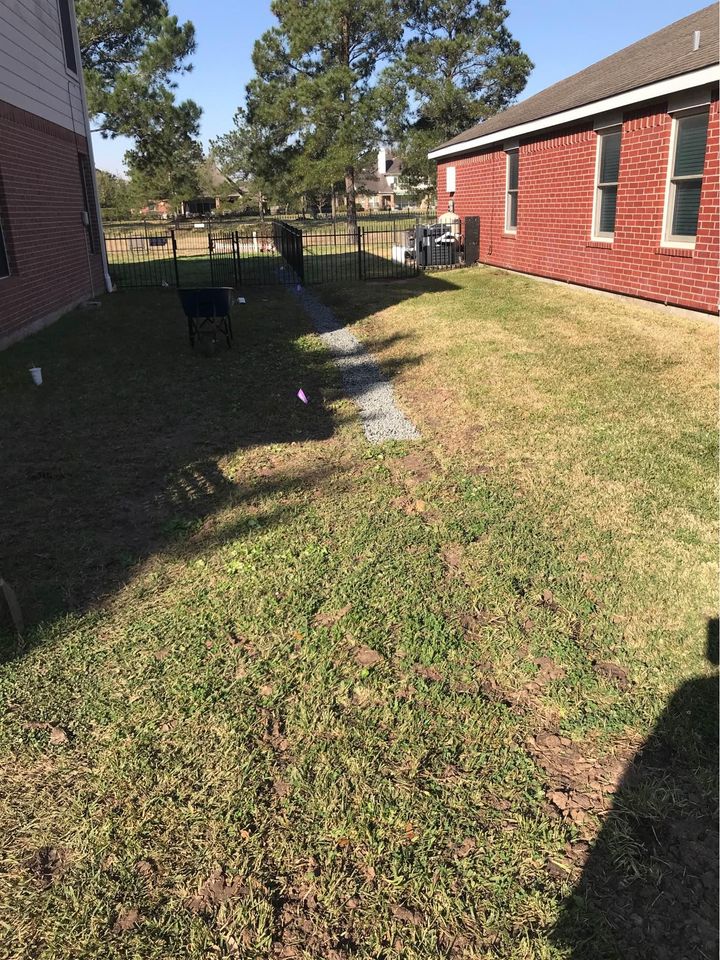
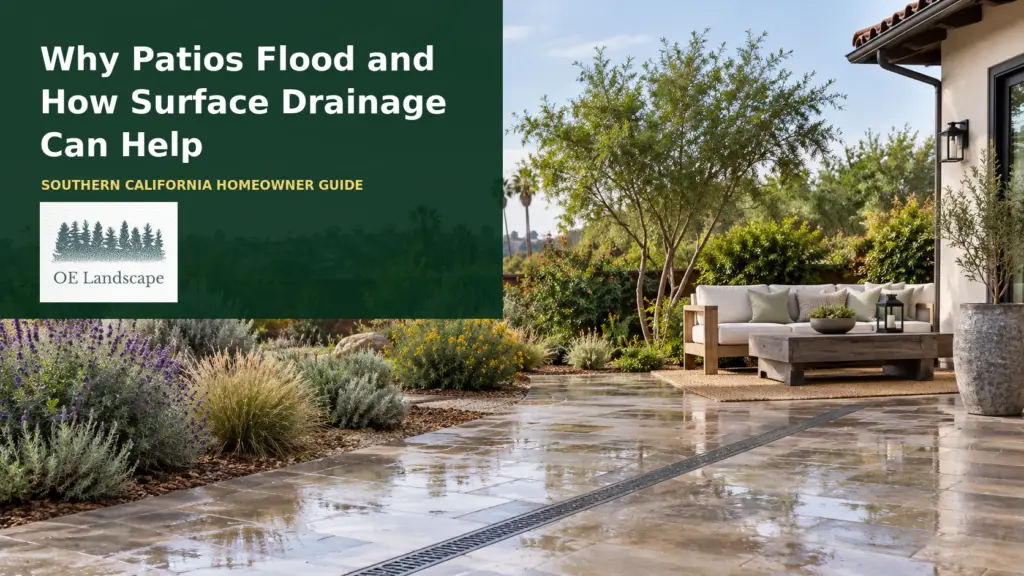
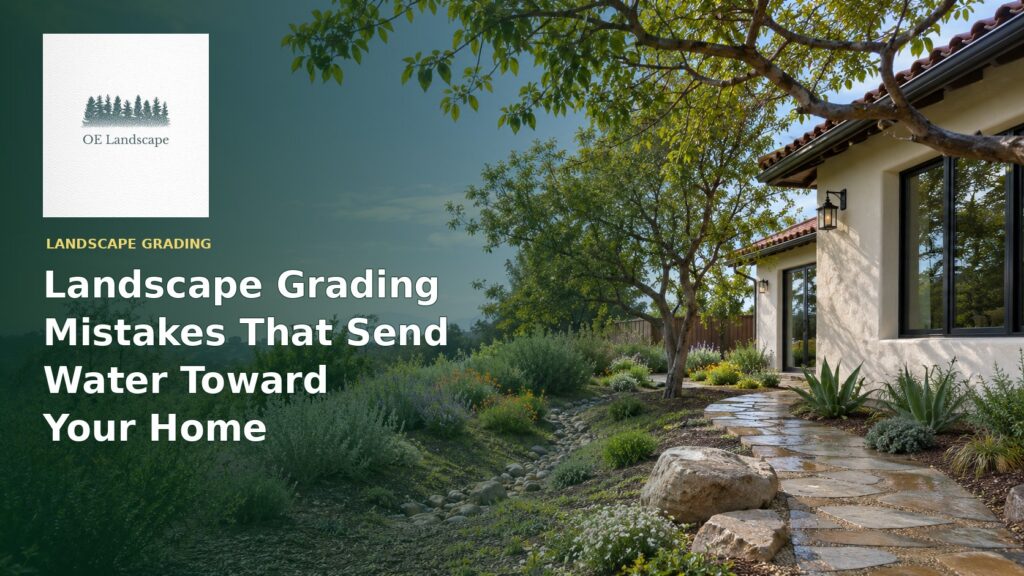
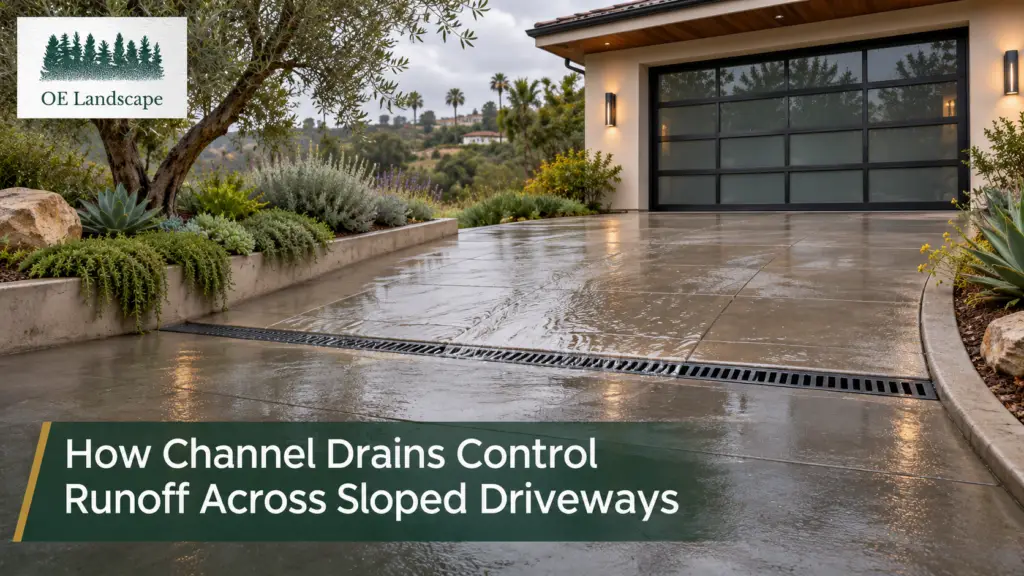
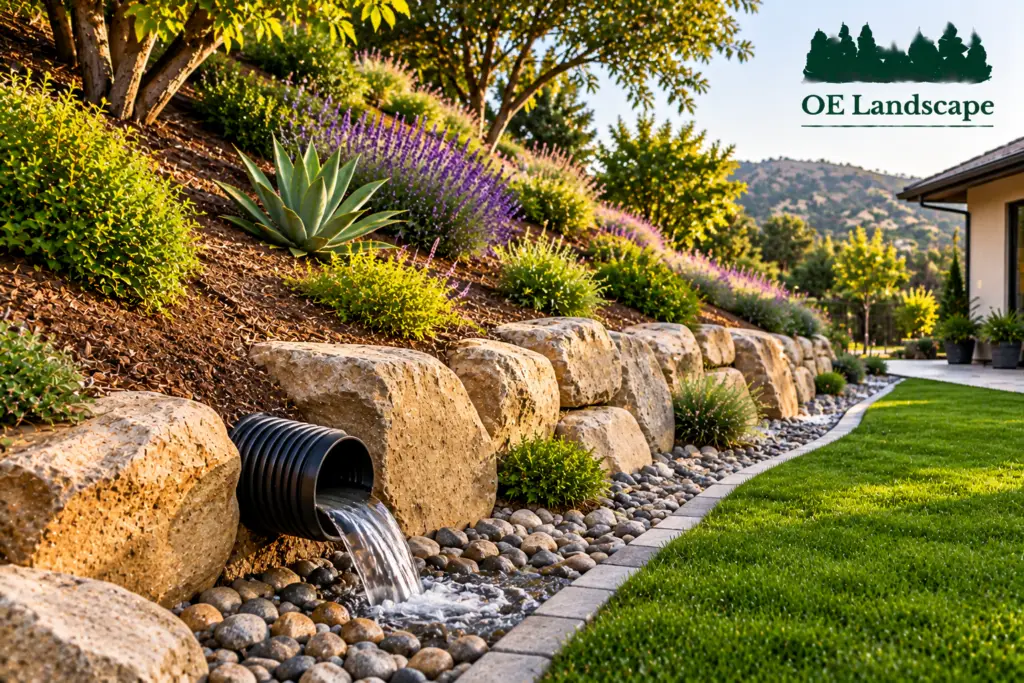
OE Landscape drainage project imagery. The appropriate drainage detail depends on the property's actual water source, grade, soil, and outlet conditions.
Give Runoff a Better Path Before It Carries More Soil Away
Tell OE Landscape where water collects, where erosion appears, and what other landscape improvements you are considering. A site-specific review is the right place to start.