How Negative Space
Makes Plants Stand Out
Learn how open gravel, lawn, simple paving, groundcover, and intentional spacing can make trees, grasses, specimen plants, and landscape features easier to see and appreciate.
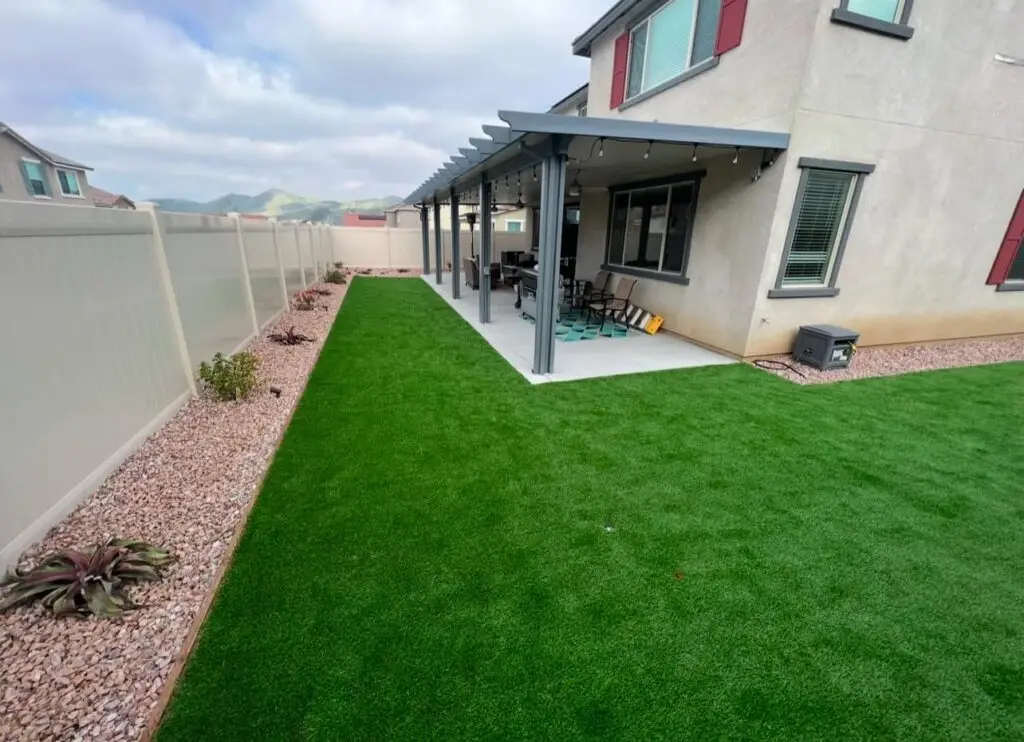
Give Strong Plants and Features Room to Be Seen
A beautiful landscape is not created only by what gets added.
Sometimes the most important part of the design is the space left around everything else.
In landscape design, these quieter areas are often described as negative space. They may appear as open gravel, lawn, simple paving, groundcover, or even intentional gaps between groups of plants.
Negative space gives the eye somewhere to rest. More importantly, it allows individual plants, trees, and landscape features to become easier to notice.
At OE Landscape, we believe thoughtful spacing can be just as important as plant selection. When every part of a yard is filled, even beautiful plants can disappear into visual clutter. When selected areas are kept open, the strongest elements have room to make an impact.
What Is Negative Space in Landscape Design?
Negative space is the open or visually quiet area around the main elements of a landscape design.
It does not necessarily mean empty dirt or unused space.
Negative space might include:
- Gravel
- Lawn
- Artificial turf
- Simple paving
- Mulch
- Low groundcover
- Open patio space
- Clear areas between planting groups
These areas create contrast with more detailed parts of the landscape.
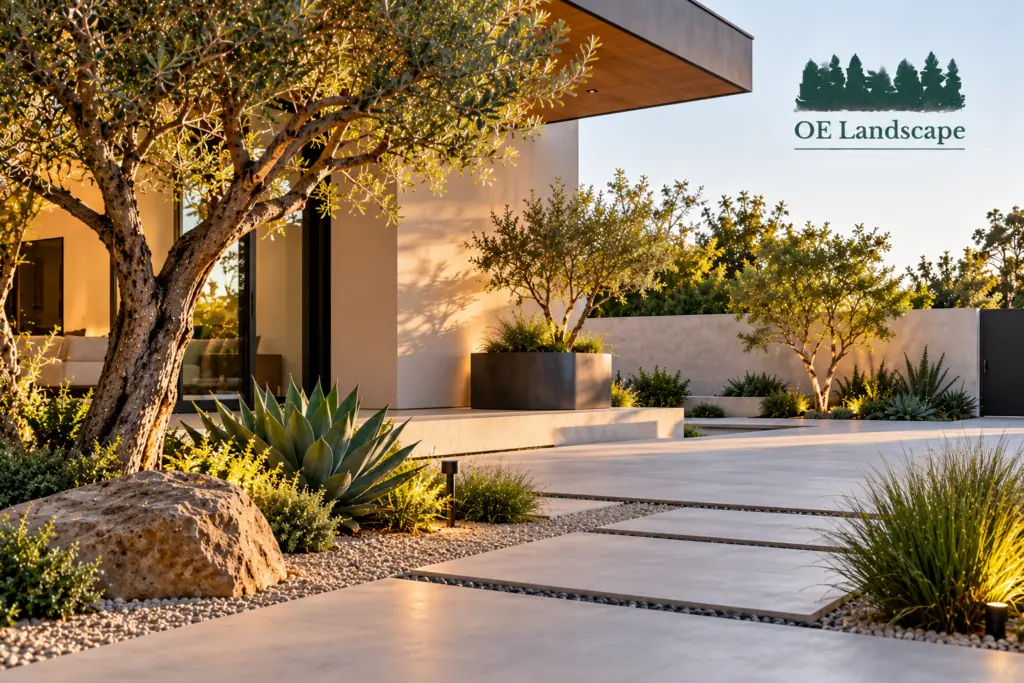
A sculptural tree becomes easier to appreciate when it is surrounded by a simple ground plane.
A cluster of ornamental grasses becomes more noticeable when it is not competing with dozens of other plant varieties.
Negative space helps establish visual hierarchy. This same principle supports stronger visual balance in landscape design.
Give Important Plants Room to Be Seen
A specimen plant is usually selected because there is something distinctive about it.
It might have:
- Interesting branching
- Architectural foliage
- Seasonal flowers
- Unusual color
- A sculptural shape
- A striking canopy
If that plant is surrounded closely by several other strong plants, much of its character may disappear.
Leaving space around it allows the eye to understand its shape.
For example, a small ornamental tree placed within a simple gravel area can become a major focal point.
The same tree surrounded by tall shrubs, flowering plants, decorative pots, and multiple materials may become much harder to notice.
Avoid Filling Every Planting Bed
One of the easiest ways to lose visual clarity is to fill every available section of a planting bed.
A new landscape can sometimes feel sparse immediately after installation because young plants have not yet reached mature size.
That can create the temptation to add more.
However, plants grow.
A shrub that appears small today may eventually become several feet wide.
Grasses expand.
Groundcovers spread.
Tree canopies develop.
Leaving appropriate space between plants helps preserve their individual forms and prevents the landscape from becoming overcrowded later.
Sometimes what looks like empty space during installation is simply room for the landscape to mature.
Use Simple Backgrounds Behind Strong Plants
The background behind a plant has a major effect on how noticeable it becomes.
A sculptural plant placed against a simple stucco wall may stand out clearly.
The same plant placed in front of several unrelated shrubs may lose its visual impact.
Useful backgrounds can include:
- Simple walls
- Gravel
- Clean fences
- Open lawn
- Plain hardscape
- Neutral planting surfaces
The goal is not to make every background empty.
Instead, designers can create quieter areas around the most important plants.
This is similar to displaying artwork on a clean wall rather than surrounding it with many competing objects.
Let Tree Canopies Become Focal Points
Mature trees often provide some of the strongest visual character in a landscape.
Their trunks, branching patterns, canopy shapes, and shadows can become natural focal points.
But trees are sometimes surrounded by so much planting that their structure becomes difficult to appreciate.
Simplifying the area around an important tree can make it much more noticeable.
A simple groundcover or gravel surface beneath the canopy may be enough.
Lower planting can also allow the trunk to remain visible while still softening the ground plane.
Giving the tree breathing room helps emphasize its scale and natural form.
Use Negative Space to Show Plant Shape
Plants are not only about flowers and foliage.
Their overall forms matter.
Some plants are rounded.
Others are upright.
Grasses may arch.
Trees develop broad or irregular canopies.
When plants overlap heavily, these individual shapes begin to merge.
Spacing allows each form to remain recognizable.
This can be especially effective in contemporary landscapes where the shape of a plant may be as important as its color. A restrained material palette can make that plant form even easier to read.
A row of carefully spaced grasses can create strong rhythm because each plant remains visible as its own form.
Create Contrast Between Open and Planted Areas
A landscape becomes more interesting when dense and open areas are balanced.
If the entire property has the same planting density, there may be very little contrast.
Instead, designers can create moments where planting becomes fuller, followed by areas that feel quieter.
For example, a pathway might move past a dense planting bed and then open toward a simple gravel courtyard.
A patio or hardscape area may be framed by vegetation on one side while remaining open toward a view.
This variation creates rhythm and makes the planted areas feel more substantial.
Let Gravel Become Part of the Composition
Gravel is particularly useful for creating negative space in Southern California landscapes.
It can provide a simple visual surface while allowing selected plants to stand out.
A gravel area may contain:
- A specimen tree
- Several sculptural shrubs
- Drought-tolerant grasses
- Succulents
- Large stepping pads
Instead of filling the entire area with vegetation, plants can be positioned strategically.
The open gravel between them becomes part of the design.
This approach can work especially well with contemporary architecture and drought-conscious landscapes.
Use Groundcovers as Quiet Space
Negative space does not always need to be completely open.
A consistent low groundcover can create a calm visual field.
Because the groundcover forms one continuous layer, taller plants become more noticeable.
For example, a few sculptural shrubs rising from a uniform groundcover can create a stronger composition than a bed filled with many unrelated plants.
The groundcover acts almost like a background.
It connects the space without competing with the features above it.
Make Ornamental Grasses More Effective Through Spacing
Ornamental grasses are often planted in large quantities because they create softness and movement.
But they do not always need to form one continuous mass.
Strategic gaps can make each group more noticeable.
Instead of filling a long planting bed completely, designers might repeat clusters of grasses with quieter areas between them.
This creates rhythm.
The open spaces help the eye recognize the repetition.
Movement also becomes more visible because the grasses are not lost within a large mass of foliage.
Give Sculptural Plants Space
Some plants naturally work as living sculptures.
Their shape may be enough to carry an entire planting area.
Examples may include plants with:
- Strong upright foliage
- Distinct branching
- Large architectural leaves
- Bold succulent forms
- Unusual silhouettes
These plants often work best when they are not crowded.
Open space around them allows their geometry to become part of the overall landscape composition.
In a modern yard, one strong architectural plant may create more impact than several smaller decorative plants.
Use Negative Space Around Entrances
Front entrances benefit from clarity.
The walkway, front door, architecture, and selected planting should be easy to understand.
Too much planting close to the entrance can make the area feel visually crowded.
Instead, a simplified approach might include:
- One strong tree
- Repeated shrubs
- Low planting near the walkway
- Open gravel or groundcover
- A clear path to the door
Negative space helps emphasize the route toward the entrance.
It can also make selected plants appear more intentional.
Open Space Can Make Small Yards Feel Larger
Small yards often suffer from overfilling.
Because homeowners want to make use of every square foot, compact landscapes sometimes contain too many plants and features.
Ironically, this can make the yard feel even smaller.
Open areas allow the eye to travel farther.
A simple patio followed by a clear planting composition may feel more spacious than several small beds filled with different plants.
Keeping sightlines open can also increase the perception of depth.
In a compact yard, restraint can create more visual space than adding another feature.
Use Negative Space to Frame Views
Open space can direct attention toward something important.
Imagine a patio with a specimen tree positioned at the far end of the yard.
If the space between the patio and tree remains relatively simple, the eye naturally travels toward the tree.
If that same area is filled with numerous shrubs, pots, decorative features, and materials, the focal point becomes harder to identify.
Negative space can therefore act almost like a visual pathway.
It helps guide attention toward the features that matter most.
Create Stronger Views From Inside the Home
Negative space is especially important when considering views through windows and sliding doors.
From inside, the entire landscape may be seen as one composition.
A crowded planting bed can look even busier when viewed through glass.
Open areas provide separation between important plants.
A living room window might frame a tree surrounded by simple planting. This is another way thoughtful landscape planning can strengthen indoor-outdoor views.
A kitchen window may look toward a small grouping of grasses with gravel around them.
These compositions can feel more intentional because the main elements are easy to recognize.
Let Architecture Breathe
Plants should complement the home rather than cover every visible wall.
Modern and contemporary architecture often benefits from leaving selected areas of the facade visible.
A simple white stucco wall can become a powerful background for a tree or sculptural plant.
The open wall itself acts as negative space.
Instead of placing plants continuously across the entire foundation, designers might concentrate planting in selected areas.
This allows the architecture and landscape to support one another.
Use Empty Wall Space as a Design Tool
Not every exterior wall needs to be covered by shrubs or climbing plants.
An open wall can create contrast.
Place one strong tree or plant nearby and the wall becomes a backdrop that emphasizes its form.
Changing sunlight may also create shadows from branches or grasses across the surface.
The negative space therefore changes throughout the day even though nothing is added to it.
Simple surfaces can make natural forms more visible.
Simplify Around Outdoor Art and Features
Negative space can also strengthen non-plant focal points.
If a landscape includes a sculpture, fountain, fire feature, or special piece of stone, surrounding it with too many other elements can reduce its impact.
A simpler background allows the feature to become more prominent.
Plants can still frame it, but they should not necessarily surround every edge.
The same principle used for specimen plants applies to other focal features: important elements need room.
Create Separation Between Plant Groups
Planting beds do not always need to contain one continuous mixture.
Separating plants into distinct groups can make the design easier to read.
One group may contain ornamental grasses.
Another might feature shrubs.
A specimen plant may stand alone between them.
Simple groundcover, mulch, or gravel can provide separation.
This creates a stronger visual hierarchy than combining every variety into one dense planting area.
Avoid Too Many Competing Colors
Negative space can also come from color restraint.
If every part of the landscape contains bright flowers or colorful foliage, the eye has nowhere to rest.
A base of green, silver, or neutral foliage can act as visual negative space.
Brighter flowering plants can then be placed selectively.
This makes the color feel more intentional.
A small group of flowers can become much more noticeable when the surrounding landscape is calmer.
Let Open Patio Areas Remain Open
Outdoor living spaces sometimes become cluttered with furniture, planters, accessories, and decorative features.
Negative space matters here as well.
A patio needs open room for circulation.
Leaving areas between furniture groups makes the space feel larger and more comfortable.
It also allows surrounding planting to remain visible.
Rather than filling every edge with pots, a few larger containers in carefully selected locations can create stronger impact.
Use Lawn as Visual Relief
Lawn can function as negative space when used intentionally.
A simple open lawn provides contrast with surrounding trees and planting beds.
It can also help larger plants stand out.
This does not mean every landscape requires natural lawn.
Artificial turf, gravel, or low groundcover can sometimes provide a similar visual function.
What matters is creating a relatively consistent surface that contrasts with more detailed planting.
Make Hardscape Feel More Intentional
Negative space can make paving and other hardscape features easier to understand.
For example, oversized stepping pads separated by gravel create clear individual shapes.
A patio surrounded by simple planting becomes easier to read as an outdoor room.
A seating wall may stand out when nearby materials remain restrained.
When too many hardscape patterns overlap, the structure becomes less obvious.
Simple surrounding areas help preserve the geometry.
Use Space to Create Rhythm
Repetition becomes stronger when there are gaps between repeated elements.
Imagine five trees planted so close together that their canopies merge into one mass.
Now imagine the same trees positioned with enough separation to recognize each trunk and canopy.
The second arrangement creates rhythm.
The pattern becomes visible.
The same principle applies to:
- Grasses
- Shrubs
- Stepping stones
- Lights
- Trees
- Planters
The spaces between repeated elements are part of the rhythm.
Without them, the pattern can disappear.
Negative Space Can Reduce Visual Maintenance
Landscapes with many tightly packed plants often require regular trimming to maintain their intended form.
Allowing more space around plants can reduce this pressure.
Plants can develop closer to their natural size.
Shrubs do not need to be constantly cut away from one another.
Grasses have room to move.
Groundcovers can spread within defined zones.
A landscape that is visually simpler can also become easier to manage.
Plan for Mature Growth
Negative space should be designed with the future in mind.
A young tree may appear isolated when first installed, but its canopy will expand.
A small shrub may eventually fill the space around it.
When plants are installed too closely because the initial landscape looks empty, the design may become overcrowded later.
Professional planning considers mature dimensions. For California gardening guidance on matching plants to site conditions, see the UC Master Gardener “Right Plant, Right Place” resource.
The goal is to leave enough space for the intended composition to develop naturally. California projects that fall under local water-efficient landscape requirements can also reference the California Department of Water Resources MWELO.
Use Negative Space in Drought-Tolerant Landscapes
Drought-tolerant landscaping is especially well suited to thoughtful use of open space.
Instead of creating a continuous dense garden, designers may arrange selected plants within gravel, rock, or other low-water-use surfaces. The UC Davis WUCOLS database can help California homeowners compare plant water-use classifications.
The result can feel intentional rather than sparse when spacing is carefully planned. For broader water-smart landscape practices, the EPA WaterSense Outdoors program provides additional guidance.
A few strong plants can create significant impact through:
- Shape
- Texture
- Height
- Movement
- Color
The space between them allows those characteristics to become easier to appreciate.
Keep Privacy Planting Focused
Privacy does not require planting every property line densely.
Doing so can make the yard feel enclosed.
Instead, identify where screening is actually needed.
A tree may block an upper-story window.
Several shrubs may screen a seating area.
Tall grasses might soften one section of fence.
Leaving other areas more open can preserve depth and visual breathing room.
Selective screening can create privacy while still allowing the landscape to feel spacious.
Use Lighting to Preserve Negative Space at Night
Negative space matters after sunset too.
If every tree, wall, and planting bed is illuminated, the entire yard may become visually flat.
Selective landscape lighting creates contrast.
A specimen tree can be highlighted while surrounding areas remain darker.
A pathway may receive low-level lighting without illuminating every plant beside it.
This balance between light and shadow creates nighttime negative space.
It can make focal features even more dramatic after dark.
Know When a Planting Bed Is Finished
One of the hardest decisions in landscaping is knowing when to stop.
A bed may still contain visible mulch or gravel after installation.
That does not automatically mean another plant is needed.
Before filling a gap, consider how surrounding plants will grow.
Ask whether the empty area contributes to the composition.
If every space is filled simply because it is available, the landscape may lose the clarity that made the original design successful.
Sometimes the empty area is exactly what the design needs.
Negative Space Makes Quality More Noticeable
When the landscape contains fewer competing elements, details become easier to appreciate. You can see how planting, paving, and focal features come together in the OE Landscape project gallery.
The form of a tree becomes more visible, while thoughtful planting can also create a calmer sensory garden experience.
The workmanship of a wall stands out.
A clean paving transition becomes noticeable.
A healthy planting group receives more attention.
This means simple landscapes place greater emphasis on quality.
There is less visual clutter to hide poor installation or weak plant selection.
Every element matters more.
Create Balance Between Planted and Open Areas
Negative space does not mean creating a property that feels unfinished.
The goal is balance.
Too little planting may feel exposed.
Too much can feel crowded.
The strongest design usually contains both.
Dense areas provide shade, privacy, color, and texture.
Open areas create contrast, circulation, and visual relief.
Together, they make the landscape feel complete.
Give the Landscape Room to Breathe
A successful outdoor space is not measured by how many plants or features can fit into it.
The strongest landscapes often rely on fewer elements placed with greater intention.
A tree becomes more impressive when its canopy can be seen.
A group of grasses becomes more expressive when there is space around it.
A sculptural plant becomes a focal point when the background remains simple.
Negative space allows these elements to have presence.
At OE Landscape, we help Southern California homeowners transform outdoor spaces through professional landscape installation, hardscaping, drainage solutions, and outdoor improvements, plant installation, irrigation systems, and artificial turf.
By balancing planting with thoughtfully designed open areas, a landscape can feel cleaner, more spacious, easier to understand, and more visually powerful.
Ready to create a landscape with better balance and stronger visual impact? Contact OE Landscape to explore planting and outdoor improvement ideas that give every element the space it needs to stand out, or start with our Project Estimator.
Create More Impact With Fewer Competing Elements
Negative space helps plants, architecture, hardscape, and focal features become easier to understand. By balancing planted areas with quieter surfaces and intentional gaps, the strongest parts of the landscape have more presence.
Open Areas Can Make the Planted Areas Stronger
Explore OE Landscape projects where planting, lawn, turf, gravel, paving, and outdoor living areas are balanced to create a clearer, more comfortable composition.
Explore Project Gallery
Ready to Create a Better-Balanced Outdoor Space?
Tell OE Landscape what you want to improve and start planning a yard where planting, open space, hardscape, and focal features work together with greater clarity.