
OE Landscape | Pumped Yard Drainage
Sump Pump Discharge Lines: What Homeowners Should Know
Sump pump discharge lines carry collected water from a low yard, patio, or drainage basin to an appropriate outlet. The line must be planned as part of the whole system: correct destination, compatible pipe, backflow protection, adequate pump capacity, safe power, and a route that does not send water back toward the house or a neighbor.
CA C-27 License #1109316Bonded & InsuredServing Southern California
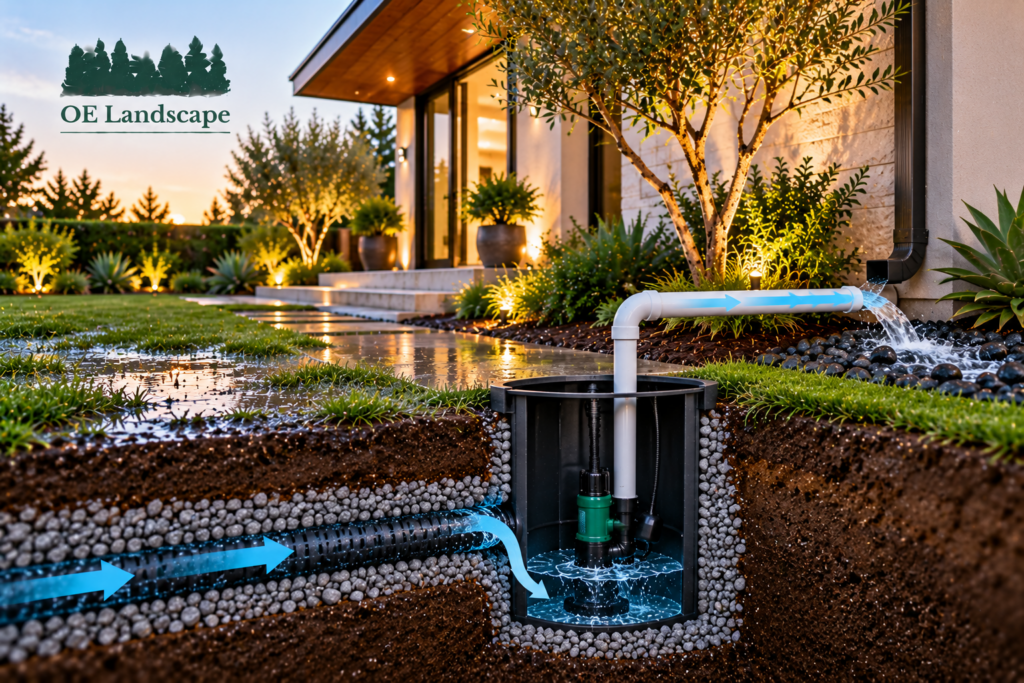
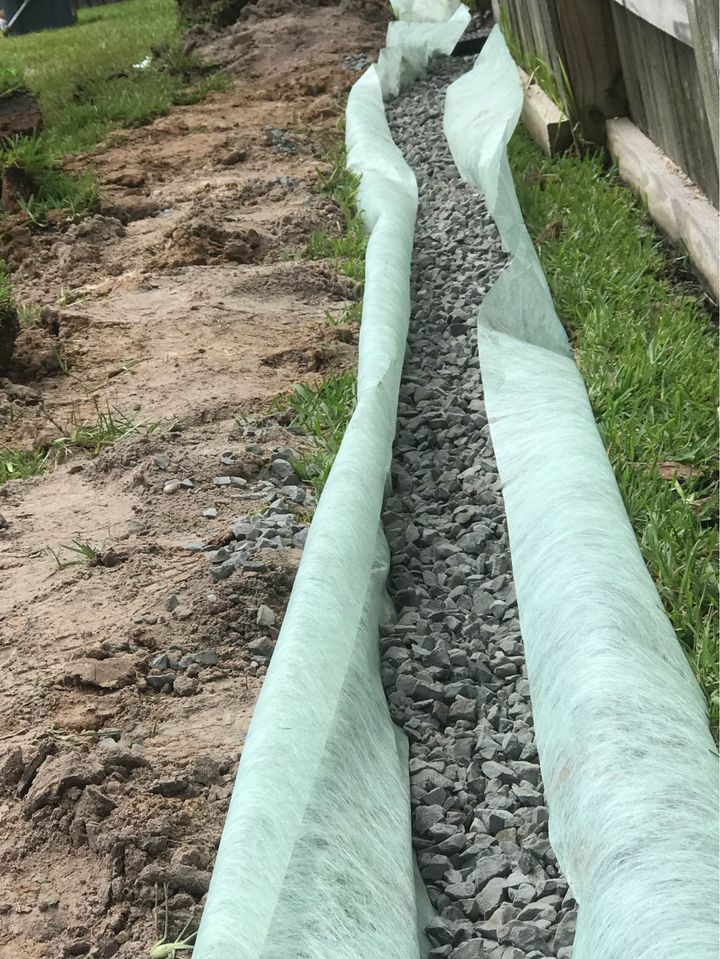
Sump pump drainage illustration. Final routing and outlet approval depend on the property and local requirements.
Plan the outlet before the trench
The pump is only as useful as the path after it
A sump pump can solve an elevation problem that gravity drainage cannot. Water from catch basins, channel drains, French drains, or a low patio enters a basin; the pump then pushes that water through a discharge line to a higher point. OE Landscape explains when that arrangement may make sense in When Does Your Yard Need a Sump Pump Drainage System?
The discharge line is not an afterthought. Its rise, length, fittings, outlet, and backflow controls all affect how hard the pump must work and whether water stays away after the pump shuts off. Federal building-science guidance likewise treats the pump, discharge pipe, check valve, outlet, and testing as one connected system.
For Southern California properties, the correct endpoint can also be a local-compliance question. City standards, county requirements, HOA rules, easements, and the available public drainage infrastructure differ. A line should never be aimed at an adjacent property or placed where it simply recirculates water into the same low area.
What a sump pump discharge line actually does
A landscape sump system collects water at a low point and uses mechanical lift to move it through pressurized piping. That is different from an ordinary yard-drain line, which normally depends on gravity. The pump provides the energy, but every foot of rise, every fitting, and every restriction adds resistance.
The line usually begins at the pump inside the basin, passes through a check valve, and continues to a planned transition or outlet. Once the pump stops, the check valve helps keep water in the discharge line from falling back into the basin. The U.S. Department of Energy's Standard Work Specifications call for a check valve and verification that the pump and floats operate safely.
A discharge line cannot correct every water problem. Surface grading, drain placement, basin capacity, and the source of runoff still matter. If a lower, dependable gravity outlet exists, a passive system may be simpler because it does not depend on a pump or electrical power.
Choose an appropriate discharge point before choosing the route
The best-looking pipe route is useless if it ends at the wrong place. The outlet must accept the water without creating erosion, nuisance flow, standing water, or a return path toward the basin. It also must comply with the rules that apply to the property.
Possible destinations vary by site and jurisdiction. A permitted connection to a public drainage system, an approved curb outlet, or an on-site dispersal approach may be considered only when local standards and site conditions allow. Sanitary sewer connections, uncontrolled street discharge, property-line discharge, and connections to public infrastructure should never be assumed to be acceptable.
Local requirements can be detailed. For example, the City of Los Angeles rainwater-sump plan-check correction sheet addresses discharge-line size, check and gate valves, pump capacity, calculations, and conditions for discharge toward the public street. The County of Los Angeles also publishes a sump pump manual with plan and equipment details. These documents are examples, not substitutes for checking the current rules where your home is located.
Plan the discharge-line route around lift, friction, access, and protection
A pump is selected against total dynamic head: the vertical lift plus the resistance created by pipe length, diameter, fittings, valves, and the outlet condition. A route with unnecessary elbows or an undersized line can reduce the actual flow delivered at the outlet. Pump labels and marketing flow rates do not replace the manufacturer's performance curve at the expected head.
Use pipe and fittings approved by the pump manufacturer and applicable local standards. The line should be supported, securely joined, and protected from vehicles, roots, digging, ultraviolet exposure, and other likely damage. Underground sections need a route that can be located later; serviceable valves and connections should remain accessible instead of being permanently buried without a plan.
Southern California rarely faces the sustained freeze conditions common in colder regions, but a trapped line can still hold sediment, encourage odors, or leave water where it can leak at a weak joint. The outlet should be detailed so it drains and disperses as intended, stays visible enough to inspect, and does not become an easy entry point for debris or pests.
Questions to settle before trenching
Prevent backflow and short-circuit recirculation
When a pump shuts off, water remaining above it naturally wants to move back downhill. A properly selected and installed check valve limits that return flow. Without it, the basin can refill with the same water, causing repeated short cycles, unnecessary wear, and reduced effective capacity during rain.
Backflow protection does not solve a poorly placed outlet. If the pipe empties beside the basin, onto soil that slopes back toward the low point, or into an already overloaded drain, water can return through the landscape even when the valve is working. The Building America Solution Center advises directing discharge away from the building, installing a check valve, keeping the float unobstructed, and testing the completed system; see its sump pump installation guide.
Listen during testing. Frequent rapid cycling, a hard bang when the pump stops, unusually long run time, or water immediately reappearing in the basin can indicate a valve, sizing, routing, or outlet problem that deserves inspection.
Match pump capacity, controls, and backup planning to the whole system
The pump must handle the expected inflow at the head imposed by the actual discharge line. That requires more than choosing the largest pump on a shelf. An oversized pump can cycle too quickly in a small basin; an undersized pump may run continuously and still lose ground. Basin volume, float travel, inlet flow, vertical lift, pipe friction, and the approved outlet all belong in the selection.
Power deserves equal attention. Outdoor electrical work and controls must be appropriate for the location and installed under applicable code. The float needs clear movement, cords should be protected, and the pump must be reachable for service. A high-water alarm can warn of pump failure, a blocked line, loss of power, or inflow beyond the system's capacity.
Storms and outages can coincide. FEMA's home flood-protection guidance recommends considering battery backup for a sump pump where continued operation during an outage matters. Backup design should reflect the required runtime, pump load, basin inflow, and maintenance plan; a battery that is never tested is not reliable protection.
Test the sump pump discharge line before the rainy season
A dry-weather test gives the homeowner a chance to see the entire sequence: water enters the basin, the float rises freely, the pump starts, the check valve holds, the line discharges at the intended point, and the pump stops without rapid restart. The test should also confirm that the outlet is not eroding soil, flooding a walkway, or directing water back toward a structure.
Before the first major rain, clear leaves and sediment from connected catch basins, inspect the sump cover, look for loose unions or cracked fittings, verify that the outlet is open, and test any alarm or backup power. After a storm, look for new settlement along the trench, wet areas that suggest a leak, accumulated debris at the outlet, or a change in pump sound and runtime.
Do not reach into a powered sump basin or attempt electrical repairs in wet conditions. Disconnect and verify power according to the equipment instructions, and use qualified help when electrical, permit, public-drain, structural, hillside, or engineered conditions are involved.
Useful information for a site review
OE Landscape can evaluate how pumped drainage fits with grading, catch basins, French drains, hardscape, and the rest of the yard. Start with the free landscape estimate page and include photos of the low area and proposed discharge path.
Drainage planned as a complete path
From collection point to responsible outlet
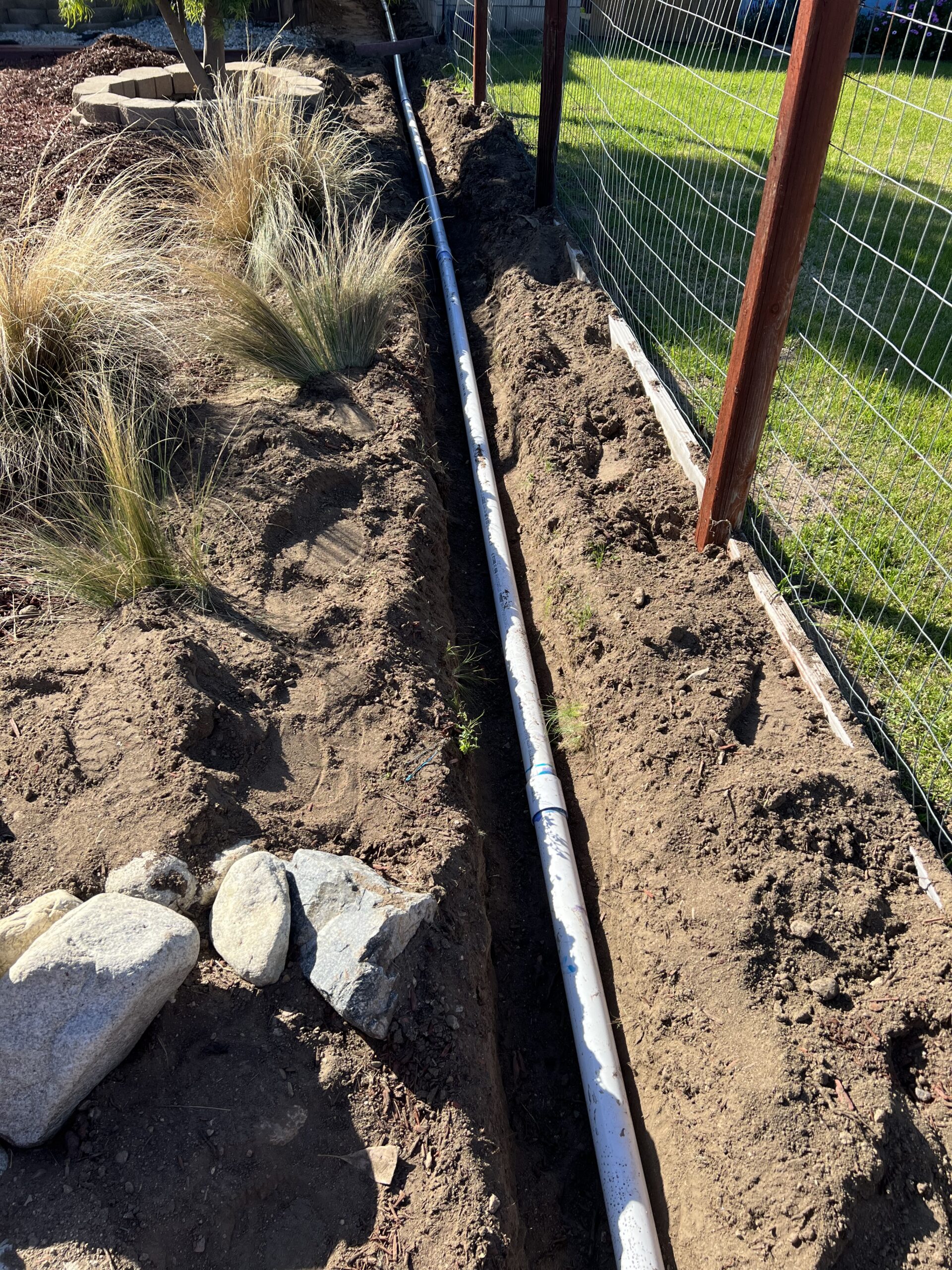
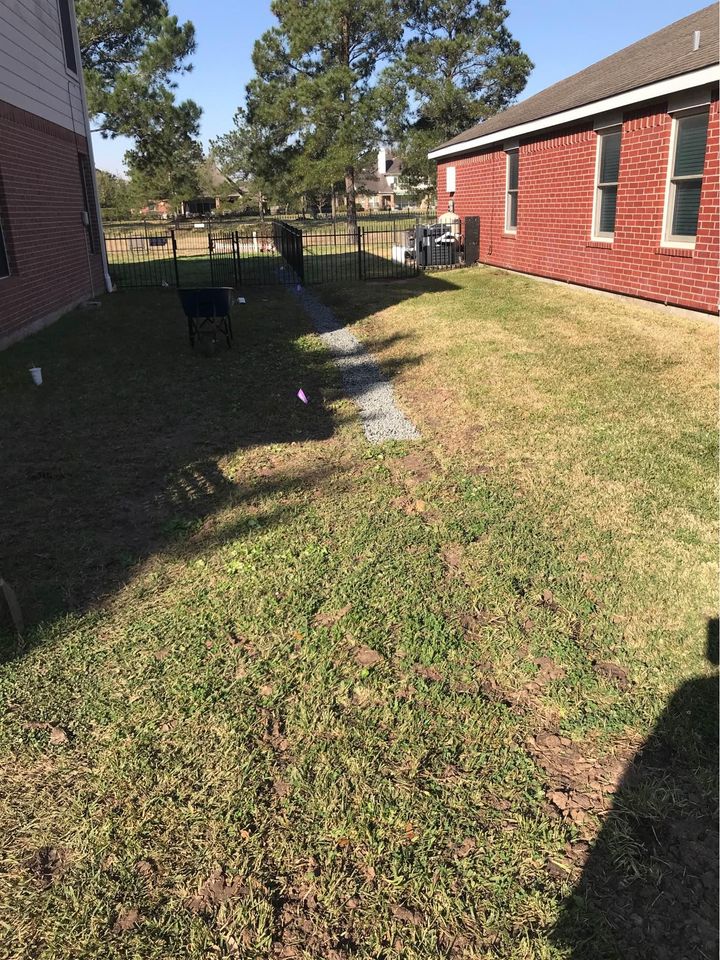
OE Landscape reviews how water reaches the low point, whether gravity can still do part of the work, where a basin can be maintained, and how the discharge line can integrate with the surrounding landscape. Generic photos do not represent this specific proposed installation; every property requires its own review.
Plan the whole drainage path
Need help evaluating a low yard or an existing sump discharge line?
Show OE Landscape where water collects, how the basin is fed, and where the line currently ends. A site review can help identify whether grading, gravity drainage, pumped drainage, or a combined approach fits the property.
CA C-27 License #1109316 | Bonded & Insured | Serving Southern California