
Pairing Contemporary Homes
with Natural Landscapes
Discover how clean modern architecture can be balanced with trees, grasses, layered planting, natural stone, movement, texture, and climate-appropriate Southern California landscaping.

Let the Architecture and Landscape Strengthen Each Other
Contemporary homes often stand out because of their clean lines, simple materials, large windows, and strong geometric forms.
These architectural qualities can create a striking property, but the surrounding landscape plays an important role in determining how the home ultimately feels.
A landscape that is too rigid may make contemporary architecture feel cold. A garden that is overly traditional may feel disconnected from the building.
One of the most effective approaches is to pair modern architecture with a more natural landscape.
At OE Landscape, we believe this combination can create the best of both worlds: the clarity and structure of contemporary design balanced by the warmth, movement, texture, and seasonal character of plants and natural materials.
Let the Home Provide the Structure
Contemporary architecture already provides a strong visual framework. A thoughtful landscape design can extend that structure into the outdoor environment.
Straight rooflines, rectangular windows, smooth walls, and simple materials create clear geometry.
The landscape does not need to repeat that geometry everywhere.
Instead, the architecture can provide structure while the planting introduces softness.
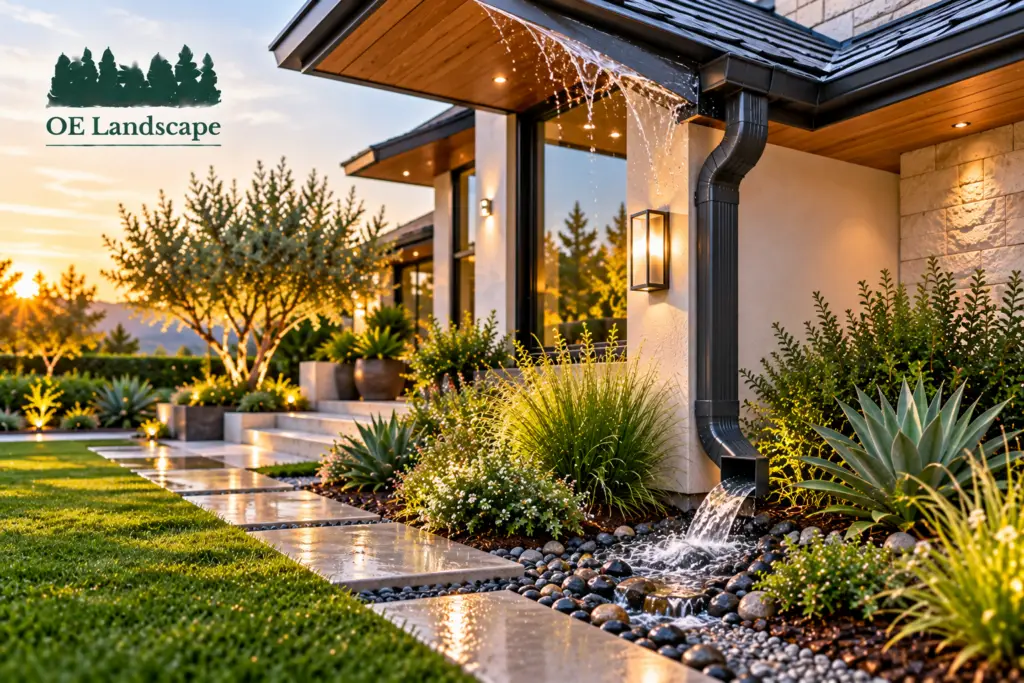
For example, a straight concrete walkway may lead toward the front entrance while loosely arranged ornamental grasses soften its edges.
A large rectangular patio or hardscape area can be surrounded by layered shrubs and trees.
This balance allows the landscape to feel connected to the architecture without looking overly controlled.
Use Natural Planting to Soften Hard Edges
Contemporary homes often contain sharp corners and broad wall surfaces.
Planting can reduce the visual hardness of these features.
Consider using:
- Ornamental grasses
- Groundcovers
- Layered shrubs
- Sculptural trees
- Drought-tolerant perennials
- Plants with soft or arching foliage
These plants can create a gradual transition between the building and the surrounding yard.
The goal is not to hide the architecture.
Instead, planting should help the structure feel more settled within the landscape.
Contrast Geometry With Organic Forms
One of the reasons contemporary homes pair so well with natural landscapes is the contrast between geometric and organic shapes.
Architecture may provide straight lines and precise corners.
Plants offer irregular canopies, changing foliage, curved stems, and varied textures.
A sculptural tree beside a smooth wall can become especially striking because the two forms are so different.
Similarly, flowing grasses planted beside rectangular pavers can make both elements feel more intentional.
Contrast creates visual interest without requiring excessive decoration.
Use Trees to Ground the Property
Trees are especially valuable around contemporary homes because they provide scale.
Large walls and expansive windows can sometimes make a house feel visually dominant.
A carefully positioned tree can help balance that scale.
Trees may be used to:
- Frame the architecture
- Shade patios
- Create privacy
- Soften tall walls
- Improve views from inside
- Establish outdoor gathering areas
The canopy also introduces movement and changing light.
As leaves shift throughout the day, shadows move across walls and hardscape, making static architecture feel more dynamic.
Keep the Planting Palette Simple
Natural landscaping does not have to mean using dozens of different plant varieties.
In fact, contemporary homes often benefit from a restrained planting palette.
Choose a smaller number of plants and repeat them throughout the property.
This might include:
- One or two tree varieties
- Several structural shrubs
- Ornamental grasses
- Groundcovers
- A limited selection of flowering plants
Repetition maintains the simplicity associated with contemporary architecture while allowing the landscape to feel softer and more natural.
Use Native and Climate-Appropriate Plants
For Southern California properties, climate-appropriate planting can support both appearance and long-term practicality.
Native and drought-tolerant plants can provide: Explore native options with Calscape.
- Texture
- Seasonal flowers
- Natural movement
- Wildlife value
- Distinctive forms
- Reduced water demand
These landscapes do not need to look sparse.
Layering different foliage types, heights, and textures can create rich planting while keeping water requirements more appropriate for the region. The UC Davis WUCOLS database is useful for comparing landscape plant water-use classifications in California.
The key is thoughtful composition.
Mix Fine and Bold Textures
Texture plays an important role when combining modern architecture with natural landscaping.
Smooth walls and large pavers provide a clean background.
Plants can introduce contrast through different foliage types.
Fine ornamental grasses may create softness.
Broad-leaved plants can provide stronger visual weight.
Shrubs with dense foliage may create structure.
Groundcovers can form a low textured layer near hardscape.
Combining these textures creates depth without requiring excessive color.
Use Natural Stone as a Transition Material
Natural stone and hardscape materials can help bridge the gap between architecture and planting.
It has enough structure to complement contemporary design while still feeling organic.
Stone may be used for:
- Retaining walls
- Steps
- Garden borders
- Seating walls
- Pathways
- Accent features
The shape and finish matter.
Large, simple stone pieces often work better with contemporary homes than highly decorative patterns.
Stone can also be combined with concrete or pavers to create a controlled contrast between manufactured and natural materials.
Introduce Gravel for a Relaxed Modern Feel
Gravel works well in contemporary landscapes because it creates simple surfaces without feeling overly formal.
It may be placed around drought-tolerant plants, between stepping pads, or within secondary garden areas.
Gravel also allows plants to visually stand out.
A sculptural shrub or group of grasses can appear especially strong against a simple gravel background.
Neutral tones usually work best because they support the architecture and plants rather than competing with them.
Let Planting Break Perfect Symmetry
Contemporary architecture may include strong symmetry or repeated geometric forms.
The landscape does not always need to follow the same pattern.
Asymmetrical planting can make the property feel more relaxed.
A specimen tree might anchor one side of the yard while a larger grouping of shrubs and grasses balances the other.
The two sides do not match, but the overall composition still feels stable. This same principle appears in how professional designers build visual balance.
This approach allows nature to provide variation without making the landscape feel disorganized.
Use Layered Planting Around Large Walls
Large blank walls can be powerful architectural features, but they may need planting nearby to feel connected to the landscape.
Instead of using one row of identical shrubs, create layers.
A taller tree or shrub can establish height.
Medium plants can provide mass.
Grasses and groundcovers can soften the base.
This creates depth and allows the wall to remain visible while becoming part of a more complete composition.
Create Natural Edges Around Hardscape
Contemporary patios and walkways often use precise edges.
These boundaries can be softened with planting.
Groundcovers may extend close to paving.
Grasses can overlap edges slightly.
Low shrubs may frame a patio without enclosing it.
This creates a more relaxed relationship between hardscape and garden areas.
The hardscape still looks clean, but the planting keeps the overall yard from feeling too rigid.
Use Outdoor Rooms Without Over-Defining Them
Contemporary landscapes often include several functional zones. See examples in our project gallery.
These may include:
- Outdoor dining
- Lounge areas
- Fire features
- Pools
- Open lawn or turf
- Garden spaces
Natural planting can separate these zones without requiring walls.
A group of trees might define a seating area.
Tall grasses could create a soft boundary.
A change in planting density may indicate a transition between spaces.
This allows outdoor rooms to remain connected while still serving different functions.
Frame Views From Large Windows
Large windows are a major feature of contemporary architecture.
They create opportunities to make the landscape part of the interior experience.
Consider what will be visible from important rooms.
A tree may become the focal point outside a living room.
Layered planting could soften the view from a bedroom.
Grasses might add movement outside a home office.
The best landscapes are often planned from both perspectives—outside and inside.
Use Planting to Create Privacy Naturally
Contemporary homes often include large areas of glass, which can increase the need for privacy.
Planting provides a softer solution than relying only on solid walls.
Trees can block upper-level views.
Shrubs can screen seating areas.
Grasses can create partial separation without closing off the yard.
Layering several plant types often creates a more natural result than installing one continuous hedge.
Privacy should be targeted where it is needed most.
Keep Hardscape Materials Restrained
Natural planting works best when the hardscape palette remains simple.
Too many different paving materials, borders, colors, and textures can compete with the landscape.
A contemporary property might use:
- One primary paving material
- One gravel type
- One natural stone accent
- One wood or metal detail
This creates a calm background for planting.
Plants then provide most of the visual variation.
Add Wood for Warmth
Wood can help contemporary outdoor spaces feel more comfortable.
It may appear in:
- Pergolas
- Fencing
- Screens
- Benches
- Gates
- Outdoor structures
Wood introduces a natural material without making the landscape feel traditional.
It works especially well with concrete, stucco, metal, and stone.
When repeated in small amounts, it can create warmth and help connect the architecture with the surrounding planting.
Let Plants Move
Movement is one of the qualities that architecture cannot provide on its own.
Trees and grasses respond to wind.
Leaves catch sunlight.
Flexible foliage shifts throughout the day.
These subtle changes help contemporary spaces feel alive.
Ornamental grasses are particularly effective because they introduce movement without requiring complicated planting.
They can be repeated along walkways, patios, or property edges to create natural rhythm.
Use Seasonal Interest Carefully
Contemporary landscapes often benefit from a stable foundation with selected seasonal changes.
Evergreen plants can provide structure throughout the year.
Flowering plants can then introduce controlled bursts of color.
Seed heads, bark, changing foliage, and new growth can add additional interest.
The landscape does not need to rely entirely on flowers. Texture, movement, and fragrance can also shape the experience, as explored in our sensory garden ideas.
Form and texture should remain important even when nothing is blooming.
Create a Natural Focal Point
Not every focal point needs to be architectural.
A tree, boulder, planting group, or water feature can become the visual center of an outdoor space and can support more comfortable outdoor spaces designed around wellness.
Natural focal points can balance the strong presence of the house.
For example, a sculptural tree at the end of a walkway may draw attention away from a blank wall.
A large boulder surrounded by grasses might anchor a planting area.
The feature should feel integrated rather than decorative.
Combine Water With Simple Forms
Water can create an effective bridge between modern architecture and natural landscapes.
The feature itself may remain simple and geometric while the surrounding planting introduces softness.
A clean rectangular basin, wall fountain, or minimal water feature can work well beside grasses, trees, or stone.
Water adds movement, reflection, and sound.
Used carefully, it can make a contemporary space feel more connected to nature.
Use Lighting to Highlight Both Plants and Architecture
Landscape lighting should reveal the relationship between the home and landscape after dark.
Instead of illuminating every surface, select a few important features.
Uplighting may highlight a tree against a wall.
Soft lighting can emphasize textured planting.
Path lights can guide movement through the landscape.
A low wall or architectural feature may be illuminated to create depth.
The goal is to preserve the natural atmosphere while making the outdoor environment functional at night.
Avoid Making the Landscape Too Perfect
One of the strengths of natural landscaping is variation.
Plants do not need to be shaped into identical forms.
Every bed does not need to mirror another.
A slightly irregular canopy or loose planting group can create contrast with highly controlled architecture.
That natural variation makes the landscape feel authentic.
The design should still be intentional, but it does not need to look overly formal.
Consider Mature Plant Size
Natural-looking landscapes still require careful planning.
Plants should be selected according to their mature size.
A small shrub installed close to a wall may eventually become too large.
Trees need adequate space for canopy development.
Groundcovers should be placed where spreading is appropriate.
Good spacing allows plants to mature into their natural forms rather than requiring constant pruning.
This helps maintain the relaxed appearance that makes natural planting effective.
Group Plants by Water Needs
A natural landscape should also be practical.
Grouping plants with similar irrigation requirements can support more efficient water use. See EPA WaterSense outdoor guidance for water-smart landscaping and irrigation.
Drought-tolerant plants can share one zone.
Plants needing more consistent moisture may require another.
A well-designed irrigation system helps the landscape remain healthy without unnecessary watering.
Planting design and irrigation planning should be developed together. California guidance is available through the DWR Model Water Efficient Landscape Ordinance.
Balance Open Space With Planting
A natural landscape does not mean filling every available area.
Open space is important.
Gravel, patios, lawn, turf, and uncluttered areas provide contrast with denser planting.
This helps individual trees and plant groups stand out.
Open space also keeps contemporary landscapes feeling clean and spacious.
The relationship between planted and unplanted areas is part of the design.
Create a Landscape That Feels Grounded
One of the most important benefits of natural planting around contemporary homes is that it helps the architecture feel connected to the site.
Without landscaping, a modern building can sometimes appear as though it has been placed on top of the property.
Trees, groundcovers, shrubs, stone, and grasses create transitions between the building and the ground.
They visually anchor the home.
The property begins to feel like one complete environment rather than separate architectural and landscape elements.
Blend Structure With Nature
Pairing contemporary architecture with natural landscaping is ultimately about balance.
The home provides order, geometry, and structure.
The landscape introduces movement, texture, shade, seasonal change, and natural variation.
Neither needs to dominate the other.
When both are considered together, the result can feel refined without becoming cold and natural without becoming unorganized.
At OE Landscape, we help Southern California homeowners transform outdoor spaces through professional landscape installation and hardscaping, plant installation, irrigation systems, artificial turf, and outdoor living improvements.
By combining contemporary architecture with carefully selected plants, natural textures, trees, stone, and climate-appropriate materials, a property can feel modern, comfortable, and connected to its surroundings.
Ready to create a landscape that complements your contemporary home? Contact OE Landscape to explore planting, hardscape, and outdoor living ideas designed to bring architecture and nature together, or use our Project Estimator to get started.
Create a Landscape That Feels Modern, Grounded, and Comfortable
Contemporary architecture provides clarity and structure. Natural planting adds movement, texture, shade, seasonal interest, and softness. When both are planned together, the property can feel refined without becoming cold and natural without feeling unorganized.
See How Planting, Hardscape, and Architecture Work Together
Explore OE Landscape projects where trees, grasses, hardscape, turf, planting, and outdoor living areas come together as one coordinated environment.
Explore Project Gallery

Ready to Create a Landscape That Complements Your Contemporary Home?
Tell OE Landscape what you want to improve and start planning an outdoor environment where architecture, planting, natural materials, and everyday outdoor living work together.