French Drains vs. Surface Drains: Choosing the Right Drainage Solution
Compare how French drains and surface drains collect different types of water, when each system makes sense, and why grading, soil conditions, hardscape, pipe routing, and a reliable outlet all matter.
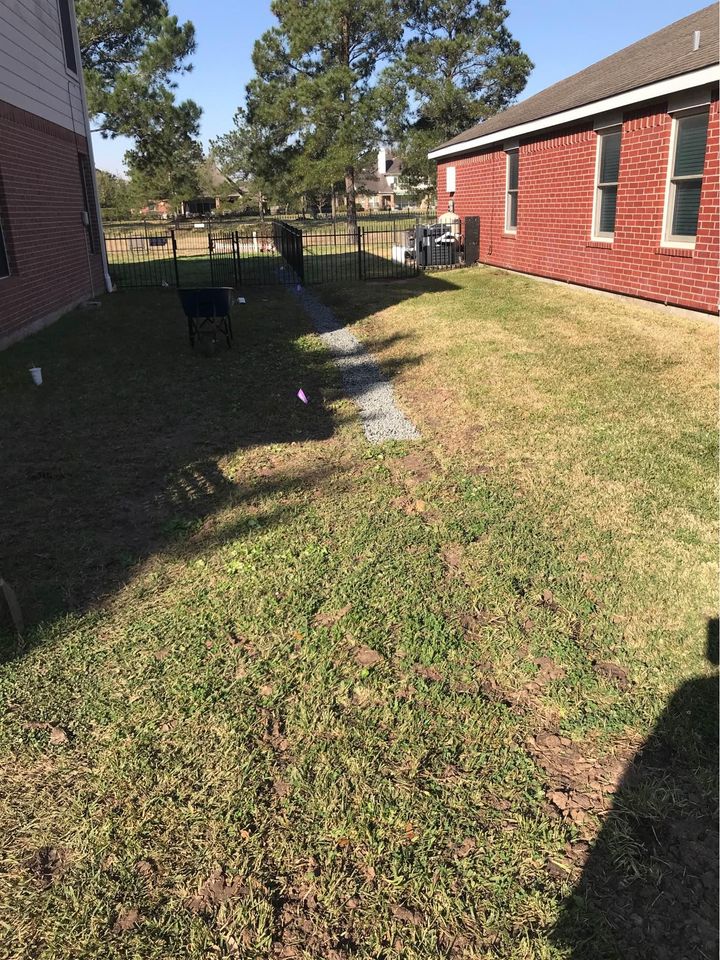
Surface Runoff and Subsurface Moisture Need Different Collection Strategies
French drains vs surface drains is one of the most important comparisons to understand when choosing a yard drainage solution. One system is designed mainly for water moving through saturated soil, while the other collects visible runoff at the surface.
Not every drainage problem is caused by the same type of water.
Sometimes the issue is easy to see: rainwater collects in a low spot and forms a puddle.
Other times, the surface looks relatively dry while the soil underneath remains saturated for days.
Those two problems may require very different solutions.
Two of the most common residential drainage options are French drains and surface drains. Both are designed to move unwanted water away from problem areas, but they collect water in different ways.
At OE Landscape, we believe the right drainage system starts with understanding where the water is coming from, how it is moving through the property, and whether the problem is happening above or below the soil surface.
For broader context on stormwater and surface runoff, review the U.S. EPA overview of urbanization and stormwater runoff.
The Basic Difference
The simplest way to understand these systems is this:
Surface drains collect visible water from the top of the ground.
French drains collect water moving through saturated soil below the surface.
A surface drain may be the better choice when water forms obvious puddles in a lawn, patio edge, or low section of the yard.
A French drain may be more appropriate when the soil remains wet, water moves through a slope, or subsurface moisture collects behind a retaining area.
The right solution depends on the behavior of the water—not just the appearance of the yard.
What Is a Surface Drain?
A surface drain is an inlet that collects runoff directly from the ground surface.
Common examples include:
- Yard drains
- Area drains
- Catch basins
- Channel drains
A typical surface-drain system includes:
- A grate or basin
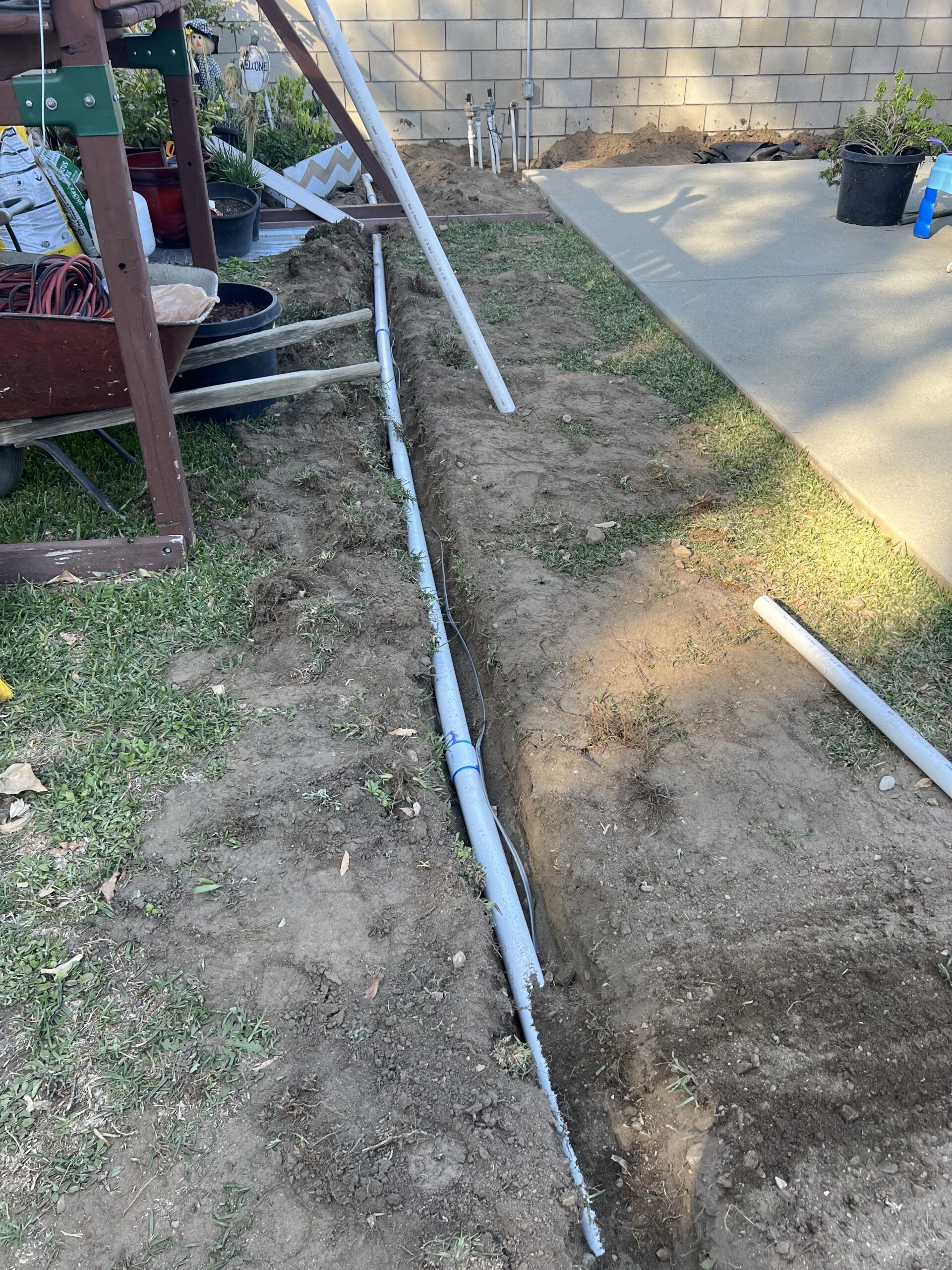
- Underground drainage pipe
- A planned discharge route
Water flows across the yard or hardscape, enters the drain, and is carried away through underground piping.
Surface drains are usually positioned at low points where water naturally gathers.
What Is a French Drain?
A French drain is an underground drainage system designed primarily to collect water from saturated soil.
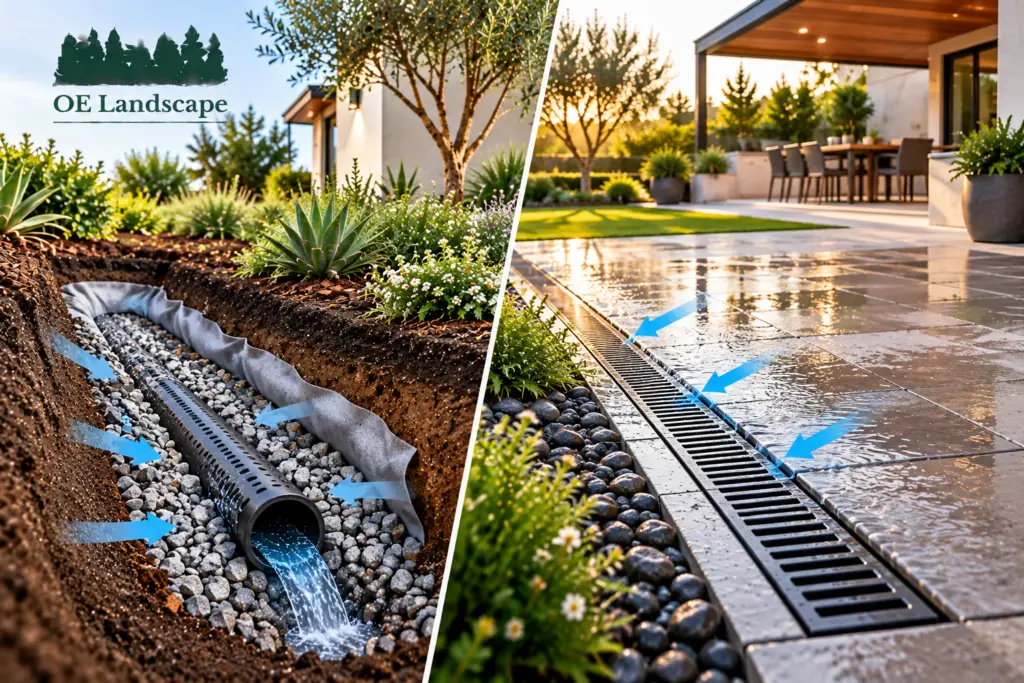
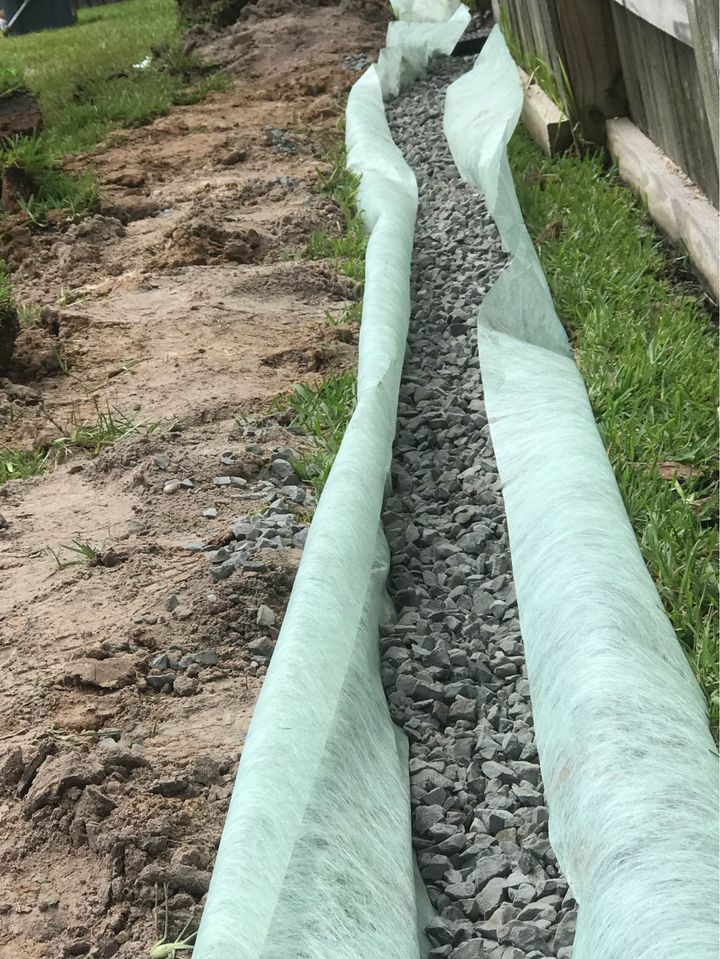
A typical French drain contains:
- A trench
- Perforated drainage pipe
- Drainage gravel
- Filter fabric
- A discharge route
Water moves through the surrounding soil, enters the gravel-filled trench, reaches the perforated pipe, and then flows toward the outlet.
Because the system works below the surface, French drains are useful when the problem is more about subsurface moisture than visible runoff.
Surface Water and Subsurface Water Behave Differently
Understanding the difference between these two types of water is one of the most important parts of drainage planning.
Surface runoff may come from:
- Rain falling directly on the yard
- Roof runoff
- Downspouts
- Driveways
- Patios
- Walkways
- Slopes
Subsurface water may develop from:
- Slow-draining soil
- Water moving downhill through the ground
- Saturated soil near retaining walls
- Persistent moisture beneath lawn or planting beds
Both types of water can create soggy conditions, but they do not always need the same drainage method.
When a Surface Drain Is Usually the Better Choice
A surface drain may be appropriate when water is visibly flowing or collecting on top of the landscape.
Common signs include:
- Puddles after rain
- Water collecting in low lawn areas
- Runoff moving toward a patio
- Water pooling near a walkway
- Surface water approaching doors or garages
- Runoff accumulating at the bottom of a slope
In these situations, the main goal is to capture water before it remains on the surface for too long.
A catch basin or yard drain placed at the correct low point may provide an effective collection point.
When a French Drain Is Usually the Better Choice
A French drain may make more sense when the soil itself remains wet.
Common signs include:
- Soil that stays saturated long after rain
- A slope that continually releases water into a lower area
- Persistent moisture along property edges
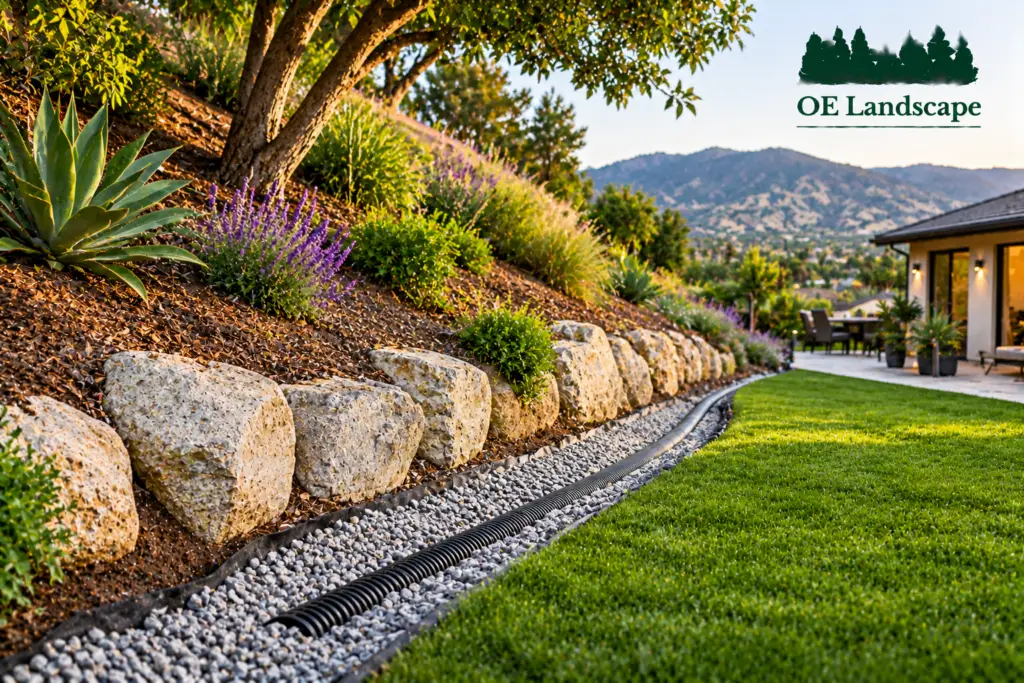
- Water collecting behind retaining walls
- Lawn that feels soft even without visible puddles
- Planting beds that remain wet below the surface
These conditions suggest that water may be moving through the soil rather than simply across the top of it.
A French drain can help intercept that water before it reaches another part of the property.
Standing Water Does Not Automatically Mean You Need a French Drain
French drains are well known, which is why homeowners sometimes assume they are the answer to every wet-yard problem.
But if water is visibly sitting on the surface, a French drain may not collect it quickly enough by itself.
A surface drain is specifically designed to receive that visible runoff.
For example, if a large puddle forms in the middle of a lawn every time it rains, a catch basin positioned at the true low point may provide more direct collection.
The drainage method should match the problem.
Wet Soil Does Not Automatically Mean You Need a Surface Drain
The reverse is also true.
A yard drain may remove visible puddles while doing little to address soil that remains saturated underneath.
If the moisture is moving through the ground, a surface inlet may only collect water after the soil is already overwhelmed.
A French drain may help intercept the subsurface water earlier.
This is why drainage planning should identify the water source and water pathway before choosing the system.
Sometimes the Best Solution Is Both
Many properties experience more than one type of drainage problem.
For example, a sloped backyard may have:
- Subsurface water moving downhill
- Surface runoff collecting at the bottom
In that situation, a French drain may intercept water within the slope while a catch basin collects surface runoff at the low point.
The two systems can work together.
This is often more effective than expecting one drain type to solve every condition.
How French Drains and Surface Drains Can Work Together
A combined system might look like this:
Slope moisture → French drain → underground drainage line
and
Surface runoff → catch basin → underground drainage line
Both systems may eventually connect to the same discharge route when the design allows.
The important thing is that each component performs the job it is best suited for.
This creates a more complete multi-layer drainage strategy.
Grading Influences Both Systems
Neither French drains nor surface drains should be planned without considering grading.
Surface drains depend heavily on grade because water must flow toward the inlet.
French drains also need appropriate slope in the underground pipe so collected water can move toward the outlet.
If the yard directs water toward the home or away from a drain, adding more drainage components may not solve the underlying issue.
Good grading helps make both systems more effective.
Surface Drains Need to Sit at the True Low Point
A catch basin installed slightly above the lowest part of the yard may collect very little water.
Runoff will naturally settle below it.
That is why basin placement should be based on finished elevation rather than convenience.
Before installation, it helps to determine:
- Where water begins
- Which direction it travels
- Where flows combine
- Where the actual low point is
The drain should be positioned where gravity already wants to send the water.
French Drains Need to Intercept the Water Path
French-drain placement is also important.
The drain should be positioned where subsurface water is actually moving.
For example, installing the drain downhill from the saturated area may allow water to pass through the problem zone before being collected.
A better location may be uphill or along the edge of the wet area where water can be intercepted earlier.
Understanding the subsurface flow direction helps determine where the trench should be placed.
Surface Drains Work Well in Lawn Areas
Low lawn areas commonly collect rainwater.
A catch basin or yard drain may help if the puddle develops because the surrounding grade directs water toward one point.
The landscape can be shaped so runoff flows toward the inlet.
The drain then carries the water away through underground pipe.
However, if the lawn remains soft and saturated even after visible water disappears, a French drain may also need to be considered.
French Drains Can Help Along Slopes
Slopes often create subsurface drainage problems because water moves downhill through the soil.
A French drain installed across or near the lower section of a slope may help intercept that moisture.
This can reduce the amount of water reaching the lower yard.
Surface drains may still be needed where runoff travels across the top of the ground.
Slope drainage often requires both surface-water control and subsurface-water interception.
Surface Drains Are Often Better Around Patios
Patios create surface runoff.
Water generally moves across the paving until it reaches a lower edge.
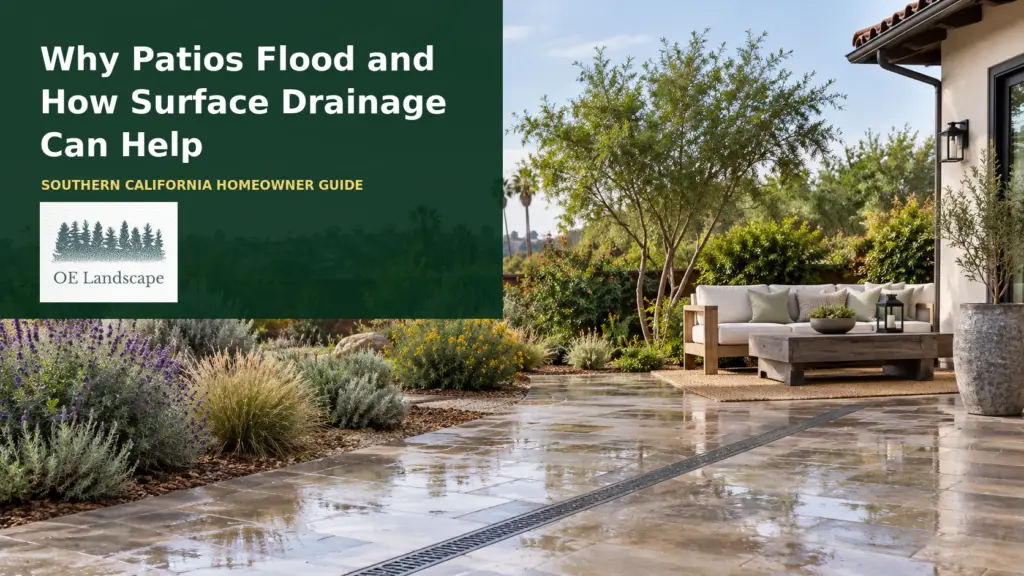
A catch basin or channel drain may be more appropriate than a French drain because the problem is occurring on top of the hardscape.
Common patio drainage solutions include:
- Channel drains
- Area drains
- Catch basins
- Correct surface slope
The goal is to collect water before it reaches doors, planting beds, or other low areas.
Channel Drains Are a Type of Surface Drain
Channel drains are especially useful where water moves across a wide hard surface.
They may be installed across:
- Driveways
- Garage entrances
- Walkways
- Patios
- Courtyards
Because they collect water along a line rather than at one small point, they can intercept runoff before it reaches a sensitive area.
They are still part of the surface-drainage category.
Driveways Usually Need Surface Drainage
A driveway that slopes toward a garage creates a surface-water problem.
Water moves across the paving.
A French drain beneath the adjacent soil would not necessarily stop that flow.
A channel drain placed across the driveway may provide a more direct solution.
The drain can collect runoff before it reaches the garage and connect it to underground piping.
This is a good example of matching the drain type to the way water actually moves.
Retaining Walls May Need French Drains
Retaining walls often interact with subsurface water.
Moisture can build up within the soil behind the wall.
French-drain-style systems may help collect and redirect this water.
Depending on the wall design, the system may include:
- Gravel
- Perforated pipe
- Drainage outlets
- Filter fabric
Surface drains may also be needed if runoff collects above or below the wall.
The retaining area should be evaluated as a complete drainage zone.
Roof Runoff Usually Needs Controlled Surface or Solid-Pipe Drainage
Downspouts create concentrated runoff.
That water is different from subsurface moisture.
In many situations, roof runoff can be routed through solid underground pipe rather than sent directly into a French drain.
This helps transport the water without releasing it into the surrounding soil.
Surface drains may still collect additional yard runoff nearby.
Roof drainage and landscape drainage should be coordinated rather than treated separately.
French Drains Should Not Be Used as a Catch-All Pipe
Because French drains use perforated pipe, they are intended to collect water along the trench.
Sending every drainage source into that pipe may not always be appropriate.
Large amounts of concentrated roof runoff or surface runoff can change how the system performs.
Different water sources may be better transported through solid pipe until they reach the appropriate discharge network.
A well-designed system uses each type of pipe for the purpose it is intended to serve.
Surface Drainage Works Best Before Water Soaks In
Surface drains are designed to collect runoff while it is still above ground.
This can be beneficial in areas where excessive water infiltration is undesirable.
For example, a yard drain may collect rainfall before it saturates a low lawn area.
A channel drain can intercept water before it reaches a planting bed.
The earlier the water is captured, the less work may be required from subsurface drainage.
French Drains Work After Water Enters the Ground
French drains operate at a different stage.
They collect water that has already moved into the soil.
This makes them useful in places where infiltration itself is creating the problem.
Examples may include:
- Saturated soil below slopes
- Wet areas behind walls
- Persistent groundwater-like seepage
- Water moving through planting beds
Thinking about when the water is being collected helps explain the difference between the two systems.
Soil Type Can Influence the Choice
Soil conditions affect how quickly water infiltrates.
Some soils drain relatively quickly.
Others hold moisture for much longer periods.
If water disappears from the surface but remains trapped below, a French drain may be useful.
If the soil absorbs water very slowly and large puddles remain visible, surface drainage may be more important.
Compacted soil can also make both problems worse.
Drainage decisions should consider the actual site conditions.
Irrigation Problems Can Mimic Drainage Problems
Before installing either system, the irrigation should be checked.
A wet area may be caused by:
- Broken sprinkler heads
- Leaking valves
- Excessive watering
- Poor drip irrigation settings
- Overspray
Installing drains without correcting the irrigation issue may simply create a system that removes water that should not be there in the first place.
The water source should always be identified first.
Sump Pumps May Be Needed for Either System
Both French drains and surface drains usually rely on gravity.
But some properties sit below the available outlet.
In those cases, either system may feed into a sump basin.
For example:
Catch basin → sump basin → pump → discharge
or
French drain → sump basin → pump → discharge
The sump pump provides the lift that gravity cannot.
The drainage method still determines how the water reaches the basin.
Every Drainage System Needs a Destination
Collecting water is only half of drainage design.
The system also needs a planned outlet.
Whether the water enters through a French drain or surface drain, it must eventually reach an appropriate discharge point.
The route may depend on:
- Property elevation
- Existing drainage infrastructure
- Local requirements
- Available outlets
- Site layout
A complete system follows the water from collection to conveyance to discharge.
Pipe Slope Still Matters
Underground pipe should generally move water downhill when gravity drainage is being used.
A system with insufficient slope may drain slowly or hold water.
This applies to both:
- Solid pipe connected to surface drains
- Perforated pipe used in French drains
Proper elevation planning is essential.
Drainage performance depends on more than the visible inlet or trench.
Maintenance Is Different for Each System
Surface drains are easy to see, which also means they are easy to inspect.
Homeowners should keep grates clear of:
- Leaves
- Mulch
- Grass clippings
- Soil
- Gravel
French drains are less visible.
Maintenance may focus more on:
- Keeping outlets clear
- Protecting cleanouts
- Preventing sediment from entering the system
- Monitoring long-term performance
Both systems benefit from thoughtful design that allows future access.
Surface Drains Can Clog at the Inlet
A surface drain may stop working even if the underground pipe is completely clear.
If leaves or mulch cover the grate, water may simply flow around it.
This is especially common during storms when debris moves across the yard.
Grate placement and maintenance should therefore be considered during landscape design.
French Drains Can Lose Performance From Sediment
French drains rely on open space within the gravel and perforated pipe.
Fine soil entering the system can reduce that open space over time.
Filter fabric and appropriate drainage materials help limit soil migration.
Proper installation plays a major role in long-term performance.
Because the system is buried, preventing clogging during construction is especially important.
Consider What the Yard Looks Like After the Storm
After rain, observe how long different areas remain wet.
If visible puddles remain, surface drainage may need improvement.
If the surface dries but the soil still feels saturated, the problem may be below ground.
These observations can help distinguish between the two types of drainage issues.
The timeline matters as much as the location.
Observe What Happens During the Storm
Watching the property while rain is falling can provide even more information.
Look for:
- Water moving across the lawn
- Runoff from patios
- Downspout discharge
- Water flowing from slopes
- Puddles forming
- Water entering existing drains
Surface flow is often easy to identify during rain.
Subsurface problems may become clearer later, when certain sections remain wet after the runoff has stopped.
Use Photos and Videos to Document Water Flow
Drainage problems can disappear by the time a contractor arrives.
Photos and videos taken during rain can help document:
- Flow direction
- Water depth
- Overflow
- Drain performance
- Erosion
- Downspout runoff
This information can make the site evaluation more accurate.
It can also help reveal whether the issue is primarily surface runoff, subsurface moisture, or both.
Surface Drains Are Often More Visible
Because surface drains need an open grate, part of the system remains visible.
That does not mean they have to look unattractive.
They can often be integrated into:
- Lawn
- Artificial turf
- Gravel
- Pavers
- Patio edges
Channel drains can align with hardscape geometry.
Catch basins can be positioned discreetly within planting.
Good landscape design allows drainage to function without becoming the focal point.
French Drains Are Usually More Hidden
One advantage of a French drain is that the system can be almost completely concealed after installation.
The surface may be restored with:
- Lawn
- Gravel
- Planting
- Other compatible landscape finishes
The drainage work continues below.
This makes French drains useful where homeowners want subsurface drainage without visible collection grates.
New Landscaping Is a Good Time to Evaluate Both
If a property is undergoing renovation, drainage should be evaluated before the visible landscape is completed.
This is the ideal time to determine whether the project needs:
- French drains
- Surface drains
- Catch basins
- Channel drains
- Gutter connections
- Sump pumps
- Regrading
Installing drainage first can reduce the need to disturb new turf, pavers, planting, or irrigation later.
Drainage should be considered infrastructure, not an afterthought.
Artificial Turf May Need Either Type of Drainage
Artificial turf projects can involve both surface and subsurface drainage.
If runoff from surrounding hardscape moves toward the turf, a surface drain may help intercept it.
If the soil below the turf remains saturated, subsurface drainage may also be required.
The correct base preparation and grading remain essential.
Artificial turf should not simply cover an existing water problem.
Planting Beds Can Need Both Systems Too
Planting beds may receive surface runoff from roofs or hardscape while also experiencing poor soil drainage.
A surface drain can collect excess runoff before it saturates the bed.
A French drain can help manage water within the soil.
The planting itself should also be selected according to site conditions.
Drainage and planting design work best when considered together.
Slopes Often Require a Combination Approach
Sloped properties can produce both fast surface runoff and persistent subsurface moisture.
A complete solution might include:
- Swales
- Surface drains
- French drains
- Erosion-control planting
- Catch basins
The goal is to manage water at several stages.
Surface runoff can be slowed and collected.
Subsurface moisture can be intercepted.
The combination can be more effective than relying on one system alone.
Do Not Choose Based on Which Drain Is More Familiar
A homeowner may have heard that French drains are effective and decide that is what the yard needs.
Another homeowner may see a catch basin and assume it will solve every puddle.
The better approach is to diagnose the water first.
Ask:
Is the problem on top of the soil or inside the soil?
Then ask:
Where does the water come from, and where can it go?
These questions lead to a more appropriate drainage solution.
Common Mistake: Installing a French Drain for Surface Runoff
One common mistake is installing a French drain where water mainly flows across concrete, pavers, or lawn.
If the water never enters the soil near the trench, the drain may collect very little of it.
A catch basin or channel drain may intercept the runoff more directly.
This is why visible flow patterns are so important.
Common Mistake: Installing Only a Catch Basin in Saturated Soil
Another mistake is placing a surface basin in an area where the real problem is subsurface moisture.
The basin may remove the visible puddle while the surrounding soil remains wet.
If water is continuously moving through the ground, a French drain may be needed to intercept it.
A complete evaluation helps prevent incomplete solutions.
Common Mistake: Ignoring Grading
Both systems can fail to solve the problem if the grade remains wrong.
A surface drain cannot collect water that flows away from it.
A French drain cannot compensate for large amounts of surface runoff constantly being directed toward the house.
Grading should be evaluated before the drainage layout is finalized.
Common Mistake: Forgetting the Outlet
Homeowners sometimes focus on the drain itself without considering where the water will go.
A French drain may be installed beautifully, but if the outlet is too high, blocked, or poorly located, the system will not perform as intended.
The same applies to catch basins.
Every system needs a complete discharge plan.
Choose the System Based on Water Behavior
French drains vs surface drains becomes much clearer with one simple comparison:
Choose a surface drain when the main problem is visible runoff or standing water on top of the ground.
Choose a French drain when the main problem is water moving through or saturating the soil.
Choose both when the property experiences both conditions.
That basic distinction can make drainage planning much clearer.
French Drains vs Surface Drains: Quick Comparison
French Drain
Best for:
- Saturated soil
- Subsurface water
- Water moving through slopes
- Wet areas near retaining walls
Collects water:
- Below the surface
Typical components:
- Perforated pipe
- Gravel
- Filter fabric
Surface Drain
Best for:
- Standing water
- Lawn puddles
- Patio runoff
- Driveway runoff
- Low surface areas
Collects water:
- At the surface
Typical components:
- Catch basin or grate
- Solid underground pipe
Neither system is automatically better.
They are simply designed for different conditions.
Build the Drainage Plan Around the Entire Property
Drainage problems rarely exist in complete isolation.
The wet area may be influenced by:
- Roof runoff
- Irrigation
- Hardscape
- Slopes
- Retaining walls
- Neighboring elevations
- Soil conditions
That is why the strongest solution often considers the whole property.
At OE Landscape, we help Southern California homeowners address drainage challenges through French drains, yard drains, catch basins, channel drains, sump pumps, landscape grading, gutter and downspout drainage, erosion-control solutions, irrigation improvements, and complete landscape renovations.
By identifying whether the problem is happening on the surface, below the surface, or both, the drainage system can be designed around how water actually moves through the property.
OE Landscape – CA C-27 License #1109316 | Bonded & Insured
Not sure which option fits your property? A French drains vs surface drains comparison starts with whether the water is moving on top of the ground, through the soil, or both. Contact OE Landscape to discuss drainage options based on your property's grading, soil conditions, hardscape, and water-flow patterns.
California homeowners can also review the California Water Boards Storm Water Program for statewide stormwater information.
Use the Right Collection Method for the Water Problem You Actually Have
OE Landscape can evaluate grading, standing water, saturated soil, roof runoff, hardscape, irrigation, slopes, catch basins, French drains, channel drains, sump systems, and discharge routes as one complete drainage plan.
Choose the Drain Based on Where the Water Is Moving.
Tell OE Landscape whether you are seeing standing water, saturated soil, slope seepage, patio runoff, roof runoff, or a combination. We can review grading, collection points, underground piping, and practical drainage options for the property.