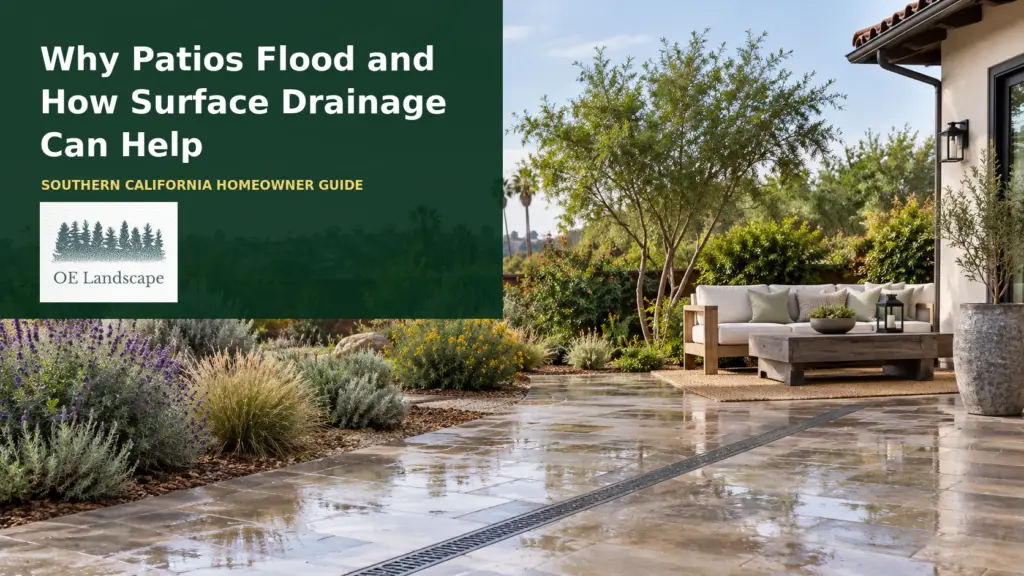
Poor Drainage Warning Signs: Is Water Threatening Your Home?
Poor drainage warning signs can include standing water, soggy soil, erosion, overflowing drains, and runoff moving toward your home. Learn what these signs mean and how grading, French drains, catch basins, channel drains, downspout routing, sump pumps, and coordinated landscape drainage can help.
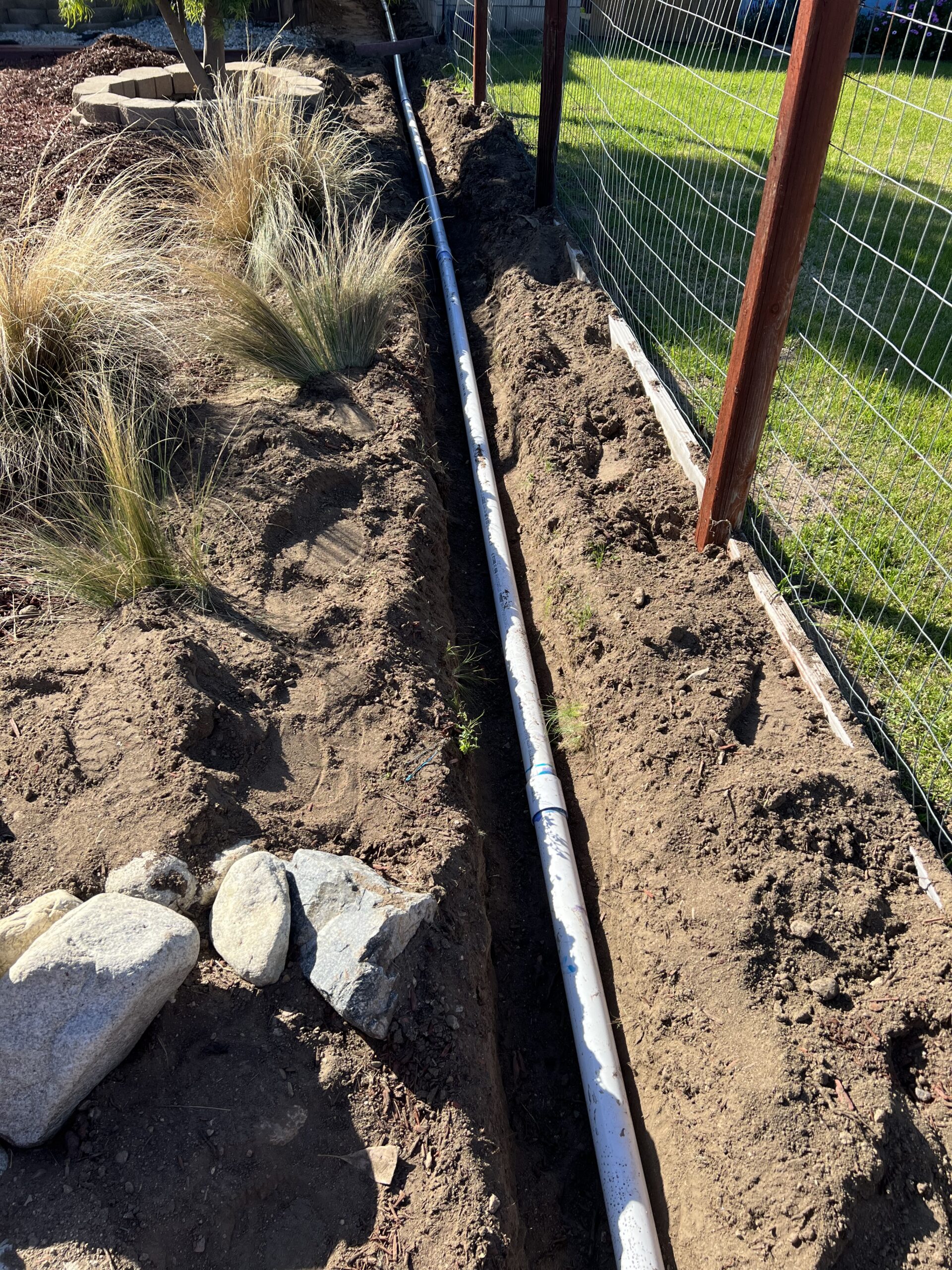
Common Poor Drainage Warning Signs to Watch For
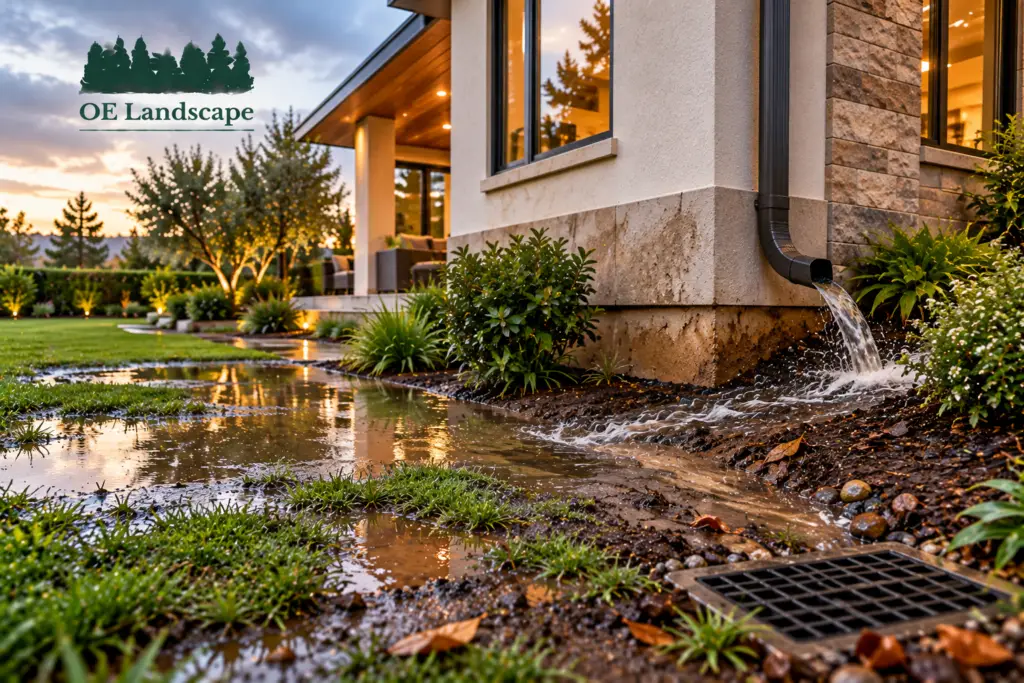
Poor drainage warning signs can appear as recurring puddles, soggy soil, erosion, overflowing drains, or runoff moving toward your home. Recognizing these patterns early can make it easier to correct the water path before the problem expands.
Drainage problems rarely begin with a dramatic flood.
More often, the warning signs appear slowly.
A puddle that returns after every storm. Soil washing away beside a walkway. A side yard that stays muddy for days. Water collecting near the foundation. Mulch repeatedly moving out of planting beds.
Individually, these problems may seem minor.
Together, they can indicate that water is not moving through the property the way it should.
At OE Landscape, we believe one of the best ways to protect a landscape and the areas surrounding a home is to identify drainage problems early. The sooner homeowners understand where water is coming from and where it is collecting, the easier it is to plan a solution before the problem grows.
OE Landscape can evaluate the broader water path and coordinate drainage improvements with hardscape, irrigation, planting, artificial turf, and other landscape work.
- Recurring standing water
- Soggy or spongy soil
- Erosion or washed-out mulch
- Overflowing or backing-up drains
- Runoff moving toward doors or the foundation
- Wet side yards that stay damp for days
For product examples and educational references, homeowners can also explore NDS drainage and water-management resources.
Why Poor Drainage Warning Signs Should Not Be Ignored
Every property receives water from several sources.
These may include:
- Rainfall
- Roof runoff
- Gutters and downspouts
- Irrigation
- Driveways
- Patios
- Walkways
- Slopes
- Neighboring elevations
A healthy drainage system gives that water a controlled route.
When the route is missing or poorly designed, runoff begins finding its own path.
That may mean flowing toward the home, collecting in low areas, saturating soil, washing out landscaping, or concentrating along hardscape.
Recognizing poor drainage warning signs early can help homeowners understand when the problem deserves closer attention.
1. Water Collects Near the Foundation
One of the most important warning signs is recurring water close to the house.
After rain, inspect the soil and hardscape near exterior walls.
Look for:
- Puddles
- Saturated soil
- Mud
- Water stains
- Downspouts discharging nearby
The ground should generally help encourage water away from the structure.
If the surrounding grade slopes toward the home, runoff may repeatedly collect near the foundation.
This can indicate a need for better grading, downspout routing, surface drains, or another poor drainage solutions.
2. The Same Puddles Return After Every Rain
Occasional standing water after an unusually heavy storm is different from a puddle that appears in exactly the same place every time it rains.
Repeated puddles usually indicate a low point.
Common locations include:
- Lawns
- Side yards
- Planting beds
- Patio edges
- Areas below slopes
The water may remain because the area has no outlet or because the surrounding grade continuously directs runoff toward it.
A yard drain or catch basin may help, but the grading around the puddle should also be evaluated.
3. Your Lawn Stays Soggy for Days
A lawn may look dry from a distance while the soil remains soft underneath.
Walk across the yard after rainfall.
If certain areas continue feeling spongy or muddy long after other sections have dried, the soil may be holding too much moisture.
Possible causes include:
- Poor soil drainage
- Compaction
- Subsurface water
- Overwatering
- A low grade
- Nearby roof runoff
If the problem is beneath the surface, a French drain or other subsurface drainage solution may be worth considering.
4. Soil Is Washing Away
Erosion is one of the clearest signs that water is moving through the property too aggressively.
Look for:
- Small channels through soil
- Exposed roots
- Soil collecting downhill
- Washouts below downspouts
- Missing soil around slopes
Erosion means runoff is not only moving—it is carrying the landscape with it.
The solution may involve changing the direction of water, reducing its speed, stabilizing the soil, or adding drainage features.
Good drainage should manage both water direction and runoff velocity.
5. Mulch Keeps Moving After Rain
Mulch should generally remain in the planting bed.
If it repeatedly washes onto walkways, patios, driveways, or lower planting areas, water is likely moving through the bed with too much force.
This may happen when:
- A downspout empties into the bed
- A slope sends runoff through it
- Hardscape drains toward the planting
- The bed is graded incorrectly
Replacing the mulch each time does not fix the underlying issue.
The runoff path should be corrected first.
6. Gravel Is Washing Out
Decorative gravel can reveal drainage problems just as clearly as mulch.
If rock repeatedly moves downhill or piles up at one end of a yard, water may be traveling through the area faster than expected.
This is especially common on:
- Slopes
- Side yards
- Areas below downspouts
- Gravel paths
- Transitions between hardscape and planting
The drainage plan may need to slow, redirect, or collect the runoff before it moves through the gravel.
7. Water Flows Toward Doors
Watch carefully around:
- Sliding doors
- French doors
- Garage doors
- Side doors
- Low exterior entrances
Water should not repeatedly move toward these openings.
If patio or walkway runoff travels in that direction, the surface grade may be incorrect.
Depending on the site, the solution may include:
- Regrading
- Channel drains
- Catch basins
- Underground drainage
Low openings deserve extra attention because water may have very little margin before reaching the building.
8. Your Driveway Sends Water Toward the Garage
Driveways can collect large amounts of runoff.
If the driveway slopes downward toward the garage, rainwater may move directly toward the door.
A channel drain installed across the driveway can sometimes intercept this flow.
However, the drainage system must also have:
- Enough capacity
- Correct pipe slope
- A suitable outlet
The drain itself is only one part of the solution.
The full hardscape runoff pathway should be considered.
9. Water Collects Along Patio Edges
A patio should drain predictably.
If water repeatedly gathers along one edge, it may indicate:
- Insufficient slope
- Settlement
- Poor transition into the landscape
- A low planting bed
- Roof runoff reaching the patio
Standing water near outdoor living areas can make the space less usable and may also contribute to staining or persistent dampness.
A channel drain, catch basin, or grade correction may be needed depending on the cause.
10. Downspouts Empty Beside the House
A downspout that releases water directly beside the foundation is a common drainage warning sign.
Gutters collect a large roof area and concentrate that water into a few downspouts.
If the downspout ends next to the home, it can repeatedly saturate the same soil.
A better strategy may involve:
- Downspout extensions
- Solid underground pipe
- Regrading
- Connection to a larger drainage system
Roof runoff should have a continuous route away from sensitive areas.
11. Gutters Overflow During Rain
If water spills over the edge of the gutter instead of reaching the downspout, something may be wrong with the roof drainage system.
Possible causes include:
- Leaves
- Debris
- Blocked downspouts
- Improper gutter slope
- Insufficient capacity
Overflowing gutters can send water directly against walls, planting beds, or foundation areas.
Before modifying the yard drainage, make sure the gutter system itself is functioning properly.
12. Your Side Yard Never Seems to Dry
Side yards are common drainage trouble spots.
They are often:
- Narrow
- Shaded
- Relatively flat
- Surrounded by walls
- Used for utilities
- Filled with downspouts
These conditions can make evaporation and drainage slower.
If a side yard remains wet long after the rest of the property dries, it may need:
- Improved grading
- Catch basins
- Downspout piping
- French drains
- A sump system in very low conditions
Because space is limited, the drainage route should be planned carefully.
13. Water Sits Behind or Near a Retaining Wall
Retaining walls change how water moves through a property.
If water collects above, behind, or below the wall, drainage may need attention.
Warning signs can include:
- Persistent saturation
- Muddy soil
- Water emerging near the base
- Erosion around the ends
Retaining walls may require both surface and subsurface drainage.
A French drain, gravel drainage layer, or surface drain may be part of the solution depending on the structure.
14. Planting Beds Stay Waterlogged
Plants need water, but they also need appropriate drainage.
A bed that stays saturated for long periods may cause certain plants to struggle.
Signs may include:
- Yellowing foliage
- Poor growth
- Consistently wet soil
- Mud around roots
Before replacing the plants, investigate why the area remains wet.
The cause may be:
- Irrigation
- Roof runoff
- Poor grading
- Slow-draining soil
- Hardscape directing water into the bed
Healthy planting depends on both water delivery and water removal.
15. Water Is Coming From a Slope
If your property sits below a hillside or raised landscape area, runoff may reach the lower yard from above.
Watch for:
- Water moving downhill
- Erosion channels
- Soil accumulation at the bottom
- Saturated lower planting areas
Slope drainage can require a combination of solutions.
These may include:
- Grading
- Swales
- French drains
- Catch basins
- Erosion-control planting
- Retaining features
The goal is to manage water before it gains too much speed or reaches the lower yard in one concentrated flow.
16. Hardscape Is Redirecting Water Into the Landscape
New patios, walkways, and driveways change how runoff moves.
A surface that once absorbed some rainfall may now send water rapidly toward another part of the yard.
Watch where water leaves the hardscape.
If it continually floods a planting bed or turf area, the landscape may not be able to handle the additional volume.
A drainage solution may need to intercept the runoff before it reaches that area.
17. Artificial Turf Has Wet or Low Areas
Artificial turf does not automatically eliminate drainage problems.
If the soil and base below the turf are poorly graded, water can still collect underneath.
Warning signs may include:
- Soft sections
- Persistent moisture
- Puddling nearby
- Low areas developing over time
Drainage should ideally be corrected before turf installation.
Possible solutions may include grading, catch basins, drainage pipe, or subsurface drainage.
18. Water Stains Appear on Hardscape
Even when you do not see water flowing, the landscape may leave evidence behind.
Look for:
- Dark staining
- Mineral marks
- Mud lines
- Algae in damp areas
- Sediment deposits
These patterns can reveal where runoff repeatedly travels or collects.
They are especially useful when evaluating drainage during dry weather.
19. Debris Collects in the Same Place
Leaves, soil, mulch, or small gravel often settle where water slows down.
If debris always collects in one location after rain, that spot may be part of an important runoff path.
The debris itself can help show:
- Where water traveled
- Where flows combined
- Where the landscape becomes flat
This can help identify good locations for drainage improvements.
20. Poor Drainage Warning Signs: Existing Drains Keep Overflowing
If a yard already has drains but water still collects, the problem may not be lack of drainage.
The existing system may be:
- Clogged
- Undersized
- Poorly graded
- Connected to an inadequate outlet
- Receiving too much water
Adding another drain without understanding why the current system fails may not solve the problem.
The entire drainage network should be evaluated. Repeated overflow is one of the clearest poor drainage warning signs that the problem may extend beyond the visible inlet.
21. Water Backs Up From a Drain
A drain that fills and then pushes water back toward the surface may indicate a downstream problem.
Possible causes include:
- Blocked pipe
- Insufficient pipe slope
- Undersized pipe
- Blocked outlet
- Too many connected drains
The visible drain may not be the source of the failure.
The problem can be farther along the drainage route.
22. Drainage Problems Appear Only During Heavy Storms
Some systems seem to work during light rain but fail when rainfall becomes more intense.
This may indicate the system does not have enough capacity.
During a strong storm, watch whether:
- Drains fill faster than they empty
- Water bypasses channel drains
- Catch basins overflow
- Downspouts back up
Drainage systems should be evaluated based on the volume they are expected to manage, not only their performance during light rainfall.
23. Water Is Entering From Neighboring Elevations
A lower property may receive runoff from higher surrounding areas.
This can make drainage more complicated because the water does not originate entirely on your property.
A drainage plan may need to intercept the water before it travels farther into the yard.
Possible solutions can include:
- Swales
- French drains
- Catch basins
- Grading
Any changes should also consider applicable local requirements and avoid creating new problems for neighboring properties.
24. Your Yard Has Developed New Low Spots
Landscapes can change over time.
Soil settles.
Tree roots grow.
Hardscape moves.
Areas that drained well several years ago may gradually become depressions.
If new puddles begin forming where there were none before, check whether the surface elevation has changed.
Regrading may sometimes restore the original drainage path.
25. Soil Is Pulling Away in Some Areas but Saturated in Others
An uneven moisture pattern can indicate water is being concentrated instead of distributed naturally.
One area may erode while another stays waterlogged.
This suggests the property may not have a balanced runoff path.
The solution may involve reshaping grades so water reaches drainage features more evenly.
26. Water Collects at the Bottom of Steps
Steps can act like small channels.
Runoff moves down each tread and may concentrate at the lower landing.
If the bottom remains wet after rain, a drainage feature may be needed there.
Possible options include:
- Channel drains
- Catch basins
- Regrading
The drainage element should be integrated carefully so the steps remain safe and comfortable to use.
27. Your Outdoor Kitchen or Fire Pit Area Floods
Outdoor living features should not become drainage low points.
If water repeatedly collects around:
- Outdoor kitchens
- Fire pits
- Seating walls
- Lounge areas
the grading may not have been coordinated properly with the hardscape.
Sunken areas are especially vulnerable.
They may require surface drains or, where gravity drainage is impossible, a sump pump.
Drainage should be part of outdoor living design from the beginning.
28. Pool Deck Runoff Is Going the Wrong Direction
Pool areas generate both rainwater and normal splash.
The deck should guide water away from buildings and toward appropriate collection areas.
If water repeatedly moves toward doors, landscape low points, or structures, the deck drainage may need improvement.
Channel drains or other surface drainage may be appropriate depending on the layout.
29. A French Drain Was Installed but Surface Water Still Puddles
This is a strong clue that the wrong type of drainage may be handling part of the problem.
French drains primarily manage subsurface water.
If visible runoff continues flowing across the yard, you may also need:
- Catch basins
- Yard drains
- Channel drains
- Better grading
Many properties require both surface and subsurface drainage.
One system should not be expected to solve every type of water problem.
30. A Catch Basin Removes the Puddle but the Soil Stays Wet
The opposite problem can happen too.
A surface drain may remove visible standing water while the surrounding soil remains saturated.
That may indicate subsurface drainage is still needed.
A French drain can sometimes help intercept water within the soil.
This is why understanding whether the problem is above or below the surface is so important.
31. Water Has No Obvious Place to Go
Sometimes the biggest warning sign is the absence of a drainage destination.
You may have catch basins and pipes, but where do they end?
Every drainage system needs an outlet.
If the property is too flat or the low area sits below the available outlet, gravity may not be enough.
In those cases, a sump pump may be considered.
A drainage system should always have a complete collection, conveyance, and discharge strategy.
32. Persistent Wet Areas Appear During Dry Weather
If sections of the yard stay wet when there has been no rain, inspect the irrigation system.
Possible issues include:
- Broken underground lines
- Leaking valves
- Overspray
- Excessive watering
- Damaged drip tubing
Drainage should not be used to compensate for a leak.
The unnecessary water source should be repaired first.
33. Plants Need Constant Replacement in the Same Wet Area
Repeated plant failure can sometimes be a drainage clue.
If the same area remains wet and plants repeatedly decline, the underlying soil conditions may not match the plant selection.
Rather than continuing to replace plants, investigate:
- Water accumulation
- Irrigation
- Soil drainage
- Nearby runoff
Correcting the drainage may improve the entire planting area.
34. Your Drainage Problems Worsened After a Remodel
New construction can change property elevations.
Projects such as:
- Patio installation
- Additions
- Driveway replacement
- Pool construction
- Retaining walls
- Artificial turf
may alter the direction of water.
If drainage problems begin after a renovation, compare the new grades with the previous water path.
The project may have unintentionally blocked or redirected runoff.
35. Water Is Undermining Landscape Edges
Watch the edges of:
- Walkways
- Turf
- Pavers
- Gravel zones
- Planting beds
If soil repeatedly washes away beside them, runoff may be following the edge.
This can gradually create depressions or expose base material.
A drainage improvement may be needed to redirect the flow before it reaches the transition.
Why Addressing Poor Drainage Warning Signs Early Matters
Drainage issues often become more complicated over time because water continues affecting the same locations.
A small erosion channel can become larger.
A slightly low lawn area may settle further.
Repeated runoff may continue moving mulch and soil.
Identifying the pattern early gives homeowners more options.
A minor grade adjustment or targeted drain may be enough before the issue affects a larger portion of the property.
What to Do After You Notice Poor Drainage Warning Signs
The first step is not necessarily to start digging.
Observe the property.
During the next rain, look for:
- Where water begins
- Which direction it travels
- Where flows combine
- Where it slows
- Where it collects
- Where existing drains send it
Take photos or video if possible.
This creates a clearer picture of the whole-property water-flow pattern.
Do Not Diagnose the Problem From the Puddle Alone
The largest puddle may be the final destination of water arriving from several locations.
For example, one low area could receive runoff from:
- The roof
- A patio
- A slope
- A side yard
Installing a catch basin at the puddle may help, but a better solution could also involve redirecting some of those upstream water sources.
Drainage should be planned from source to destination.
Match Poor Drainage Warning Signs to the Right Solution
Different warning signs point toward different drainage methods.
For visible standing water:
Consider:
- Yard drains
- Catch basins
- Grading
For saturated soil:
Consider:
- French drains
- Soil improvements
- Irrigation corrections
For hardscape runoff:
Consider:
- Channel drains
- Surface slope correction
For roof runoff:
Consider:
- Gutter maintenance
- Downspout extensions
- Solid underground piping
For low areas without a gravity outlet:
Consider:
- Sump pump drainage
Some properties require several of these systems working together.
Drainage Product and Stormwater Resources
For homeowners who want to understand common drainage components, NDS drainage products and water-management resources provide examples of catch basins, channel and trench drains, French drain systems, grates, fittings, and other stormwater components. Product selection should still be based on the property, expected flow, grading, pipe route, and outlet.
For broader runoff guidance, review the U.S. EPA overview of stormwater runoff and the California Water Boards Storm Water Program.
Drainage Should Be Planned Before a Landscape Renovation
If a landscape already shows warning signs, address them before installing new finishes.
This is especially important before adding:
- Pavers
- Artificial turf
- Planting
- Irrigation
- Outdoor kitchens
- Lighting
- Patios
Underground drainage is much easier to install before the finished landscape is completed.
This can also reduce the need to remove new work later.
Good Drainage Is Often Invisible
A well-designed drainage system does not need to dominate the landscape.
Catch basins can blend into turf or planting.
Channel drains can align with hardscape.
French drains remain underground.
Downspout piping can be concealed below the surface.
Grading can be almost unnoticeable.
What homeowners notice instead is that the property handles rainfall better.
Use Poor Drainage Warning Signs to Follow the Water
The most important lesson in drainage is simple:
Follow the water.
Where does it begin?
Where does it travel?
Where does it collect?
Where should it go instead?
Those questions can reveal whether the property needs better grading, surface drains, French drains, gutter connections, channel drains, or a sump pump.
At OE Landscape, we help Southern California homeowners respond to poor drainage warning signs through French drains, yard drains, catch basins, channel drains, sump pumps, landscape grading, gutter and downspout drainage, erosion-control solutions, irrigation improvements, and complete landscape renovations.
Recognizing poor drainage warning signs early can help prevent recurring water problems from becoming larger landscape and property issues.
OE Landscape – CA C-27 License #1109316 | Bonded & Insured
Noticing standing water, erosion, soggy soil, or runoff moving toward your home? Contact OE Landscape to discuss drainage solutions designed around your property's grading, hardscape, landscape, and overall water-flow conditions.
Fix the Water Path, Not Just the Puddle
A successful drainage plan considers where water starts, how it travels, where it collects, and where it can be discharged. OE Landscape can coordinate drainage with grading, hardscape, irrigation, turf, planting, and broader landscape construction.
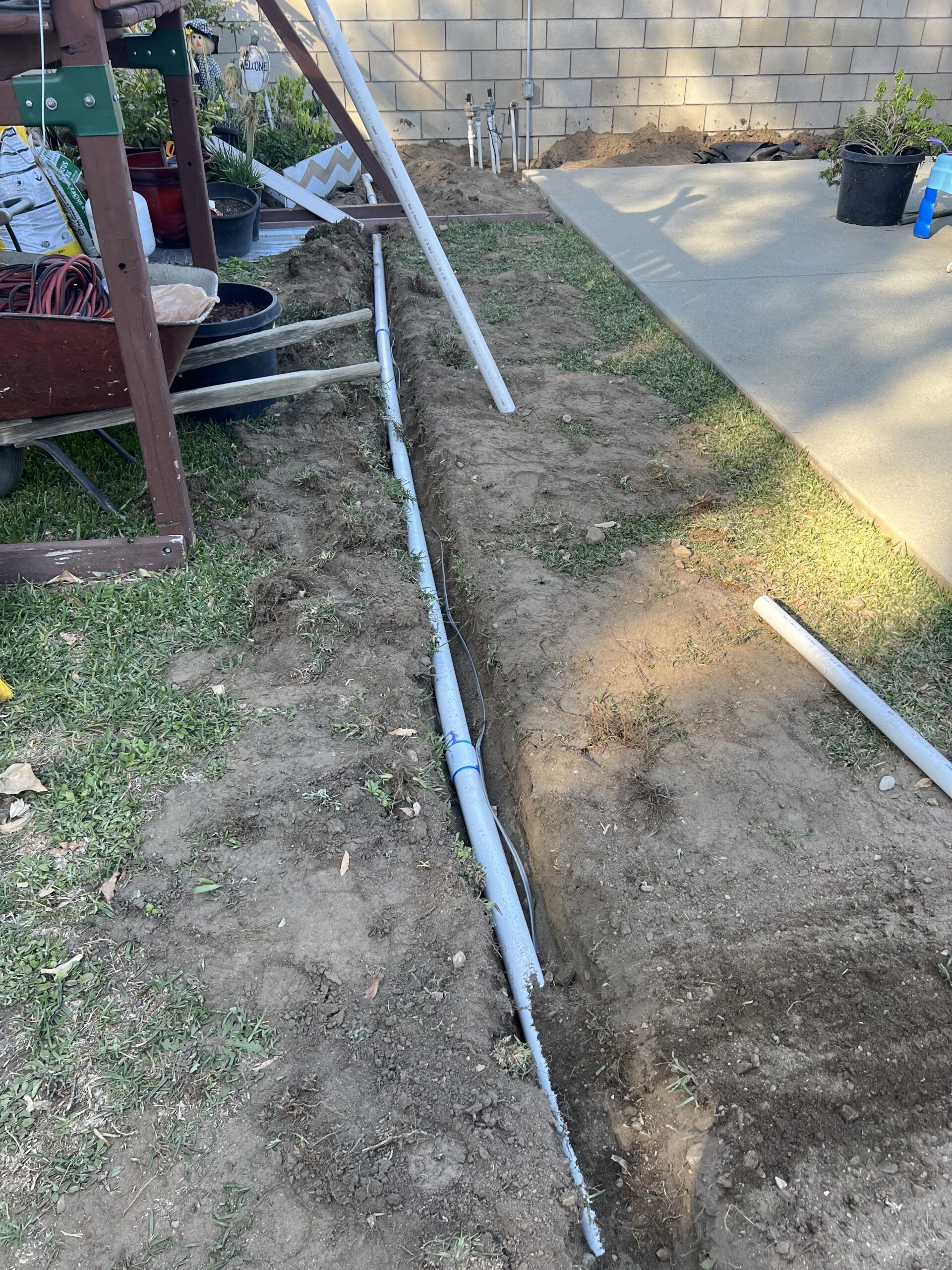
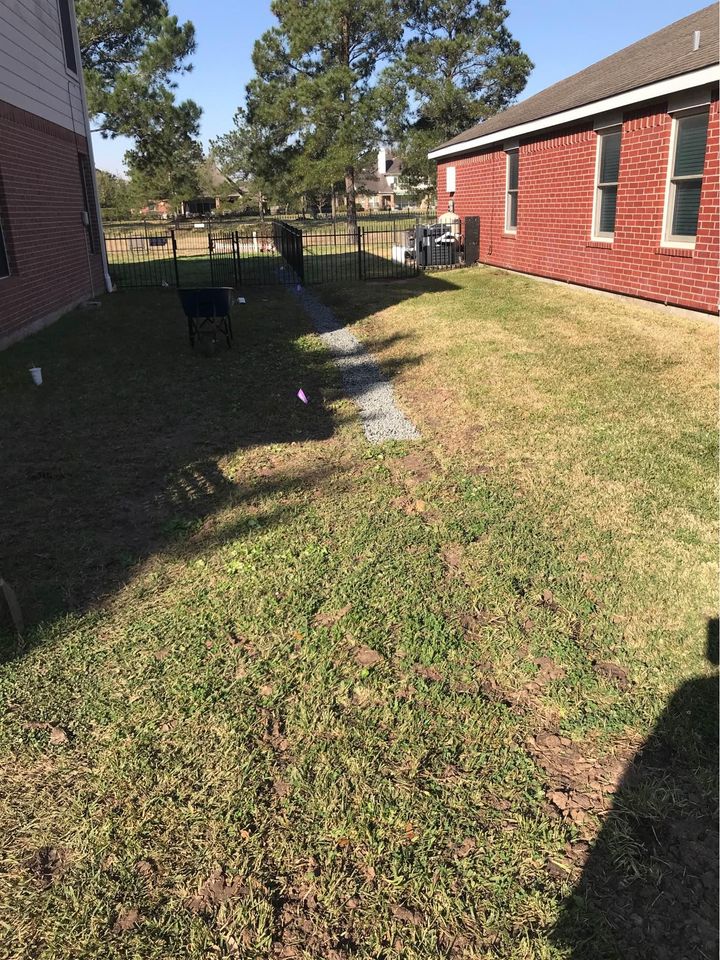
Seeing Poor Drainage Warning Signs Around Your Home?
We can evaluate how water moves across the property and recommend drainage improvements that work with your grading, hardscape, landscaping, and available outlet conditions.